
How to Lay Pavers for a Driveway
What if your pavers for a driveway could do more than just hold cars? What if it became the centerpiece of your home’s curb appeal, blending durability with stunning design?
Many homeowners overlook the potential of their driveway. They settle for plain concrete or asphalt. But today’s options offer so much more.

This guide explores how to transform your outdoor space. It covers everything from planning to long-term care. You will learn professional techniques for a beautiful, lasting surface.
Whether you tackle this project yourself or hire a pro, understanding the process is key. The right materials and methods make all the difference.
Key Takeaways
- Driveways can be both functional and visually appealing with the right materials.
- Proper planning and base preparation are crucial for a durable surface.
- Various paver types, including concrete and natural stone, offer different benefits.
- Design options like patterns and borders allow for personalization.
- Regular maintenance extends the life and appearance of your driveway.
- New eco-friendly products provide sustainable choices for modern homes.
Introduction to Driveway Pavers
Imagine transforming your home’s entrance with a surface that combines strength with stunning visual appeal. Modern driveway solutions offer far more than basic functionality.
These interlocking systems create durable surfaces that handle vehicle weight beautifully. Unlike solid concrete slabs, they flex with ground movement. This prevents cracks and maintains a perfect appearance for years.
Homeowners enjoy countless design possibilities with these modular units. They come in various colors, sizes, and textures. This allows custom patterns that complement any architectural style.
Premium products like County Materials’ concrete pavers blend timeless style with advanced technology. They deliver unmatched performance in any setting. Both traditional and modern landscapes benefit from their flexibility.
Key advantages include:
- Superior weight distribution through interlocking design
- Easy repairs by replacing individual units
- Resistance to freeze-thaw cycles and heavy traffic
- Increased property value through premium appearance
- Potential municipal incentives for permeable options
The pavers installation process requires careful planning but delivers exceptional results. These surfaces can last decades with minimal maintenance. Their natural expansion capacity prevents damage over time.
Various material options provide different benefits:
- Concrete: Offers wide color range and design flexibility
- Natural Stone: Provides unique textures and premium look
- Porcelain: Delivers modern appearance and stain resistance
These solutions work for driveways, patios, pool decks, and outdoor living spaces. They create cohesive hardscape designs around homes. The right choice depends on climate, style preferences, and budget.
With proper installation, these surfaces become long-term investments. They enhance curb appeal while providing practical benefits. Many homeowners find they’re worth the initial project investment.
Planning Your Paver Driveway Project
Before the first paver touches the ground, strategic planning ensures lasting results. Thoughtful preparation prevents common mistakes and creates a smooth installation process. Homeowners should approach this phase with careful attention to detail.
Assessing Your Space and Needs
Proper evaluation begins with accurate measurements of the driveway area. Homeowners should note the length, width, and total square footage. This information helps calculate material requirements accurately.
Soil conditions and drainage patterns require special attention. Poor drainage can undermine even the best installation. Evaluating the slope and grade ensures water flows away from structures properly.
Vehicle types and traffic frequency influence design choices. Heavy trucks require different support than passenger cars. The project should accommodate the weight and frequency of expected use.
Local building codes and HOA regulations must be reviewed early. These rules often dictate materials, colors, and installation methods. Compliance prevents costly revisions later in the project.
Utility line locations need marking before any excavation begins. hitting underground lines creates safety hazards and repair expenses. Most areas offer free utility marking services.
Setting a Budget and Timeline
Realistic budgeting accounts for all project components. Material costs vary significantly between concrete and natural stone options. Tools, equipment rentals, and potential professional help should be included.
A contingency fund of 10-15% covers unexpected expenses. Soil issues or drainage corrections often emerge during excavation. This buffer prevents financial stress during the installation process.
The project timeline typically spans several phases:
- Design and planning period (1-2 weeks)
- Material acquisition and delivery (1-3 weeks)
- Base preparation and installation (1-2 weeks)
- Finishing and curing time (3-7 days)
Climate considerations affect both schedule and material choices. Freeze-thaw cycles demand specific paver characteristics. Products like Unilock offer superior performance in challenging weather conditions.
Permitting processes can add time to the overall schedule. Some municipalities require approval before driveway work begins. Early application prevents project delays.
Professional installation might accelerate the timeline but increases costs. DIY approaches save money but require more personal time investment. The choice depends on skills, budget, and schedule flexibility.
Choosing the Right Pavers for Your Driveway
Selecting the perfect material transforms your driveway from functional to fabulous. The right choice balances beauty with practical performance. It creates a surface that withstands daily use while enhancing your home’s character.
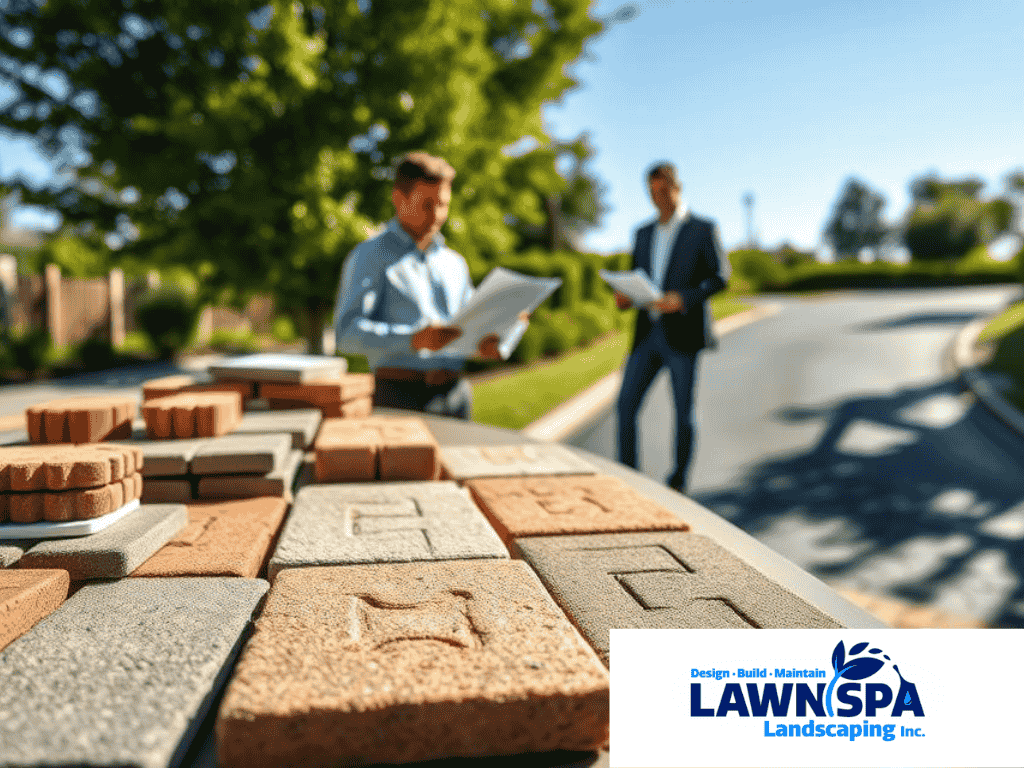
Types of Pavers: Concrete, Natural Stone, and Porcelain
Concrete options provide exceptional strength and design flexibility. County Materials uses Genesis Face-Mix Technology for enhanced compression strength. This method bonds high-strength face-mix with fine aggregate to a structural base layer.
The result is vibrant, long-lasting color with a smooth finish. These units come in various colors, textures, and shapes. They offer consistent sizing for easier installation patterns.
Natural stone brings unique beauty through organic variations. Natural Paving Classicstone Steel Blue uses quality Indian limestone. It features a naturally rippled surface with matte shades of light blue-grey.
These pieces have occasional copper tones and hand-cut edges. Natural Paving De Terra Harvest uses quality sandstone from India. It creates warm brown, pink, grey, and buff colors in mixed pack sizes.
Porcelain offers a modern appearance with superior performance. Natural Paving Vitripiazza Nuvola comes from quality Italian porcelain. It features mid to light gray and white banding with ribbon-like patterns.
This material provides excellent stain resistance and low maintenance. It mimics natural stone while offering very low water absorption.
Factors to Consider: Durability, Style, and Climate
Durability requirements include compressive strength and abrasion resistance. The material must handle vehicle traffic without damage. Freeze-thaw resistance is crucial for colder regions.
Key durability features by material type:
- Limestone: Low water absorption prevents algae growth and staining
- Sandstone: Provides natural slip resistance and frost resistance
- Porcelain: Offers superior strength and minimal water absorption
- Concrete: High pigment concentration ensures color longevity
Style selection should complement your home’s architecture. Consider the surrounding landscape design elements. The color and texture should create visual harmony.
Climate significantly impacts performance and longevity. Certain materials perform better in specific regions. Permeable options like Unilock’s system help with rainwater management.
These products feature wider joint gaps and special bases. They provide optimal drainage for wet climates. This technology supports sustainable water management around homes.
Always consider the total project scope when selecting materials. The right choice ensures beauty and function for years. It creates an outdoor space that truly enhances your property.
Design Ideas and Patterns for Driveway Pavers
Creative patterns transform ordinary driveways into stunning outdoor features. They add visual interest and personality to your home’s entrance. The right design turns functional surfaces into artistic statements.
Modern paving systems offer incredible flexibility for custom looks. Homeowners can mix colors, textures, and shapes. This creates unique patterns that reflect personal style.
Manufacturers like County Materials produce dimensionally compatible products. Their units come in four-inch increments with uniform heights. This simplifies installation and allows maximum design freedom.
Popular Paver Patterns and Layouts
Several classic patterns work beautifully for driveways. Each offers different visual effects and structural benefits. The choice depends on your aesthetic preferences and practical needs.
Running bond creates a simple, traditional appearance. It features staggered joints like brick walls. This pattern works well with rectangular units.
Herringbone provides excellent interlock and strength. Its zigzag pattern handles vehicle weight effectively. This makes it ideal for high-traffic areas.
Basket weave offers a charming, woven appearance. It pairs units in alternating directions. This creates visual texture and interest.
Circular designs make dramatic focal points. They work particularly well in large driveways. These patterns often require more cutting and planning.
| Pattern Type | Best For | Installation Difficulty | Structural Strength |
|---|---|---|---|
| Running Bond | Traditional looks, simple designs | Easy | Good |
| Herringbone | High traffic, maximum stability | Moderate | Excellent |
| Basket Weave | Visual interest, medium traffic | Moderate | Good |
| Circular | Focal points, large areas | Difficult | Variable |
Pattern complexity affects installation time and material waste. Simpler designs like running bond work efficiently. Complex patterns may require more cuts and careful planning.
Scale considerations ensure the pattern matches driveway dimensions. Large patterns can overwhelm small spaces. Smaller patterns might get lost in expansive areas.
Incorporating Borders and Accents
Border treatments frame the driveway beautifully. They create defined edges that enhance the overall appearance. Contrasting colors make the design pop.
Unilock recommends using contrasting units to create visual boundaries. This technique delineates different “rooms” in outdoor spaces. It adds organization and structure to the design.
Accent pieces in contrasting colors create focal points. They can highlight entrance areas or special features. These elements add personality and custom touches.
Lighting integration within borders improves nighttime safety. It also creates attractive ambiance after dark. This combination of function and aesthetics elevates the design.
Color coordination creates cohesive outdoor spaces. The paving should complement home exterior colors. It should also harmonize with landscape elements.
Custom design elements add personal significance. Family crests, dates, or special symbols make unique statements. These touches transform standard driveways into personalized works of art.
Preparing the Base for Pavers
The foundation beneath your driveway determines its strength and longevity more than any other factor. A properly constructed base distributes vehicle weight evenly and prevents settling over time. This hidden support system makes the visible surface perform beautifully for decades.
Excavation and Grading
Excavation begins the transformation process. Workers remove soil to the proper depth for all layers. This depth accounts for the paver thickness plus base materials.
The grading process establishes crucial water drainage. A slope of 1/4 inch per foot directs water away from structures. This prevents pooling and protects the foundation.
Subbase preparation ensures stable conditions. All organic material must be removed completely. The soil beneath must be firm and well-compacted.
Adding Gravel and Sand Layers
The gravel base provides structural support and drainage. This layer typically measures 4-6 inches thick for driveways. Proper compaction creates a stable foundation.
Mechanical plate compactors achieve the necessary density. This step prevents future settling under vehicle loads. Each pass should create a firm, unyielding surface.
The sand setting bed comes next. This layer creates a smooth, level surface for installation. It allows for minor adjustments during the placement process.
Edge restraints maintain pattern integrity over time. They prevent movement and keep the design intact. These are essential for long-term performance.
Permeable systems require special consideration. Unilock products need wider joint gaps and specific bases. Their design ensures optimal rainwater management.
County Materials offers advanced protection technology. Their Sentinel Sealed system provides maximum stain resistance. This factory-applied treatment enhances surface durability.
Quality base preparation impacts the entire project lifespan. Proper techniques prevent settling and maintain levelness. The result is a driveway that performs beautifully for years.
Installing Pavers: Step-by-Step Process
The moment of truth arrives when preparation meets execution. This phase transforms careful planning into tangible results. Proper technique ensures both beauty and durability in the final surface.
County Materials’ dimensionally compatible units simplify the installation process. Their four-inch increments with uniform heights allow maximum design freedom. This consistency helps maintain pattern integrity throughout the project.
Lawn Spa Landscaping provides additional benefits during installation. It resists damaging effects of chemicals while retaining vibrant color. This ensures the finished surface maintains its appearance over time.

Laying Pavers and Ensuring Proper Alignment
Pavers installation begins from a fixed reference point. This could be a building corner or established edge restraint. Starting correctly sets the foundation for the entire pattern.
Maintain consistent joint spacing using spacers or guide strings. This ensures pattern alignment throughout the installation. Regular checks prevent small errors from becoming major issues.
The laying pattern should follow the planned design exactly. Workers should frequently verify alignment and levelness. Temporary walking boards protect newly laid units from displacement.
Key alignment techniques include:
- Using string lines for straight course guidance
- Checking levelness every few feet with a long level
- Maintaining consistent joint widths throughout
- Working in manageable sections for better control
The interlocking nature of these materials creates structural integrity. Mechanical connections between units distribute weight effectively. This makes the surface strong and durable.
Cutting and Fitting Pavers as Needed
Pattern adjustments often require cutting units to fit. This occurs around obstacles, edges, or design elements. Proper techniques ensure clean edges and maintain aesthetic quality.
Cutting requires proper safety equipment and specialized tools. Wet saws provide precise cuts for complex shapes. Splitter machines work well for straight cuts through certain materials.
The installation process should maintain organization and pattern consistency. Workers should complete full units before addressing cut pieces. This approach keeps the project organized and efficient.
Regular checking with levels and straight edges maintains surface plane. This prevents tripping hazards and ensures proper drainage. The final surface should be smooth and even throughout.
Important cutting considerations:
- Measure twice and cut once for accuracy
- Use appropriate personal protective equipment
- Keep cut edges clean and free of chips
- Fit cut pieces tightly against fixed objects
Proper fitting around edges and obstacles completes the installation. These details separate professional results from amateur work. They ensure the surface functions perfectly while looking beautiful.
Finishing and Maintaining Your Paver Driveway
The final touches transform your pavers installation into a lasting masterpiece. Proper finishing techniques protect your investment for years to come. They ensure your hardscape maintains its beauty through seasons of use.
Regular maintenance keeps the surface looking like new. It prevents common issues before they become major problems. A well-maintained driveway adds value to your property.
Sealing and Joint Sand Application
Joint sand application locks individual units in place. Workers sweep specialized sand into all gaps between pieces. Proper compaction creates a stable, interlocked surface.
Polymer-modified sands offer enhanced stability. They resist weed growth and insect infiltration. These products provide better long-term performance than regular sand.
Sealing protects the surface from stains and weather damage. County Materials’ Sentinel Sealed Technology provides factory-applied protection. This system resists organic and inorganic stains effectively.
The dual-layer protection fights UV damage and color fading. It prevents weathering, efflorescence, and poly-haze formation. Proper application requires clean, dry surfaces and ideal weather conditions.
Natural stone options like limestone and sandstone need different care. They offer natural resistance to algae growth and staining. Their maintenance requirements differ from concrete products.
Long-Term Care and Cleaning Tips
Regular cleaning involves simple sweeping and occasional washing. Immediate stain treatment prevents permanent damage. Different materials require specific cleaning approaches.
Seasonal maintenance includes checking for weed growth. Homeowners should monitor joint sand loss and surface damage. Addressing issues early prevents larger problems later.
Winter care demands special attention. Plastic shovels prevent surface scratching during snow removal. Avoid harsh de-icing chemicals that can damage the finish.
Re-sanding joints becomes necessary every 2-5 years. Usage patterns and weather conditions affect this timeline. Proper maintenance ensures continued beauty and function.
Re-sealing surfaces is recommended every 3-5 years. This maintains protection and enhances color vibrancy. Consistent care extends the life of your installation.
Different materials require unique stain removal techniques. Natural stone needs different care than concrete products. Understanding these differences ensures proper maintenance.
Exploring Product Options and Innovations
Modern paving solutions continue to evolve with exciting new technologies. These innovations offer improved performance and environmental benefits. Homeowners now have more choices than ever for their outdoor projects.
Eco-Friendly and Permeable Paver Solutions
Environmentally conscious options are transforming outdoor spaces. Permeable systems manage rainwater through special design features. They allow water to filter through joints and base materials.
This reduces stormwater runoff and surface flooding. Some systems can capture rainwater for landscape irrigation. These features may qualify for municipal tax incentives.
Many manufacturers incorporate recycled materials in their products. Sustainable sourcing practices ensure environmental responsibility. These eco-friendly choices appeal to modern homeowners.
| Feature | Environmental Benefit | Practical Advantage |
|---|---|---|
| Permeable Design | Reduces runoff | Less surface water |
| Recycled Materials | Conserves resources | Often cost-effective |
| Rainwater Capture | Water conservation | Landscape irrigation |
| Local Sourcing | Lower carbon footprint | Faster availability |
Advanced Technologies in Paver Manufacturing
New manufacturing processes create superior products. County Materials uses Genesis Face-Mix Technology for enhanced strength. This method bonds high-strength face-mix with structural base layers.
The result is better compression strength and durability. Products maintain their appearance over time. They resist damage from weather and heavy use.
Factory-applied treatments provide additional protection. Sentinel Sealed Technology fights stains and UV damage. This eliminates the need for additional onsite sealing.
Color technologies ensure long-lasting vibrancy. They resist fading from sun exposure. The finished look remains beautiful for years.
Some systems incorporate lighting or heating elements. These features enhance functionality and safety. They create more usable outdoor living spaces.
Larger format units with reduced jointing offer contemporary aesthetics. These modern designs appeal to current style preferences. They create sleek, seamless surfaces for various applications.
Conclusion
A well-executed paver driveway project brings lasting value and beauty to any home. It combines durability with endless design options. Homeowners can choose from concrete, natural stone, or modern porcelain products.
Each material offers unique colors, textures, and finishes. This variety allows complete customization to match any architectural style. The result enhances both function and visual appeal.
Proper installation and regular maintenance ensure decades of reliable service. Innovative systems even support eco-friendly rainwater management. This investment transforms outdoor spaces while boosting property value.
Ready to upgrade your driveway? Contact your local paver installation experts today for a free consultation and customized design tailored to your home and neighborhood.