
Top 9 Concrete Patio Paver Trends for Newburgh Homes: Durability Meets Style
Newburgh, NY, sits at the heart of the Hudson Valley, a region celebrated for rolling hills, historic architecture, and scenic river views. But if you’ve lived here for more than a year, you know the weather is as challenging as it is beautiful. Harsh winters with freeze-thaw cycles, humid summers, and heavy rainfall create conditions that can wreak havoc on traditional poured concrete patios. That’s why concrete patio pavers are becoming the go-to choice for Newburgh homeowners. Unlike monolithic slabs that crack and spall under pressure, pavers flex with the ground, resist staining, and offer endless design possibilities.
In this guide, we’ll cover everything you need to know: costs, the best paver styles for Newburgh architecture, and professional tips to ensure your patio lasts decades. By the end, you’ll understand why investing in pavers isn’t just smart—it’s essential for Hudson Valley homes.
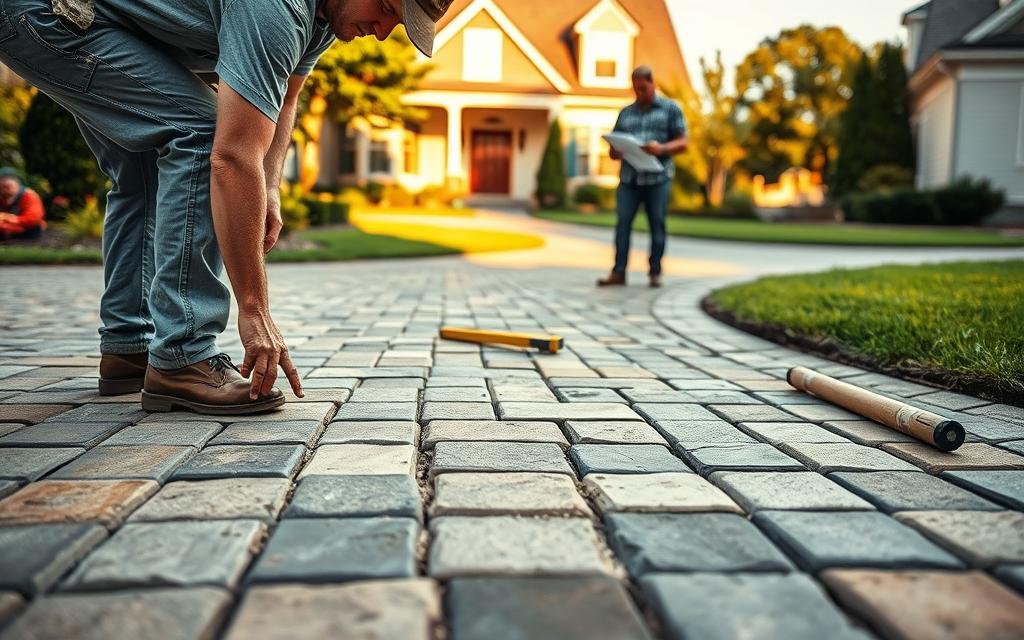
1. Why Concrete Pavers Beat Poured Concrete in Newburgh
When deciding between poured concrete and concrete pavers, the climate and soil conditions in Newburgh make the choice obvious. Here’s why:
Flexibility Prevents Cracking
Newburgh’s soil is prone to slight shifts due to freeze-thaw cycles, heavy rainfall, and variable moisture content. Poured concrete, being one continuous slab, cannot accommodate movement. Cracks appear quickly, leaving your patio looking unsightly and requiring expensive repairs.
Concrete pavers, however, are installed as individual units over a prepared base. Each paver can move slightly, absorbing soil movement without cracking. This flexibility translates into a longer-lasting, more resilient patio that withstands Newburgh’s shifting ground year after year.
Easy Maintenance and Repair
Accidents happen. A BBQ spill, a fallen flower pot, or a small chip can mar a concrete slab for years. With pavers, fixing minor damage is simple: lift the affected unit, replace or clean it, and put it back in place. No jackhammer, no patching compound, and no expensive contractors required. For homeowners in Newburgh, this ease of maintenance makes pavers a smart long-term investment.
2. Best Paver Styles for Newburgh Architecture
Newburgh is a city of contrasts—historic neighborhoods like the Historic District sit alongside modern homes in the hills overlooking the Hudson River. Selecting a paver style that complements your home’s architecture is essential.
The Historic Look
For colonial, Victorian, or early 20th-century homes, distressed or textured pavers complement the character of historic architecture. Popular choices include:
- Tumbled or aged pavers: Provide a weathered look that blends seamlessly with brick facades.
- Multi-color patterns: Rust, tan, and gray tones mimic the natural aging of stone, adding charm and authenticity.
- Herringbone or basket weave layouts: Classic patterns that elevate the elegance of period homes.
Modern Minimalism
New constructions or renovations in Newburgh’s surrounding hills favor clean, contemporary lines:
- Large-format pavers (24×24 or 24×36 inches): Create a sleek, resort-style feel.
- Smooth finishes with subtle textures: Maintain safety without compromising the modern aesthetic.
- Neutral tones like slate gray, ivory, or charcoal: Offer a minimalist palette that works with glass railings, modern landscaping, and pool decks.
Mixing traditional and modern elements is also possible—many homeowners create transitional designs that honor the city’s history while embracing contemporary lifestyles.
3. Durability: Standing Up to New York Winters
Newburgh winters are notorious. Snow, ice, and repeated freezing and thawing create problems for unprepared patios. Concrete pavers overcome these challenges when installed correctly.
Salt and Freeze Protection
Many homeowners rely on rock salt to manage ice, but excessive salt can degrade certain materials. Properly sealed concrete pavers resist salt penetration, preventing surface spalling and discoloration.
Top sealant options include:
- Silane or siloxane-based sealers
- Water-repellent sealers with UV protection
- Penetrating sealers that preserve texture while preventing moisture intrusion
Drainage Matters
Heavy Hudson Valley rainfall can accumulate on patios that aren’t properly sloped or lack a well-prepared base. Pavers are installed over a compacted base of crushed stone and sand, allowing water to infiltrate between units or flow toward designated drainage points.
A professional base not only prevents pooling but also protects the integrity of both your patio and surrounding landscaping.
4. Cost & ROI in the Newburgh Market
Investing in a concrete paver patio isn’t just about aesthetics—it’s also a financial decision.
Value Add
Well-designed patios increase resale value, particularly in Orange County, NY, where buyers prioritize functional outdoor living spaces. Homes with durable, attractive patios often sell faster and at higher prices.
Price Range
Concrete paver prices vary based on style, size, and installation complexity. For Newburgh homeowners:
- Basic pavers: Starting at $15–$20 per square foot
- Premium pavers (textured, large-format, or multi-color): $25–$35 per square foot
- Installation costs: Typically included in square-foot pricing but may increase for slopes, retaining walls, or custom patterns
When compared to poured concrete, which can crack and require patching or replacement, the long-term ROI for pavers is significantly higher. A patio that lasts 30–50 years with minimal maintenance offsets its slightly higher upfront cost.
5. Local Installation Timeline
Understanding when and how pavers are installed in the Hudson Valley ensures a smooth project.
- Preparation: Excavate 8–12 inches for base materials.
- Base installation: Crushed stone or recycled concrete is compacted to create a stable foundation.
- Bedding layer: A one-inch layer of coarse sand allows for minor leveling adjustments.
- Paver placement: Laid in your chosen pattern, ensuring straight lines and even spacing.
- Joint sand and sealing: Polymeric sand fills the gaps, and sealant protects against moisture, UV, and salt.
For Newburgh, the ideal installation window is late spring through early fall, avoiding frozen ground and heavy winter precipitation. Most patios are completed in 1–3 weeks, depending on size and complexity.
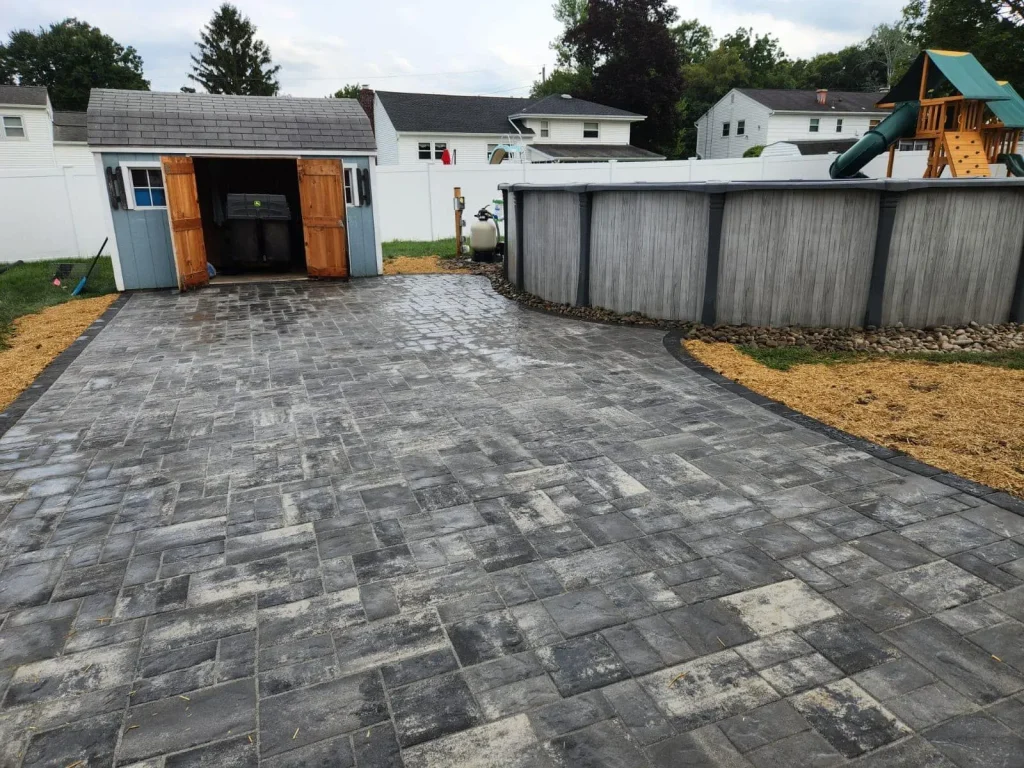
6. Top 9 Concrete Patio Paver Trends for 2026
To make your Newburgh patio both functional and stylish, consider these 2026 trends:
- Large-Format Pavers: Sleek and modern, ideal for minimalistic or poolside patios.
- Distressed Textures: Perfect for historic homes, adding character and charm.
- Permeable Pavers: Environmentally friendly and excellent for drainage compliance.
- Mixed Materials: Combining natural stone, concrete, or brick pavers for unique patterns.
- Neutral and Earthy Color Palettes: Gray, tan, and slate mimic natural landscapes.
- Herringbone and Basket Weave Patterns: Classic layouts with visual interest.
- Integrated Lighting: Pavers with built-in LED pathways for safety and ambiance.
- Fire Pit Surrounds: Pavers used to create cohesive spaces around outdoor fire features.
- Cool-Touch Technology: Lighter colors that stay comfortable in summer heat.
These trends highlight the versatility of pavers, allowing homeowners to create patios that are both beautiful and practical for Newburgh’s climate.
7. Local FAQ (SEO Goldmine)
Do I need a permit for a patio in Newburgh, NY?
Generally, small patios under a certain size do not require a permit. However, patios that alter grading, drainage, or include retaining walls may require approval from the City of Newburgh Building Department. A licensed installer can handle permits on your behalf.
How long does a paver installation take?
Most standard patios are installed in 1–3 weeks, depending on size, slope, and design complexity. Large-format or intricate patterns may take longer.
What is the best time of year to install pavers in the Hudson Valley?
Late spring through early fall is ideal. Ground must be thawed, and heavy rainfall should be minimal for proper base compaction.
How do pavers handle freeze-thaw cycles?
When properly installed over a compacted base and sealed, pavers flex with soil movement, preventing cracking.
Can I customize my paver color or pattern?
Yes! Homeowners can choose textures, colors, formats, and layouts to match either historic Newburgh homes or contemporary designs.
8. Cost-Benefit Summary
Investing in concrete patio pavers offers:
- Durability: Resistant to Newburgh’s freeze-thaw cycles and heavy rainfall.
- Flexibility: Easy repairs and replacements.
- Design Variety: Endless combinations of patterns, colors, and textures.
- Resale Value: Functional outdoor living spaces increase home value.
- Safety: Slip-resistant surfaces and cool-touch technology.
Even though upfront costs are higher than simple poured concrete, pavers save money long-term by eliminating cracks, patching, and replacement needs.
9. Conclusion & Call to Action (CTA)
A concrete paver patio isn’t just a place to sit—it’s an extension of your home, blending style, function, and durability. For Newburgh homeowners, investing in pavers means:
- A patio that withstands harsh winters and humid summers
- Aesthetic flexibility that complements your home’s architecture
- Long-term savings and minimal maintenance
Don’t spend another summer with a muddy backyard. Upgrade your outdoor living space with a custom concrete paver patio designed for your lifestyle.