
The Best Privacy Fencing for Sloped Yards: A Complete Landscape Guide 2026
Looking at your sloped yard, have you ever wondered which privacy fencing style will hold up and still look premium in ten years? This guide is for U.S. homeowners with an established budget who want lasting value and minimal compromise.
Privacy on a slope means blocking sightlines from uphill and downhill neighbors, streets, and patios while accounting for grade, drainage, and elevation changes. High-end jobs cost more because layout takes extra time, post engineering is tougher, and materials must resist movement, moisture, and wind.
By the end of this guide you will pick between stepped and racked builds, understand an installation plan, and vet contractors by their experience and documentation.
Key Takeaways
- Privacy on slopes requires sightline and drainage planning.
- Premium projects cost more due to engineering and materials.
- Stepped vs racked choices depend on grade and gap tolerance.
- Use an experience-backed process, not quick fixes, to protect value.
- Compare bids apples-to-apples and check documentation and timelines.
Privacy fencing options that actually work on sloped yards
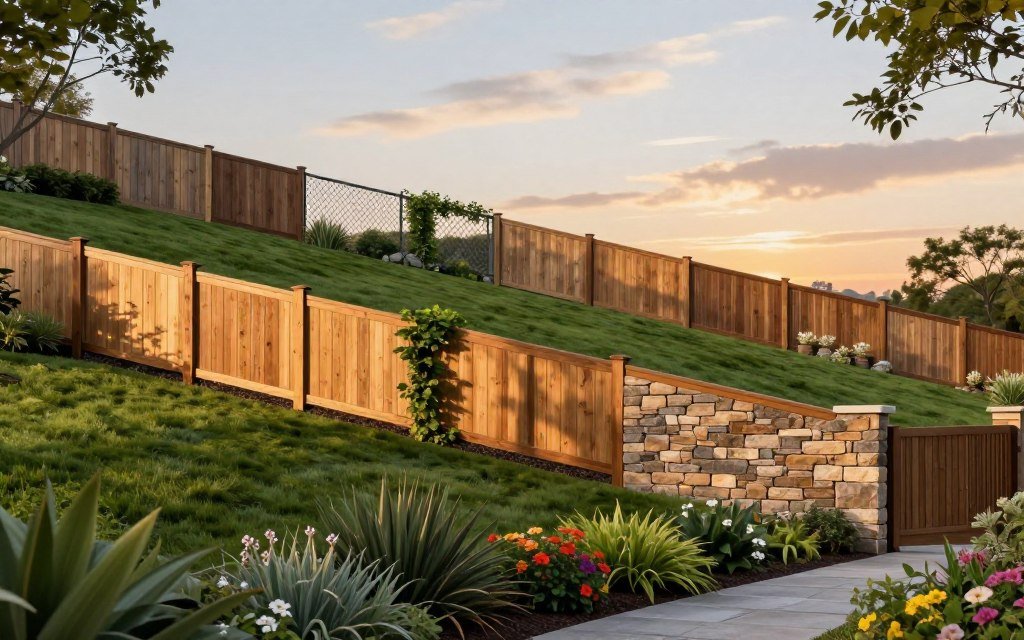
On a hillside, not every privacy solution will stay straight or block sightlines the way you expect. Start by measuring slope grade in simple terms: gentle (0–10%), moderate (10–25%), steep (25%+). Grade changes guide post spacing, panel layout, and the small errors that quickly make gaps visible. Property lines and setbacks often force posts back from the true edge, which affects where panels can go.
Post depth and footing choices
Post depth is not one number on hills. Downhill posts often need deeper embedment or concrete footings. Frost depth, soil type, and drainage decide embedment and footing style.
Stepped vs racked: a clear decision guide
Stepped builds create crisp, architectural sightlines but can leave triangular gaps at the base. Racked panels follow grade for a cleaner run but can distort on very steep runs. Choose stepped for curb appeal and racked where continuous privacy matters at eye level.
Materials and long-term risks
Wood adapts on-site and is easy to customize. Vinyl is low maintenance but less forgiving on sharp grades. Composite balances stability and premium looks. Aluminum reduces wind load; chain link with slats keeps airflow while improving screening.
Wind, water, and installer experience
Solid panels act like a sail in high wind. Stronger posts, better fasteners, and returns cut failure risk. Manage water with swales, French drains, and by keeping panels off wet soil to limit rot and heave.
Think of a premium installation like a sport: systems built for repeated stress by crews with the right skills and experience perform better over time.
Service directory for sloped-yard privacy fence design and installation
A structured service menu makes hillside privacy projects predictable and keeps costs from drifting. This section lists the core deliverables for clients who want a managed process: assess → plan → permit → build, with upgrade options instead of bare-minimum work.
Site assessment, layout, and permitting coordination
Premium site assessments measure slope transitions, map drainage paths, locate utilities, test soil, and chart sightlines from patios, pools, and neighbor windows.
Layout best practices use stringlines, control points, and reference elevations to keep picket reveal consistent. Crews confirm property lines before any holes are dug.
Permitting coordination flags common triggers like height limits, corner visibility, and easements. Early documentation prevents redesigns when retaining elements change reviews.
Installation services: posts, retaining transitions, and gates
Post-setting options include wet-set concrete, dry-pack, or helical piles. Larger-diameter posts and frost solutions address wind and expansive soils.
Retaining transitions show how fences meet small walls or terraces without weak points, and why drainage behind any retaining element is essential.
Gate solutions cover hinge geometry, dropped rails, adjustable hardware, swing clearance, and optional double gates for equipment access.
Programs, schedule, and handoff
Clients expect tiered programs: base installation, privacy upgrades (lattice tops, kick boards), wind bracing, and premium finishes.
A realistic schedule lists design lead times, permitting windows, material arrival, and weather-sensitive work like digging and concrete cure. Clear install notes, on-site foreman walkthroughs, and homeowner instruction complete the handoff.
Seasoned teams with years of hillside work bring sport-like discipline and on-site skills that preserve straightness and long-term quality.
How to choose the right fencers for a premium sloped-yard project
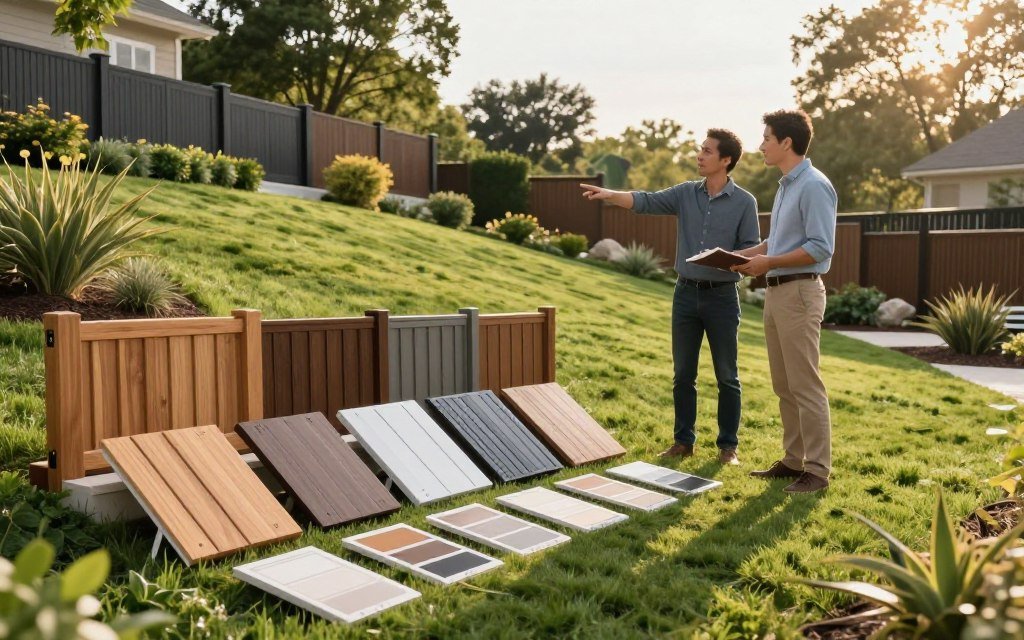
For premium hillside work, vetting contractors by process beats choosing on price alone. Use clear checkpoints so bids are comparable and risk is reduced over time.
Evaluating experience with a level-based checklist
Match crew capability to project complexity:
- Level 1 — gentle grade, few transitions.
- Level 2 — multiple grade breaks and gates.
- Level 3 — steep slope with drainage and retaining interfaces.
Verifying skills and instruction standards
Ask for years in business and hillside portfolios showing similar slope angles from multiple viewpoints. Confirm how they measure grade, keep lines straight, and prevent bottom-edge gaps.
Comparing programs, options, and schedules
Compare material sourcing, post sizing, hardware quality, and privacy upgrades listed as line items. Confirm lead times, crew availability, and a realistic schedule: demo → layout → posts → panels → gates.
Competition-level quality benchmarks
The best teams operate like a club or competitions program: repeatable steps, safety routines, and documented methods. Red flags include vague drainage answers, no wind bracing plan, or missing survey checks.
What world-class looks like
Expect written warranties, a maintenance plan, as-built photos, and a closeout packet. Lawn Spa Landscaping demonstrates this documentation-and-warranty mindset. Request a quality-control walk and a photographed punch list before final payment.
Conclusion
A measured approach turns slope challenges into reliable, lasting privacy solutions. Identify your grade issues, pick stepped or racked based on the sightline outcome you want, then match materials to exposure and maintenance goals.
Protect ROI with engineered posts, planned drainage, wind-aware details, and a scope that avoids common hillside failures. Prioritize workmanship and documented methods over quick fixes.
Follow a structured process: assessment, design, permitting, installation, and final documentation. That sequence produces consistent results on sloped sites.
Ready-to-request-bids checklist: confirm property lines, desired height/opacity, material preference, gate locations, cleanup expectations, and warranty terms for fencing.