
Drainage Solutions
Drainage solutions for wet yards, foundation runoff, soggy lawns, and stormwater problems in Newburgh and the Hudson Valley.
Drainage Starts With Where the Water Comes From
Useful drainage work begins by tracing water, not by guessing at a pipe location. Lawn Spa looks at roof discharge, driveway pitch, low lawn pockets, soil compaction, neighboring grades, and the route water takes during heavy rain. In many Hudson Valley yards, the visible puddle is only the final symptom. The cause may be a downspout dumping into clay soil, a patio base that blocks flow, a driveway edge that channels runoff toward turf, or a lawn that was graded flat during construction.
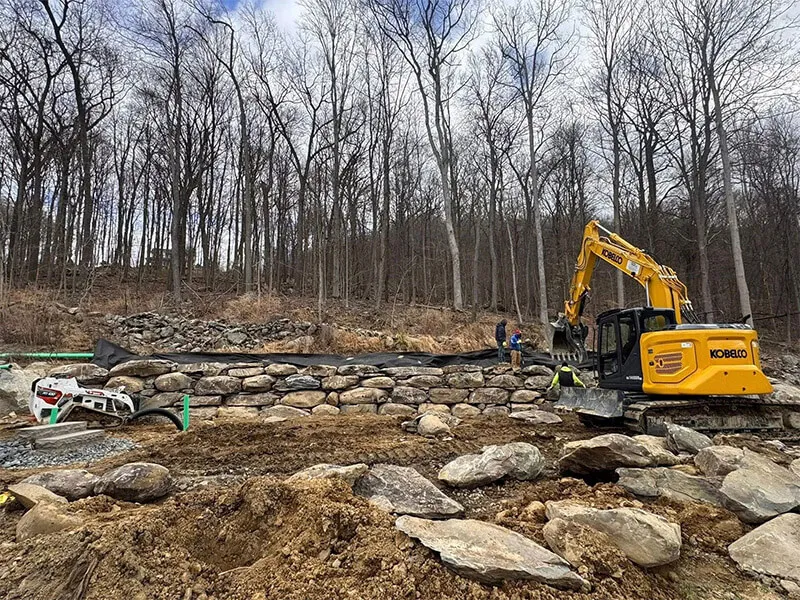
The right drainage solution can include surface swales, catch basins, dry wells, French drains, regrading, downspout extensions, stone outlets, or a combination of repairs. Lawn Spa explains what each component is meant to do, where water will be collected, where it will be released, and what areas should remain accessible for future maintenance. That matters because a buried drain with no cleanout or a discharge point that simply moves water to a neighbor can create a different problem later.
Before pricing the work, the team reviews equipment access, utility conflicts, trees and roots, soil conditions, and whether hardscaping or lawn restoration will be disturbed. If the property also needs patio repair, pool deck work, or new planting beds, drainage should be planned first so the finished improvements are not undermined by the next storm.
Common Drainage Situations Lawn Spa Reviews
Wet side yards often need a direct plan for roof water and narrow access. Backyards with standing water may need a combination of soil correction, grading, and a defined outlet. Foundation seepage calls for careful review of slope, downspouts, mulch depth, and hardscape edges before recommending underground work. Driveway runoff may need trench drains, stone edges, or surface reshaping so water does not cut across the lawn.
For larger properties, the solution may be phased. A first visit can identify the highest-risk water sources, the practical route for drainage pipe, and whether excavation equipment can enter without damaging fences, utilities, lawns, or existing patios. Lawn Spa also considers how the repaired area will look after installation, including seed, sod, stone, or planting restoration.
When requesting drainage service, include photos taken during or shortly after rain, the length of time water remains, and any history of basement seepage, washed-out mulch, sinking pavers, or turf that will not establish. Those details help the estimate focus on the cause instead of a temporary cosmetic fix.
Solving Yard Drainage Problems Without Guesswork
Drainage solutions should begin with observing how water actually moves. Standing water may come from compacted soil, a low spot, roof runoff, driveway runoff, a blocked outlet, an undersized pipe, a failed dry well, poor patio pitch, or grading that sends water toward the wrong area. Lawn Spa asks property owners to share photos during rain, how long puddles remain, and which areas become muddy, icy, or unusable. That information is more useful than a dry-day description alone.
A durable plan often combines collection, conveyance, and restoration. Collection may involve catch basins, channel drains, swales, or French drains. Conveyance may require solid pipe, daylight outlets, stone discharge areas, or tie-ins where appropriate. Restoration may include topsoil, seed, sod, grading, mulch repair, or hardscape adjustment. If only one part of the system is addressed, water can reappear somewhere else on the property.
Drainage work also needs to respect the rest of the landscape. A trench across a lawn should be restored properly. A drain near a patio should not undermine the base. A discharge point should not create erosion or send water toward a neighbor, sidewalk, driveway, or foundation. Lawn Spa reviews access, slope, soil conditions, and existing features before recommending a practical repair.
Common Hudson Valley Drainage Factors
Many properties around Newburgh and the surrounding service area have clay-heavy soil, ledge, compacted fill, steep grade changes, mature tree roots, and older downspout routes that no longer match how the property is used. Seasonal leaf buildup, freeze-thaw cycles, snowmelt, and heavy summer storms can expose problems that look minor during dry weather. A drainage estimate should account for these patterns instead of relying on a one-size-fits-all trench.
Before requesting service, note whether water comes from roof leaders, neighboring grade, a driveway, a patio, a pool area, or a lawn depression. Include photos of outlets, downspouts, wet basement areas, muddy lawn panels, and any recent work that changed the grade. If you plan to add pavers, a pool, planting beds, or a retaining wall, mention that as well so drainage can be planned before new construction locks in the grade.
What a Clear Drainage Proposal Should Explain
The proposal should identify what will be excavated, what materials are used, where water will go, how disturbed areas are repaired, and what maintenance may be needed later. Catch basins should remain accessible. Stone outlets may need occasional cleaning. Seeded lawn areas need watering and time to establish. Lawn Spa discusses those details so the repair is understandable before work begins.
Good drainage work is not about hiding water for a few weeks. It is about moving water in a controlled way, protecting hardscapes and foundations, and making lawn and outdoor living areas usable after storms. Share the symptoms and timing, and Lawn Spa can recommend a practical on-site drainage review.
Drainage Solutions Matched to the Yard
Every drainage request should start with the conditions on the actual property. Lawn Spa looks at roof runoff, low lawn panels, compacted soil, clay-heavy areas, driveway runoff, patio pitch, foundation edges, catch basins, discharge points, and restoration after trenching. Those details affect the right crew, equipment, materials, visit timing, and whether the work should be handled as a single project, a seasonal service, or a phased improvement plan.
A clear estimate should explain what is included, what is excluded, and what may change if hidden conditions appear. Property owners should know whether preparation, disposal, cleanup, restoration, access protection, and follow-up recommendations are part of the scope. That level of detail is especially important in the Hudson Valley, where clay soil, ledge, mature trees, steep grades, heavy rain, snow, and freeze-thaw cycles can change how outdoor work performs after the first season.
Lawn Spa also considers how the service connects to the rest of the site. A lawn plan may reveal drainage work. A patio may require grading first. A pool area may need a safe walking route and restored turf. A snow plan may affect where turf is repaired in spring. Looking at those connections helps the client avoid paying for work in the wrong order.
Photos and Rain Patterns That Help Diagnosis
For drainage service, send photos during or soon after rainfall, identify where water starts, where it collects, and how long it remains. Mention downspouts, basement seepage, washed mulch, sinking pavers, soggy turf, icy walks, or prior drainage repairs so Lawn Spa can focus on the cause and recommend a repair that moves water safely.
Useful questions include how long the work should take, what weather can delay it, how disturbed areas will be protected, what maintenance is expected afterward, and which related services should be considered now. Common related needs include draining and excavation, grading, lawn repair, pavers, retaining walls, and waterproofing. The answer does not have to make the project larger; it should make the approved scope more accurate.
Why Water Patterns Matter
A clear proposal explains the result, the sequence, the practical limits, and what happens if conditions change. Lawn Spa uses that approach so property owners can compare value, plan timing, and approve work with fewer surprises.
Use the estimate form to describe the property, the service goal, and the first problem you want solved. Lawn Spa can recommend a focused plan for your home, business, HOA, or managed landscape.
Review Yard Drainage With Lawn Spa
Share the property town, site conditions, timing goals, and the issues you want solved. Lawn Spa will follow up with a practical route for a field review or proposal.