
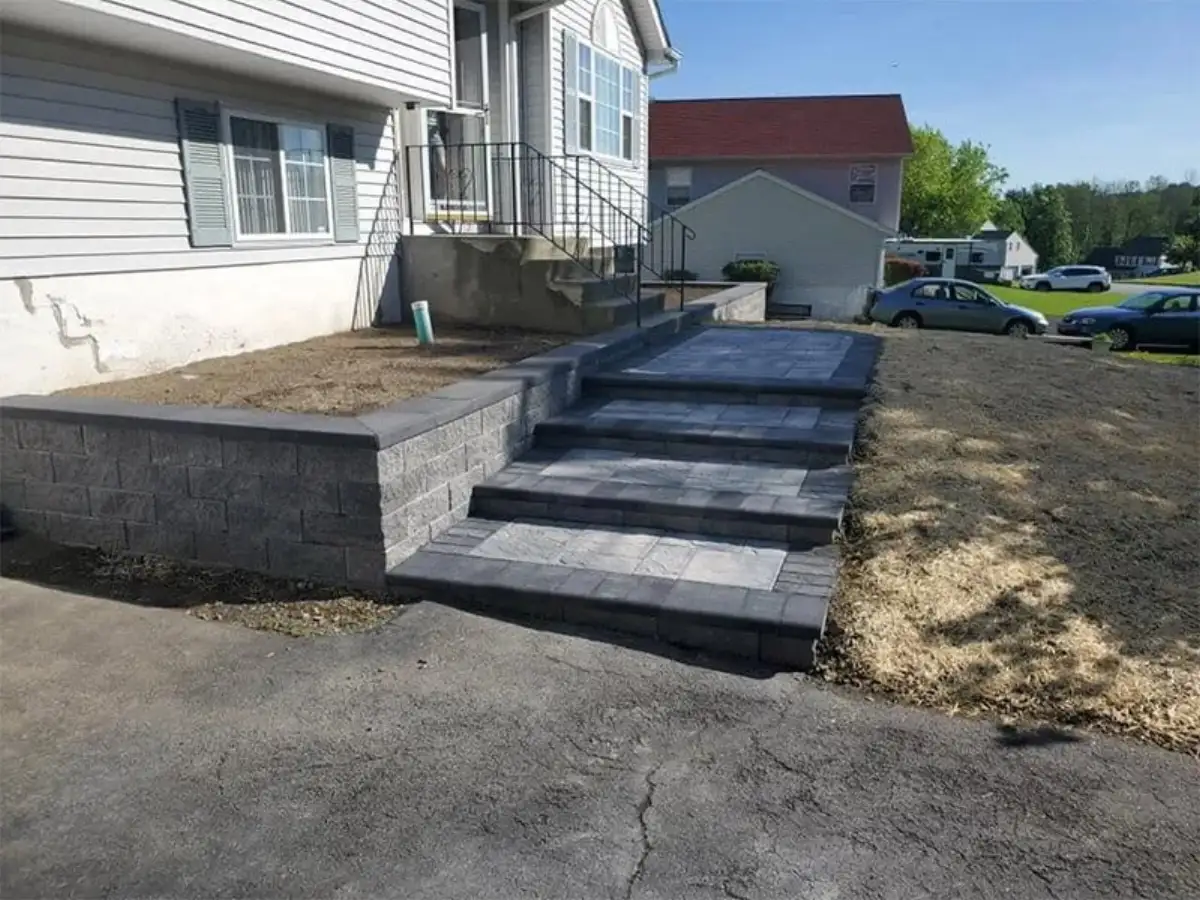
Concrete & Masonry in Newburgh, NY
From poured concrete driveways to hand-laid natural stone walls, Lawn Spa Landscaping builds structures designed to handle the Hudson Valley's demanding freeze-thaw climate while adding lasting value to your property.
Professional Masonry & Concrete Services
Concrete and masonry add structural integrity and visual impact to any property. Whether you need a new driveway, a decorative stamped patio, or a retaining wall that holds back a hillside, our team delivers precision craftsmanship backed by quality materials. We serve homeowners and businesses across Newburgh, New Windsor, and Orange County, NY.
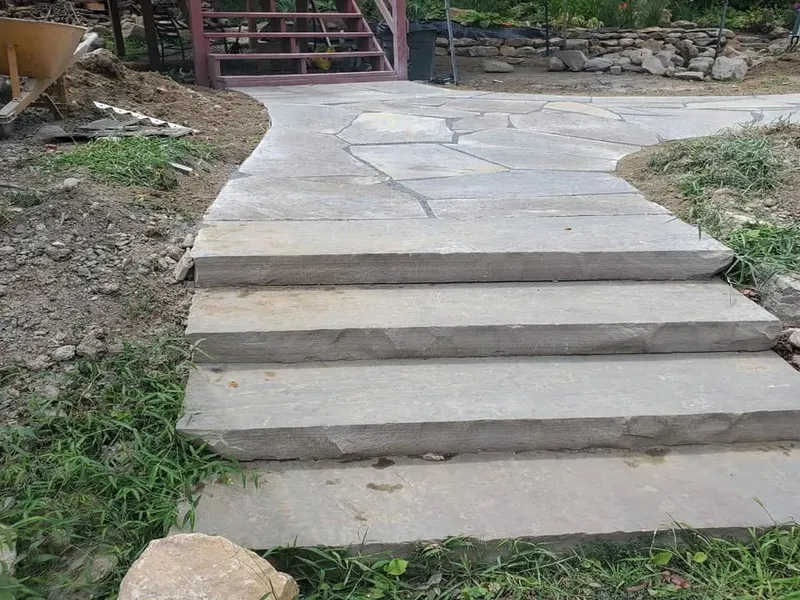
Walkways, Steps & Patios
Concrete can provide a durable surface when the design, sub-base, reinforcement, joints, drainage, mix, placement, and curing are suited to the application. Lawn Spa plans driveways, walkways, and patios around the site's intended loads, grades, transitions, and Hudson Valley weather exposure.
- Concrete driveways with proper drainage pitch and control joints
- Walkways and garden pathways for safe, attractive access
- Patio slabs sized for outdoor furniture, grills, and entertaining
- Stamped and decorative concrete with patterns that mimic stone, brick, or slate
Walls, Steps & Masonry Structures
Retaining walls solve grading challenges and create usable space on sloped properties. Fire pits and outdoor fireplaces extend your outdoor season well into the fall. We work with natural stone, concrete block, and brick to match your home's architecture and deliver a finished product that looks intentional, not bolted on.
- Retaining walls engineered for proper drainage and load-bearing capacity
- Fire pits and outdoor fireplaces built with heat-rated masonry
- Stone and brick accent walls, columns, and borders
- Concrete walls, steps, and structural foundations
Concrete Resurfacing & Repair
Not every surface problem requires a full tear-out. After the underlying slab is assessed, suitable non-structural wear such as discoloration, surface spalling, or minor stable cracks may be a candidate for resurfacing. Overlays can refresh the appearance of driveways, patios, and walkways, but they do not correct failed or moving substrates.
Concrete & Masonry FAQ
Concrete driveway service life varies with the sub-base, drainage, mix, reinforcement, jointing, curing, traffic, deicing exposure, freeze-thaw conditions, and maintenance. The proposal should identify the site-specific preparation and care recommendations rather than promise a fixed lifespan.
Stamped concrete is freshly poured concrete pressed with textured mats to create patterns that resemble natural stone, brick, or slate. It is just as strong as standard concrete because the base mix is identical. With proper sealing it maintains its color and texture for years while costing significantly less than natural stone.
Yes. Water pressure behind a retaining wall is the leading cause of failure. Every retaining wall we build includes gravel backfill and a perforated drain pipe at the base to relieve hydrostatic pressure. Without proper drainage, even a well-built wall can lean, crack, or collapse over time. Read our retaining wall guide for a full breakdown of drainage requirements, wall types, and permit rules in the Hudson Valley.
In many cases, yes. If the underlying slab is structurally sound, meaning no major heaving, deep cracks, or settlement, we can apply a resurfacing overlay that restores the appearance and adds years of service. We assess the condition during a free on-site evaluation to determine if resurfacing is a viable option.
Spring through fall is ideal. Concrete needs air temperatures above 50 degrees Fahrenheit to cure properly, and mortar for stonework has similar requirements. We schedule masonry projects from April through November in the Hudson Valley. Contact us early in the season to secure your preferred timeline.
Masonry Details Need Solid Base, Drainage, and Finish Planning
Concrete and masonry work fails early when the base, water control, or edge conditions are treated as afterthoughts. Lawn Spa reviews the soil, frost exposure, slope, adjacent pavement, and where water will collect before recommending a slab, step, wall, walkway, or stone feature. In the Hudson Valley, freeze-thaw cycles make preparation especially important. A clean finish is not enough if the structure heaves, settles, traps water, or pushes runoff toward the house.
For concrete, the estimate should cover thickness, reinforcement, sub-base, expansion control, finish texture, and how the new surface meets doors, walks, patios, and driveways. For masonry and stone work, the conversation includes footing requirements, drainage behind walls, cap choices, joint style, and how the new work fits existing hardscapes. Lawn Spa focuses on durable construction details and practical transitions instead of isolated patches that look finished but do not solve the underlying problem.
Many masonry projects connect to other services. A retaining wall may need excavation and drainage. A step repair may require grading. A concrete pad may need snow storage or equipment access. A stone border may tie into planting beds and lawn maintenance. Planning those connections up front creates a cleaner result and a more realistic proposal.
Appropriate Uses for Concrete, Block, and Stone
Concrete is useful for utility pads, walkways, equipment areas, and durable flatwork where a continuous surface makes sense. Block and segmental wall systems are often better for retaining grade changes when drainage and wall height are properly engineered. Natural stone can add a premium look for steps, borders, veneer, and landscape features, but it still needs the right base and setting method.
Lawn Spa helps compare those options based on budget, appearance, maintenance, and site conditions. The recommendation may also include pavers, drainage work, or grading if another material would perform better than a simple concrete pour.
When requesting an estimate, include photos of the existing area, measurements, cracking or settling concerns, and how water behaves after rain. If the masonry touches a doorway, driveway, pool deck, patio, or retaining wall, include those connections in the request.
Durable Concrete and Masonry Starts Below the Surface
Concrete and masonry work is often judged by the finished face, but long-term performance depends on base preparation, drainage, reinforcement, joints, pitch, and how the new work connects to the rest of the property. Lawn Spa reviews the intended use of the surface before recommending a repair or installation. A front walk, pool equipment pad, driveway apron, step repair, retaining edge, veneer wall, and patio border each carry different load and drainage requirements.
Hudson Valley freeze-thaw cycles make preparation especially important. Water that sits under a slab, behind a wall, or along a masonry joint can expand, shift, crack, or stain the finished work. A proposal should explain whether excavation, stone base, compaction, reinforcement, control joints, wall drainage, cap treatment, or adjacent grading is included. When those details are not clear, property owners may be comparing a durable scope against a surface-only repair.
Concrete and masonry projects also need clean transitions. Steps should meet existing walks at safe heights. Pool areas need surfaces that shed water without sending runoff toward the pool or house. Walkways should meet driveways, patios, and lawn areas without creating trip edges. Walls and columns should be integrated with planting beds, lighting, drainage, and routine winter maintenance so the finished feature is not damaged by ordinary use.
Repair, Replacement, or New Installation
Some concrete and masonry problems can be repaired, while others point to a deeper failure. Cracks caused by age or isolated impact may be manageable. Cracks caused by settlement, poor drainage, missing base, frost heave, or moving soil often need a more complete solution. Lawn Spa looks at the surrounding grade, nearby downspouts, tree roots, traffic patterns, and adjacent hardscapes before recommending the right scope.
For new work, the estimate should include dimensions, material expectations, finish, access, demolition or haul-off, curing time, and site restoration. If the project needs to match existing pavers, natural stone, veneer, stucco, brick, or concrete texture, photos and material references are helpful. If the area supports vehicles, equipment, or frequent foot traffic, that information should be shared early so the base and reinforcement are appropriate.
Coordinating With Landscape and Drainage Work
Concrete and masonry often perform best when coordinated with grading, drainage, planting, and lighting. A new walkway may need downspout management before installation. A wall may need drainage stone and an outlet. A pool deck or patio edge may need planting beds and lawn restoration after the masonry is complete. Lawn Spa can discuss the full sequence so finished work is protected rather than disturbed by the next phase.
Use the estimate request to describe what failed, what you want the area to do, and how soon it needs to be usable. That gives the team enough context to recommend masonry or concrete work that fits both the property and the way the space will be used.
Concrete and Masonry Built for Daily Use
Every concrete and masonry request should start with the conditions on the actual property. Lawn Spa looks at walkways, steps, slabs, aprons, pool equipment pads, retaining edges, veneer details, drainage paths, and the base conditions that decide whether the finished work stays stable. Those details affect the right crew, equipment, materials, visit timing, and whether the work should be handled as a single project, a seasonal service, or a phased improvement plan.
A clear estimate should explain what is included, what is excluded, and what may change if hidden conditions appear. Property owners should know whether preparation, disposal, cleanup, restoration, access protection, and follow-up recommendations are part of the scope. That level of detail is especially important in the Hudson Valley, where clay soil, ledge, mature trees, steep grades, heavy rain, snow, and freeze-thaw cycles can change how outdoor work performs after the first season.
Lawn Spa also considers how the service connects to the rest of the site. A lawn plan may reveal drainage work. A patio may require grading first. A pool area may need a safe walking route and restored turf. A snow plan may affect where turf is repaired in spring. Looking at those connections helps the client avoid paying for work in the wrong order.
What We Review Before Concrete or Stone Work
Before concrete or masonry work is priced, note the condition of existing slabs, steps, walls, footings, drainage, cracks, settlement, and nearby hardscape or planting areas. Photos of the whole work zone, close-ups of damage, and rough dimensions help Lawn Spa determine whether repair, replacement, excavation, or drainage correction should be included in the proposal.
Useful questions include how long the work should take, what weather can delay it, how disturbed areas will be protected, what maintenance is expected afterward, and which related services should be considered now. Common related needs include pavers, drainage solutions, excavation, retaining walls, pool decks, and landscape restoration. The answer does not have to make the project larger; it should make the approved scope more accurate.
Base Prep, Drainage, and Finish Order
A clear proposal explains the result, the sequence, the practical limits, and what happens if conditions change. Lawn Spa uses that approach so concrete and masonry customers can compare value, plan timing, and approve work with fewer surprises.
Use the estimate form to describe the property, the service goal, and the first problem you want solved. Lawn Spa can recommend a focused plan for your home, business, HOA, or managed landscape.
Masonry Details That Match Structure, Drainage, and Style
Natural stone and masonry work needs a clear plan for support, water movement, and the look of the finished space. Lawn Spa reviews wall height, footing conditions, existing grades, adjacent patios or walks, stone style, mortar needs, and access for materials.
The estimate should define whether the project is decorative, structural, or both. A garden wall, veneer repair, fire feature, step rebuild, and retaining wall each require different preparation, drainage, material handling, and sequencing.
Stonework often connects directly to pavers, concrete, planting beds, and landscape lighting. Planning those transitions early keeps edges clean and helps avoid cutting into finished work later for drains, sleeves, or grade corrections.
For a masonry estimate, share photos of the existing area, the desired stone look, approximate dimensions, drainage concerns, and whether the masonry needs to retain soil, support traffic, or serve as an outdoor living feature.
Ready for Concrete That Lasts?
Call Lawn Spa Landscaping for a free masonry estimate. Licensed, insured, and trusted across the Hudson Valley.