
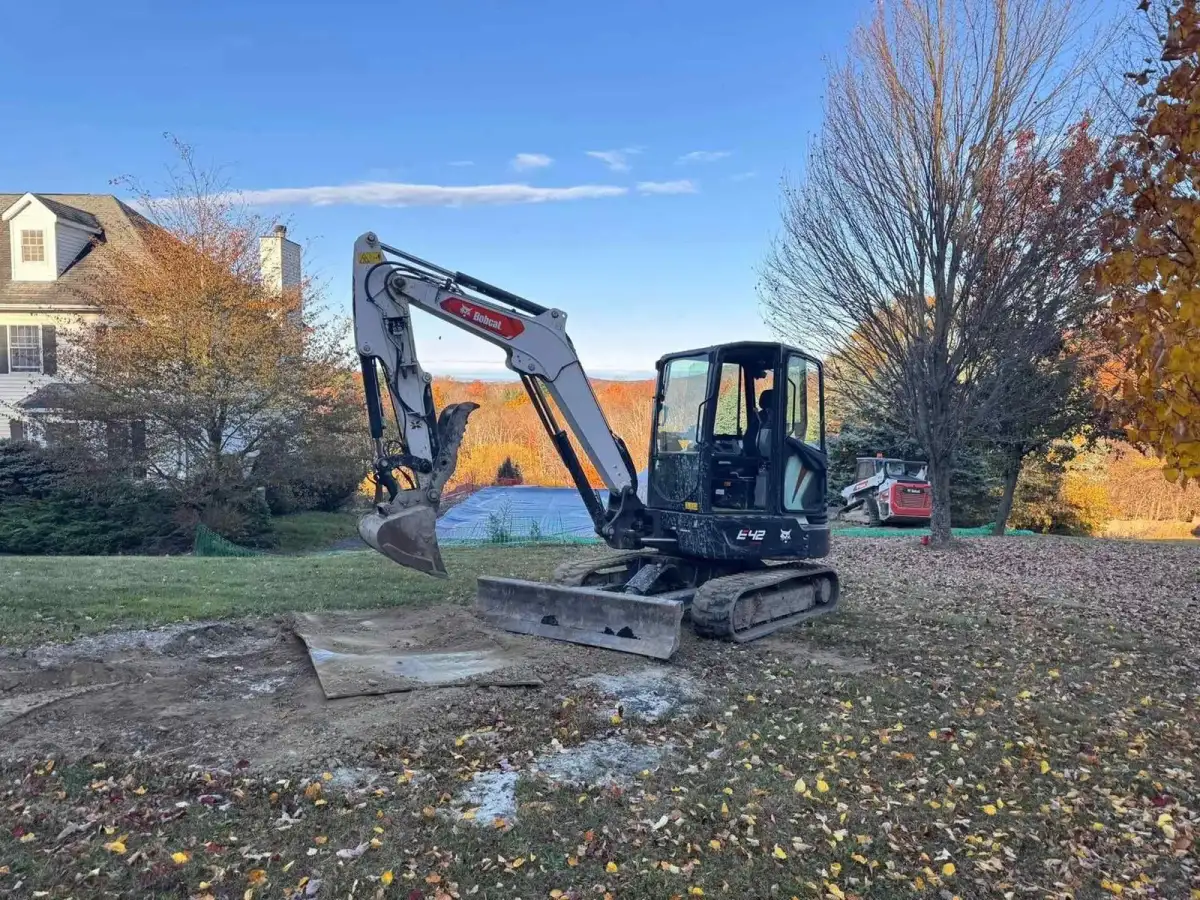
Draining and Excavation
Excavation, grading, trenching, and drainage preparation for outdoor construction projects across Orange County and nearby Hudson Valley communities.
Excavation That Supports the Finished Outdoor Project
Draining and excavation work sets the stage for patios, retaining walls, pools, driveways, lawn renovation, and foundation-area repairs. Lawn Spa treats excavation as part of the finished system, not just dirt removal. The crew reviews depth, base material, compaction, spoil handling, access routes, and how water will move after the grade changes. That prevents common problems such as soft patio bases, settled walkways, buried water against a wall, or a lawn that is smooth but still too flat to drain.
Every site has limits. Tight side yards may restrict machine size. Existing fences, irrigation, utilities, septic components, mature trees, or overhead wires can affect staging. Sloped Hudson Valley properties may need stepped access, erosion control, and careful sequencing so open soil is not exposed longer than necessary. Lawn Spa accounts for those constraints before committing to equipment, crew size, and schedule.
Excavation scopes can include trenching for drainage pipe, preparing patio or pool deck bases, removing failed soil, reshaping lawn areas, cutting grades for retaining walls, or opening access for masonry and hardscape work. The best plan also describes restoration: seed, stone, topsoil, grading touchups, or temporary protection until the next phase begins.
What to Clarify Before Equipment Arrives
Good excavation planning answers practical questions before the crew mobilizes. Where can materials be delivered? Is there room for a machine to turn? Where will excavated soil go? Does the project require utility marking? Will work cross an irrigation line, buried electric, drainage outlet, or old masonry? Is the grade being changed enough to affect a neighbor, sidewalk, driveway, or foundation?
Lawn Spa walks through those details during the estimate so the proposal reflects actual site conditions. For homeowners, that means fewer surprises once the ground is open. For commercial sites, it helps coordinate access, safety, and cleanup around tenants, parking, and operating hours.
Use the estimate form to describe the excavation goal, known utilities, access width, and whether the work is tied to drainage, hardscaping, pool installation, lawn repair, or masonry. Photos of gates, slopes, and the work area are especially useful.
Excavation That Protects the Finished Project
Excavation is the first phase of many outdoor projects, but it is also the phase where shortcuts are hardest to see later. Lawn Spa treats digging, grading, trenching, and site preparation as part of the finished result. A drainage trench must have the right pitch. A patio base must have consistent depth and compaction. A pool area needs enough working room for equipment, backfill, and restoration. A retaining wall or walkway needs preparation that fits the soil and grade around it.
A useful excavation proposal should explain access, equipment size, staging, haul-off, imported material, backfill, compaction, utility considerations, and daily site conditions. Residential properties often have tight gates, finished driveways, irrigation lines, lighting wire, fences, patios, and plantings that need protection. Commercial properties may have tenant access, parking, and traffic flow concerns. Defining those conditions before work starts keeps the excavation from creating avoidable damage.
Ground conditions also matter. Saturated soil, frozen ground, buried debris, clay, roots, ledge, and steep slopes can change how a project should be sequenced. Lawn Spa reviews visible site conditions and asks about known underground features so the work can be planned realistically. Standard utility marking is important, but property owners should also identify private utilities such as irrigation, lighting, septic components, drainage lines, invisible fence wire, or private electrical runs.
Drainage, Grading, and Site Preparation
Draining and excavation often overlap because water problems usually require grade correction, trenching, or both. The scope should identify where water is being collected, where it is being moved, and how the disturbed area will be restored. If excavation supports a patio, driveway, pool, wall, or lawn renovation, the base preparation should be coordinated with that final use. Digging first and designing later can lead to settlement, erosion, or rework.
For hardscape preparation, Lawn Spa considers excavation depth, stone base, compaction, edge restraints, geotextile needs, drainage, and how the surface will meet existing grades. For lawn or landscape restoration, the team considers topsoil, seed, slopes, and access for future maintenance. The finished prep should leave the property ready for the next phase rather than simply opened and filled.
What to Share Before an Estimate
Helpful details include project goals, approximate dimensions, photos of the access route, known wet areas, existing hardscapes, septic or utility information, and whether material must be hauled away or reused on site. If timing matters because of a pool, patio, drainage, or masonry sequence, include that as well. Lawn Spa can then recommend a realistic plan for equipment, schedule, and restoration.
Good excavation work should make the invisible parts of the project stronger. By planning access, pitch, compaction, and restoration up front, Lawn Spa helps the final landscape, drainage system, or hardscape perform as intended.
Draining and Excavation With the End Use in Mind
Every drainage and excavation request should start with the conditions on the actual property. Lawn Spa looks at machine access, trench pitch, soil saturation, staging, disposal, backfill, compaction, utility marking, driveway protection, and how the opened area will support the next phase. Those details affect the right crew, equipment, materials, visit timing, and whether the work should be handled as a single project, a seasonal service, or a phased improvement plan.
A clear estimate should explain what is included, what is excluded, and what may change if hidden conditions appear. Property owners should know whether preparation, disposal, cleanup, restoration, access protection, and follow-up recommendations are part of the scope. That level of detail is especially important in the Hudson Valley, where clay soil, ledge, mature trees, steep grades, heavy rain, snow, and freeze-thaw cycles can change how outdoor work performs after the first season.
Lawn Spa also considers how the service connects to the rest of the site. A lawn plan may reveal drainage work. A patio may require grading first. A pool area may need a safe walking route and restored turf. A snow plan may affect where turf is repaired in spring. Looking at those connections helps the client avoid paying for work in the wrong order.
Access, Spoil, Utilities, and Machine Routes
For drainage and excavation work, describe the wet area, the planned construction area, equipment access, visible utilities, gates, slopes, and any nearby patios, pools, driveways, fences, or planting beds that need protection. Clear site photos and rough dimensions help Lawn Spa plan excavation, grading, drainage routing, disposal, and restoration in the right order.
Useful questions include how long the work should take, what weather can delay it, how disturbed areas will be protected, what maintenance is expected afterward, and which related services should be considered now. Common related needs include drainage solutions, pavers, pool installation, concrete and masonry, retaining walls, and lawn restoration. The answer does not have to make the project larger; it should make the approved scope more accurate.
Protecting the Next Phase of Work
A clear proposal explains the result, the sequence, the practical limits, and what happens if conditions change. Lawn Spa uses that approach so property owners can compare value, plan timing, and approve work with fewer surprises.
Use the estimate form to describe the property, the service goal, and the first problem you want solved. Lawn Spa can recommend a focused plan for your home, business, HOA, or managed landscape.
Review Draining and Excavation Needs
Share the property town, site conditions, timing goals, and the issues you want solved. Lawn Spa will follow up with a practical route for a field review or proposal.