
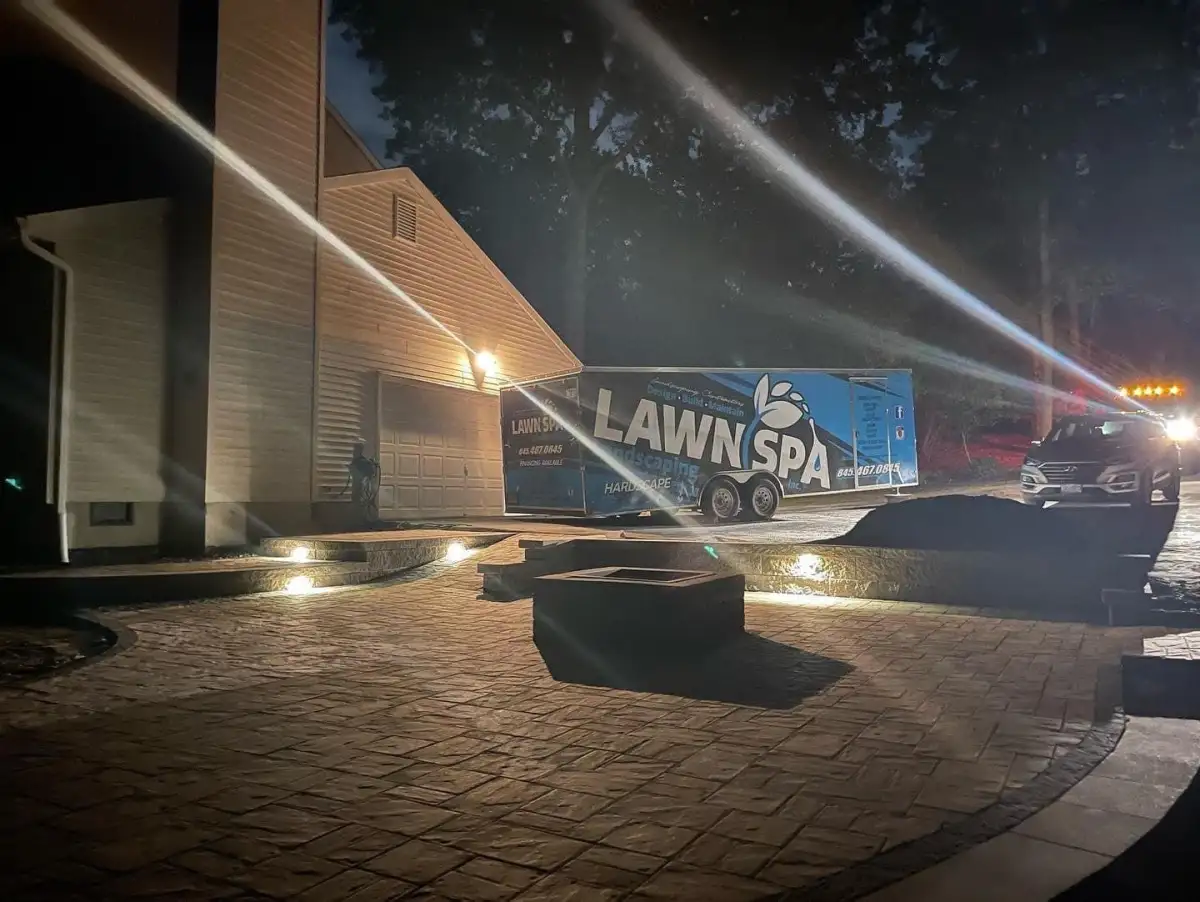
Pavers and Pool Decks in Newburgh, NY
Paver patios, pool decks, walkways, and outdoor living surfaces built with drainage, base preparation, comfortable circulation, and Hudson Valley weather in mind.
Planning a Paver Surface Around Water, Access, and Use
Patio installation in the Newburgh and Hudson Valley area typically costs $15 to $30 per square foot for interlocking concrete pavers and $25 to $50 per square foot for natural stone. A standard 300-square-foot patio runs $4,500 to $9,000 for pavers or $7,500 to $15,000 for natural stone, fully installed with excavation, base preparation, and polymeric sand.
The timeline for most residential patio projects is 3 to 5 working days from excavation to final cleanup. Larger projects involving multiple levels, integrated seating walls, fire pits, or outdoor kitchen islands may take 7 to 14 days. We schedule patio installations from March through November, with spring and early summer being the most popular booking periods in the Hudson Valley.
What distinguishes a patio that lasts 25 years from one that settles and shifts within 3 years is the base preparation. Orange County's clay soil expands when wet and contracts when dry, and it heaves during freeze-thaw cycles. We excavate a minimum of 8 inches below finished grade, install geotextile fabric to separate the clay subgrade from the aggregate base, compact crushed stone in 2-inch lifts to 95 percent density, and screed a 1-inch sand setting bed before laying any pavers. This preparation is not optional in this climate.
Interlocking Pavers for Everyday Outdoor Living
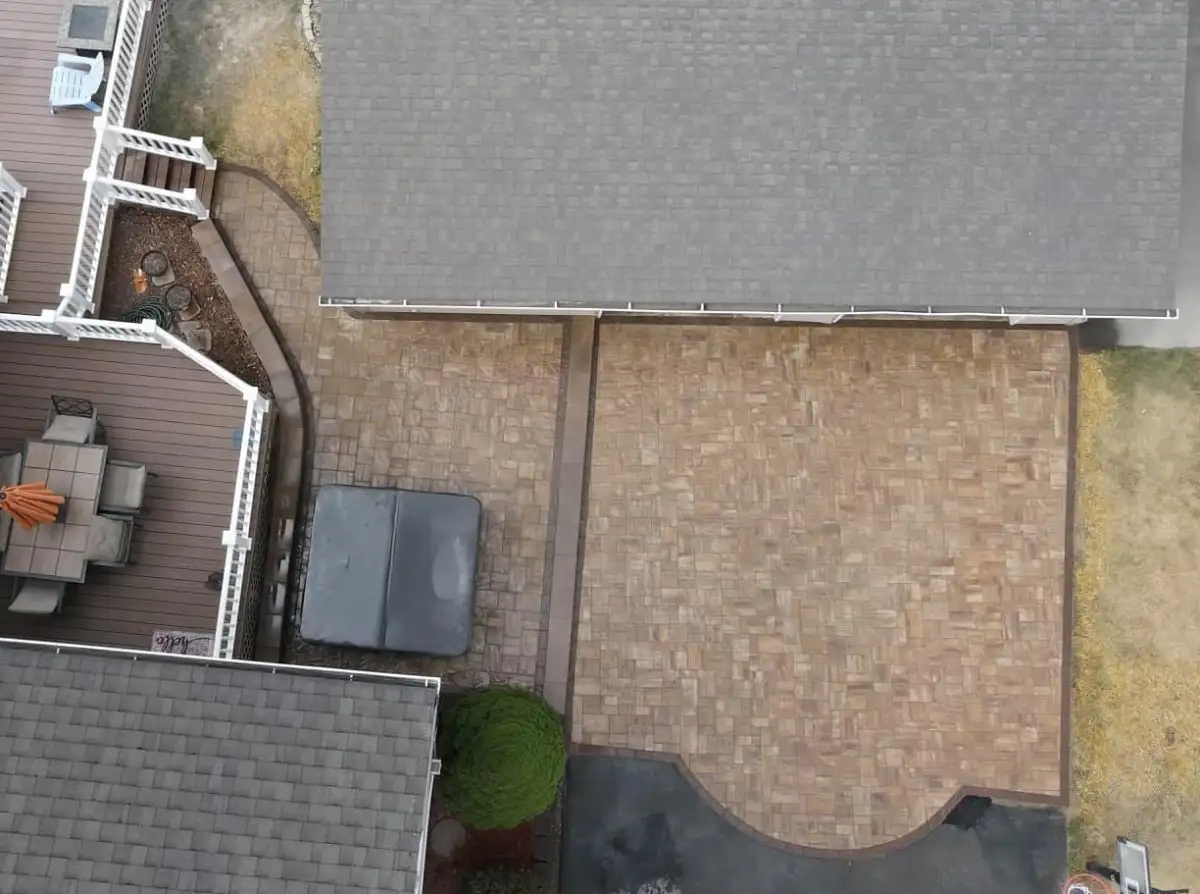
Interlocking concrete pavers are the most popular patio material in the Hudson Valley for good reason. They resist freeze-thaw cracking, offer dozens of color and pattern options, and allow individual unit replacement if ever damaged. Our paver installation process uses only products rated at 8,000+ PSI compressive strength with ASTM C936 freeze-thaw certification.
Popular paver patterns for Hudson Valley patios include herringbone (strongest for driveways and high-traffic areas), running bond (clean modern look), basketweave (traditional appeal), and random ashlar (mimics natural stone at a lower price). We help you select the pattern, color, and border treatment that complements your home and landscape during a free design consultation.
- Cambridge, Nicolock, and Belgard paver brands
- Herringbone, running bond, basketweave, and ashlar patterns
- Custom color blending and border accents
- Integrated steps, seating walls, and fire features
- Proper base for Orange County clay soil
Natural Materials for Poolside and Patio Spaces
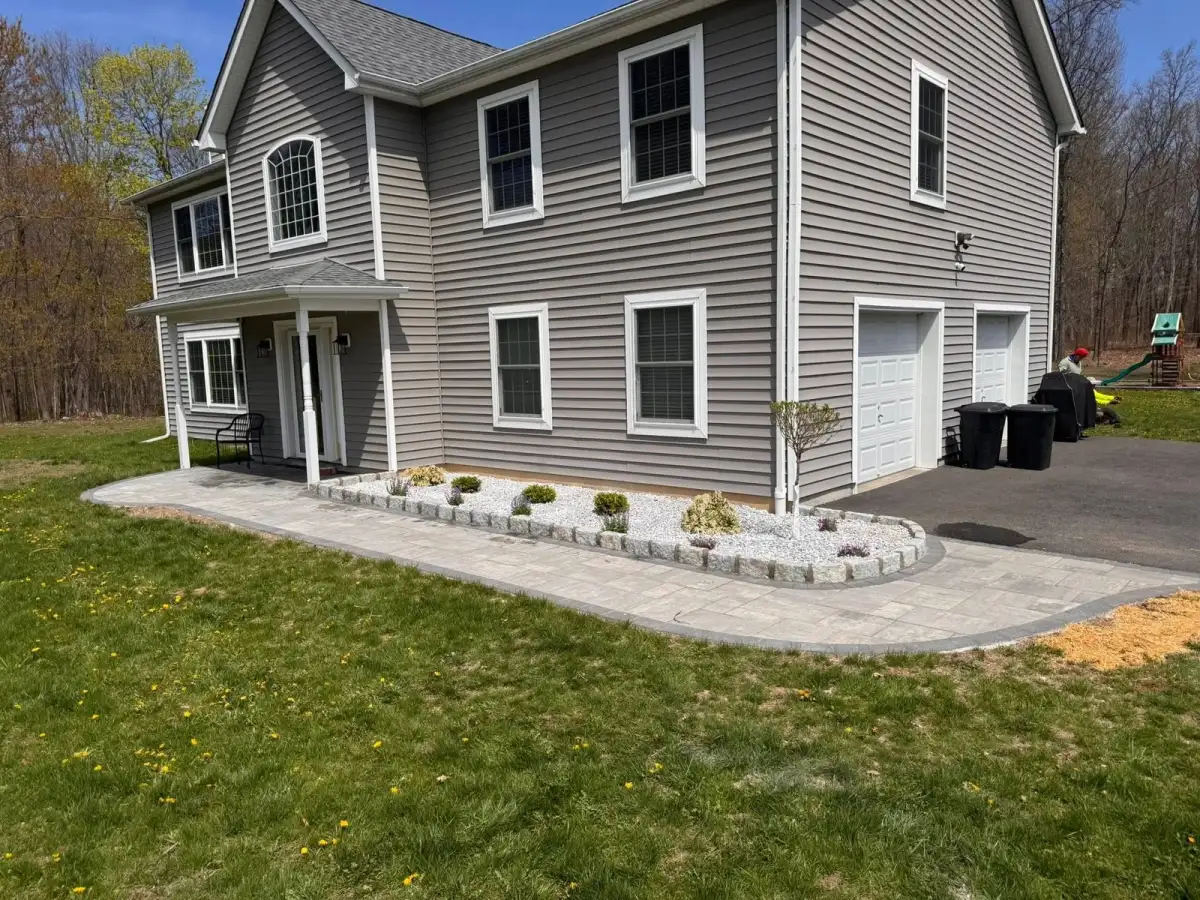
Natural stone patios offer an unmatched organic beauty that improves with age. Hudson Valley bluestone, one of the region's signature building materials, produces a patio surface with natural color variation in blues, grays, and earth tones that complements both historic and contemporary architecture. Each piece is unique, creating a surface that manufactured products cannot replicate.
We also install flagstone, granite, and travertine patios for homeowners who want a specific aesthetic. Natural stone requires hand-setting each piece and careful leveling, which takes more time than manufactured pavers but produces a finished surface with authentic character and lasting value.
- Hudson Valley bluestone -- the regional signature stone
- Flagstone, granite, limestone, and travertine options
- Full-range thickness for natural-edge installations
- Cut-to-size for geometric, contemporary designs
- Dry-laid or mortar-set methods available
Poolside Pavers Need Drainage, Safety, and Comfortable Circulation
Pavers around a pool or patio have to manage water, bare feet, furniture, traffic flow, and the transition to lawn or planting areas. Lawn Spa reviews coping height, splash zones, gate access, sun exposure, furniture clearances, deck drains, and the way people will move through the space.
A strong pool deck scope should define base preparation, pitch away from the pool and structures, edge restraint, joint material, step or wall tie-ins, equipment access, and restoration around the work area. Slip resistance and comfortable circulation are just as important as color and pattern.
When the pool, patio, lighting, fencing, and planting are coordinated together, the finished area feels intentional and avoids rework. Drainage, sleeves, gates, and bed edges can be placed before the surface is locked in.
For a pool deck or patio estimate, share pool type, coping condition, desired deck size, furniture plans, drainage concerns, gate locations, and photos showing how the project connects to the house and yard.