
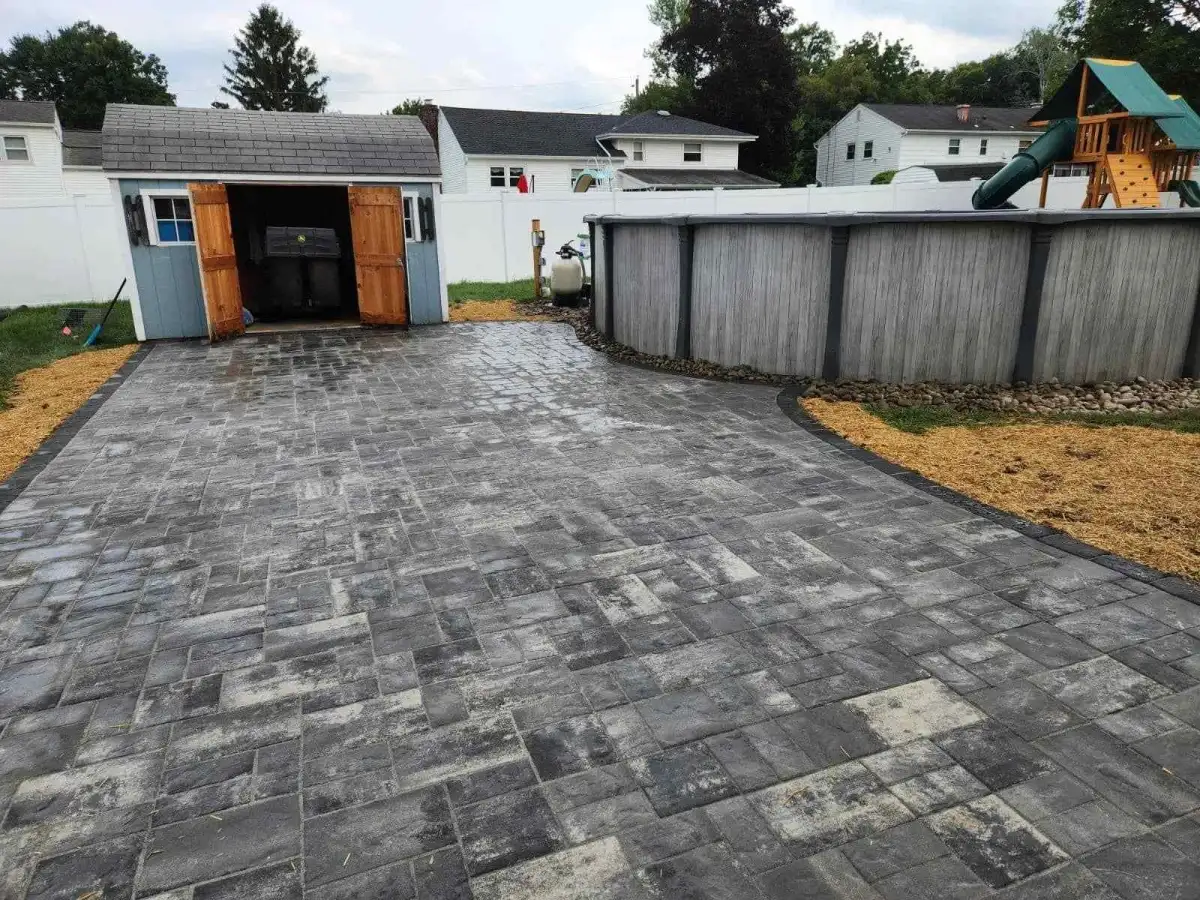
If you are comparing paver contractors in Newburgh, the smartest questions are not only about color and pattern. The bigger issues are base depth, drainage, access, materials, and whether the estimate covers the full build from excavation to final joint stabilization. That matters here because the Hudson Valley sees wet springs, hot summers, and winter freeze-thaw cycles that expose shortcuts quickly.
Before booking a patio, walkway, driveway, or pool deck in Newburgh, New Windsor, or a nearby Orange County community, consider the conditions that shape a reliable paver installation: existing grade, soil, water movement, equipment access, material fit, and the way the new surface will connect to the rest of the property.
How Much Should I Budget for Pavers in Newburgh?
For many patio projects in the Newburgh and Hudson Valley area, paver installation commonly falls in the $15 to $30 per square foot range. That type of range usually assumes standard interlocking concrete pavers, workable access, normal excavation, proper base preparation, edge restraints, and polymeric sand. A straightforward 300-square-foot patio may land between $4,500 and $9,000, while larger patios, pool decks, driveways, walls, steps, or premium natural stone can move well above that range.
Square footage is only part of the estimate. A smaller patio with difficult backyard access, poor drainage, or a steep grade can cost more per square foot than a larger open area near the driveway. Newburgh properties also vary a lot from one neighborhood to the next. Some yards are flat and simple to reach. Others need extra excavation, soil removal, drainage correction, or a retaining edge before pavers can be installed properly.
What Is Included in a Proper Paver Estimate?
A useful paver estimate should explain more than the finished surface. Ask whether excavation, base stone, compaction, geotextile fabric where needed, bedding layer, pavers, edge restraints, joint sand, cleanup, and disposal are included. For patios and walkways, the base is often the most important part of the job because it controls movement, drainage, and long-term stability.
Lawn Spa handles the full scope on paver and hardscaping work: excavation, grading, drainage planning, base installation, paver laying, edge restraints, and joint stabilization. That full-scope approach keeps the project from becoming a handoff between separate contractors who may not be solving the same site problem.
How Deep Should the Base Be?
Base depth depends on the use of the surface. A walkway is not built the same way as a driveway. A patio that supports furniture and foot traffic does not need the same base as a vehicle area, but it still needs enough compacted crushed stone to stay stable through winter. In many Hudson Valley patio applications, a compacted stone base around 6 inches is common, with heavier-duty paver driveways requiring more.
The exact base should be decided after seeing the site. Clay-heavy soil, wet areas, slopes, and places near foundations can change the recommendation. If a contractor gives a price without discussing base preparation, that is a warning sign. Pavers can look finished on day one and still fail if the base is thin, poorly compacted, or pitched toward the house.
Do I Need Drainage Before Pavers?
Drainage should be part of the first conversation, not an add-on after the patio is installed. Paver surfaces need the right pitch so water moves away from the house, steps, pool, and low lawn areas. On some Newburgh properties, a simple slope correction is enough. On others, the project may need a channel drain, French drain, dry well connection, or broader drainage solutions before the paver surface is built.
This is especially important around pool decks and walkways that meet existing concrete, retaining walls, or basement entries. Water trapped in the wrong place can undermine the base, create icy winter surfaces, or push moisture toward the foundation. Good paver design solves the surface and the water path together.
What Pavers Hold Up Best in Hudson Valley Winters?
Newburgh homeowners should look for pavers rated for Northeast freeze-thaw conditions. Interlocking concrete pavers are popular because they can flex with the base more effectively than poured concrete, and individual units can be replaced if one gets damaged. Natural stone and travertine can also be excellent choices when the material fits the use, the finish is appropriate, and the installation method is right for the site.
For pool decks, texture and heat comfort matter as much as appearance. For driveways, thickness and base structure matter more than decorative pattern. For walkways, clean transitions and trip-resistant edges are critical. The best material is the one that matches how the surface will actually be used.
Can Pavers Connect to a Pool, Wall, or Landscape Plan?
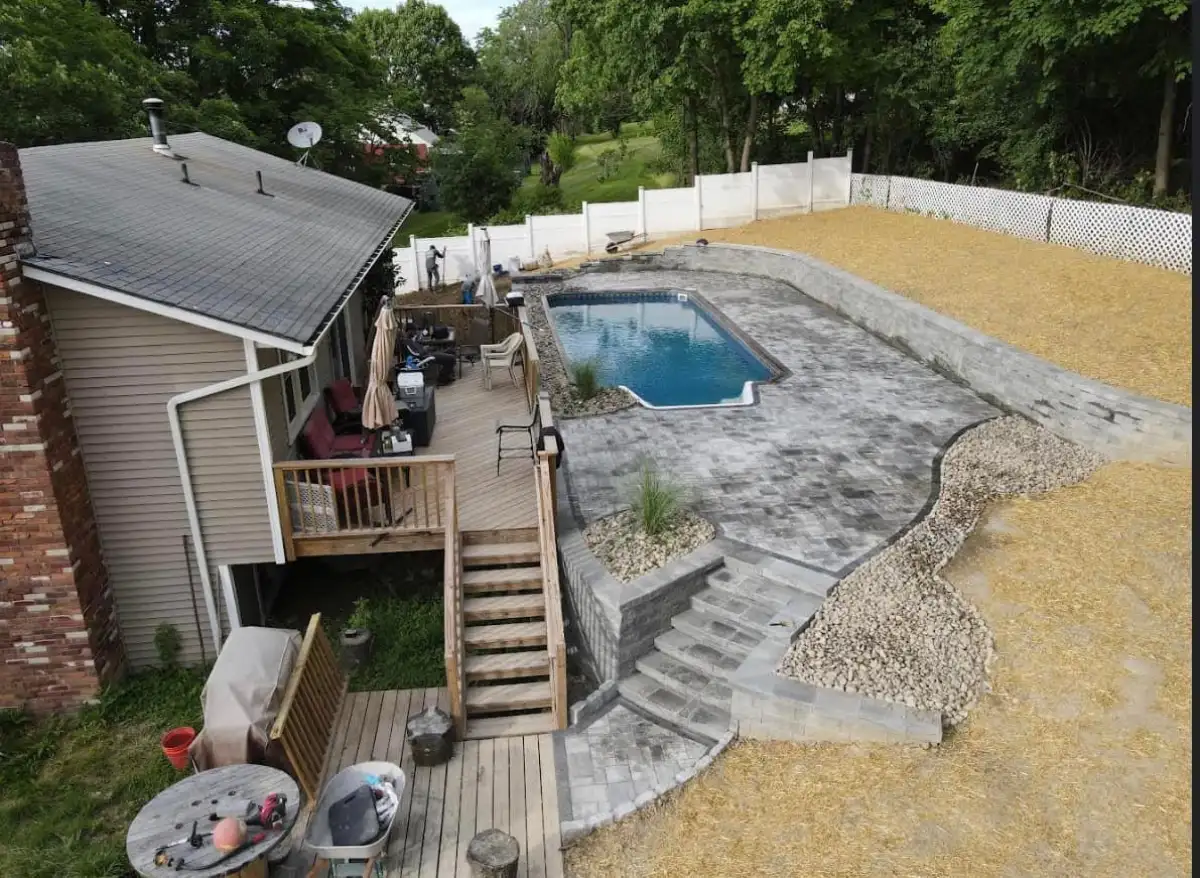
Yes, and planning those connections early usually leads to a better project. Lawn Spa installs pavers as part of patios, walkways, retaining wall areas, and pool projects. If you are considering a future pool, outdoor kitchen, landscape lighting, or new planting beds, bring that up during the paver estimate. The layout, conduit planning, drainage, and elevations may change if the patio is only phase one.
Paver projects are often the organizing piece for a backyard because the surface controls how people move through the space. A patio can connect the house to a grill area. A walkway can make a side yard easier to maintain. A pool deck can tie the pool shell, steps, fencing, planting beds, and lawn together. Early planning helps avoid tearing up finished work later.
What Should I Have Ready Before Requesting an Estimate?
You do not need a finished design before calling, but a few details help the estimate move faster. Think about how you want to use the space, the approximate size, whether you prefer concrete pavers or natural stone, where water currently collects, and whether equipment can reach the area. Photos are helpful, especially after rain, because they show drainage patterns that may not be visible on a dry day.
If you want a patio ready for summer or a pool deck completed before the main swim season in Newburgh, request an estimate early. Spring and early summer schedules fill quickly across Orange County.
Questions to Ask Before Booking
- How will the patio or walkway pitch water away from the home?
- What base depth and stone material will be used for this specific surface?
- Are edge restraints and polymeric sand included?
- Will the estimate cover excavation, disposal, grading, and cleanup?
- Can the selected paver handle freeze-thaw cycles and the intended use?
- Does the layout allow for future lighting, pool work, walls, or planting beds?
Ready to Compare Options?
If you are planning pavers in Newburgh, Lawn Spa Landscaping Inc. can evaluate the site, explain the practical options, and provide a clear estimate. Explore paver installation options, request a free estimate, or call (845) 467-0845.
FAQ: Newburgh Paver Projects
Many standard paver patio projects in the Newburgh and Hudson Valley area fall around $15 to $30 per square foot, but final pricing depends on size, access, base needs, drainage, material, and pattern complexity.
Interlocking pavers can perform very well in freeze-thaw conditions because individual units move with the base and can be replaced if damaged. Performance still depends on proper excavation, compacted stone base, edge restraints, and drainage.
Yes. If water collects near the proposed patio, walkway, pool deck, or foundation, drainage should be addressed before the paver surface is built. Otherwise the base can settle and winter ice can become a recurring problem.
Use the contact form or call (845) 467-0845. Include your project type, address, rough size, timing goals, and any photos that show the area or drainage concerns.