
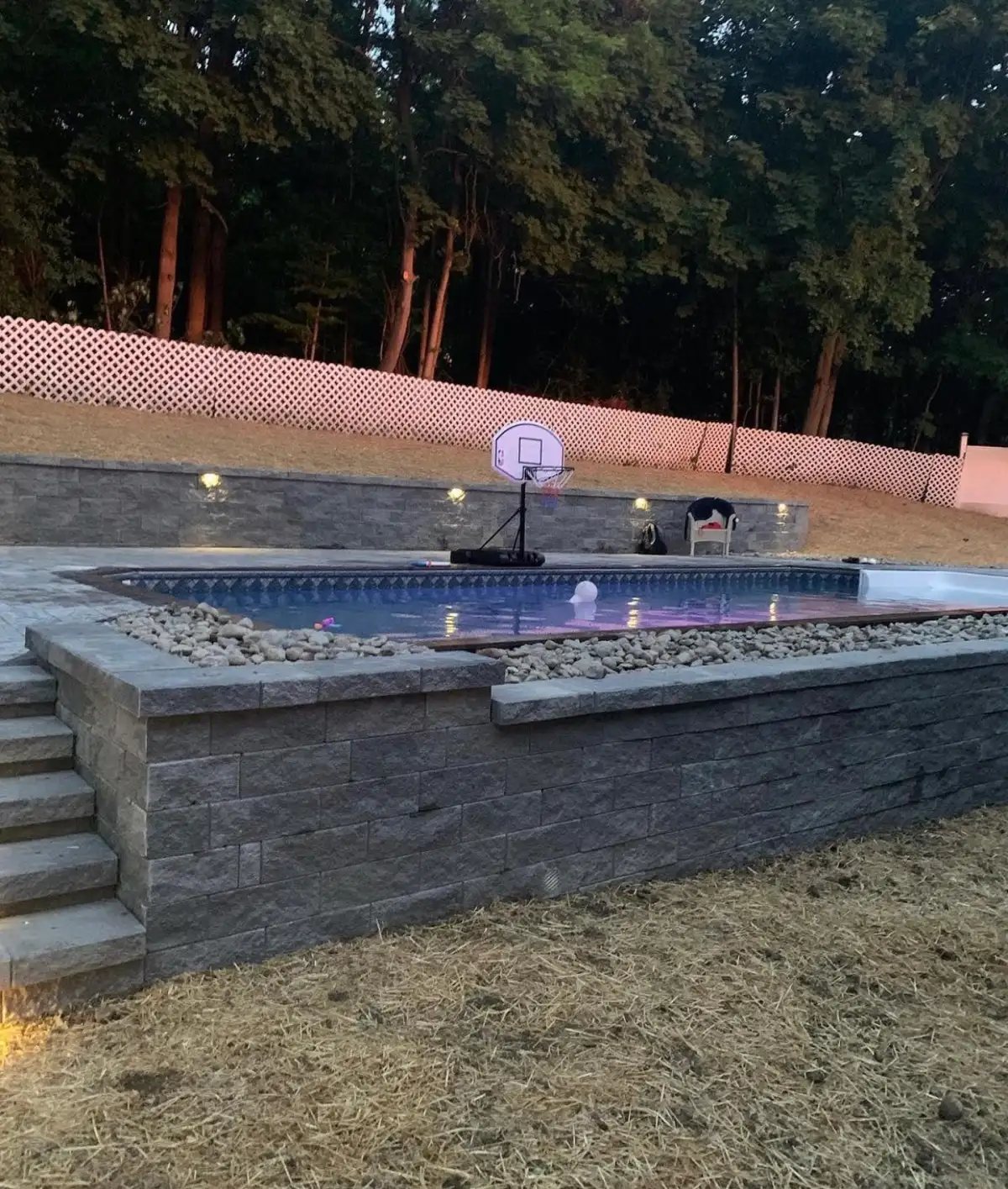
Retaining Wall Construction in Newburgh, NY
Structural retaining walls that stabilize slopes, prevent erosion, and create usable outdoor space. Engineered drainage behind every wall. Built for Orange County clay soil and Hudson Valley freeze-thaw cycles.
Retaining Wall Costs, Materials & Engineering
Retaining walls in the Newburgh and Hudson Valley area typically cost $20 to $45 per square face foot, depending on the wall material, height, and site conditions. A 50-linear-foot wall standing 3 feet tall generally runs $3,000 to $6,750. Walls over 4 feet in height require engineered drainage, geogrid reinforcement, and often a building permit from the Town or City of Newburgh, which adds to the project scope and cost.
The heavy clay soil throughout Orange County is the single biggest factor in retaining wall design. Clay absorbs and holds water, expanding during wet periods and creating hydrostatic pressure behind walls. During winter freeze-thaw cycles, this saturated clay expands even further. Without proper drainage -- perforated pipe wrapped in filter fabric, backed by clean gravel -- that pressure will push even well-built walls forward within a few years. Every retaining wall we build includes this drainage system as standard, not as an add-on.
We build three main types of retaining walls: segmental concrete block (the most cost-effective for walls under 6 feet), natural stone (for a more organic appearance that blends with the Hudson Valley landscape), and boulder walls (for a rugged, natural look on large properties). Each material has specific structural capabilities, and we match the material to your site conditions, aesthetic goals, and budget. For a detailed cost comparison, see our retaining wall cost and permit guide.
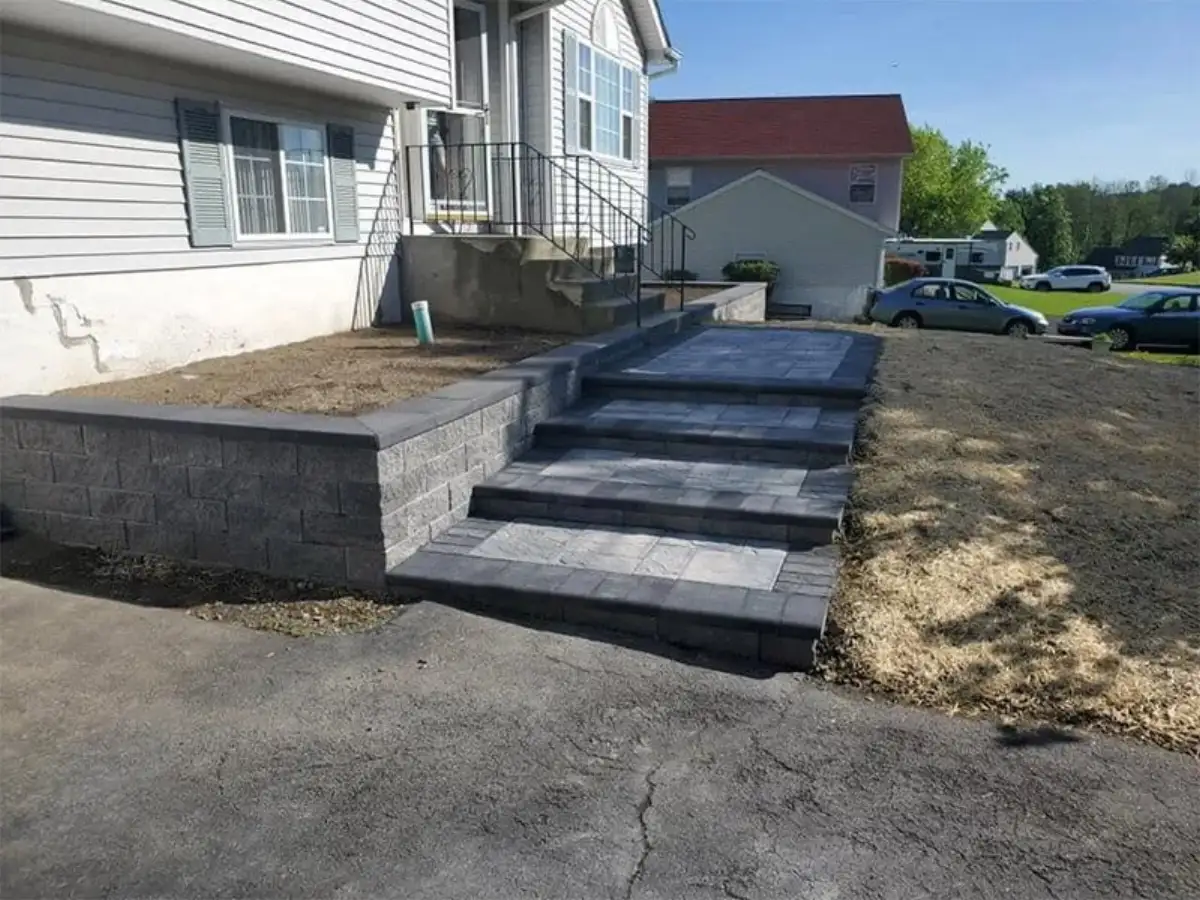
Segmental Block Retaining Walls
Segmental retaining wall blocks are the most versatile and cost-effective solution for residential and commercial properties in the Hudson Valley. These interlocking concrete units stack without mortar, using their own weight and a pin-and-lip system to resist lateral earth pressure. They are available in a range of colors and textures that complement both modern and traditional architecture.
For walls over 4 feet, we install geogrid reinforcement layers at calculated intervals within the backfill zone. This creates a reinforced earth mass that acts as a gravity wall, allowing us to build structurally sound walls up to 12 feet without the cost of a poured concrete stem wall. Proper compaction of each backfill lift is critical, and our crews use plate compactors in 6-inch lifts to achieve the density required for long-term stability.
- Cost-effective for walls under 6 feet
- Geogrid reinforcement for heights up to 12 feet
- Multiple color and texture options
- Integrated cap stones for a finished top edge
- Compatible with built-in stairways and planters
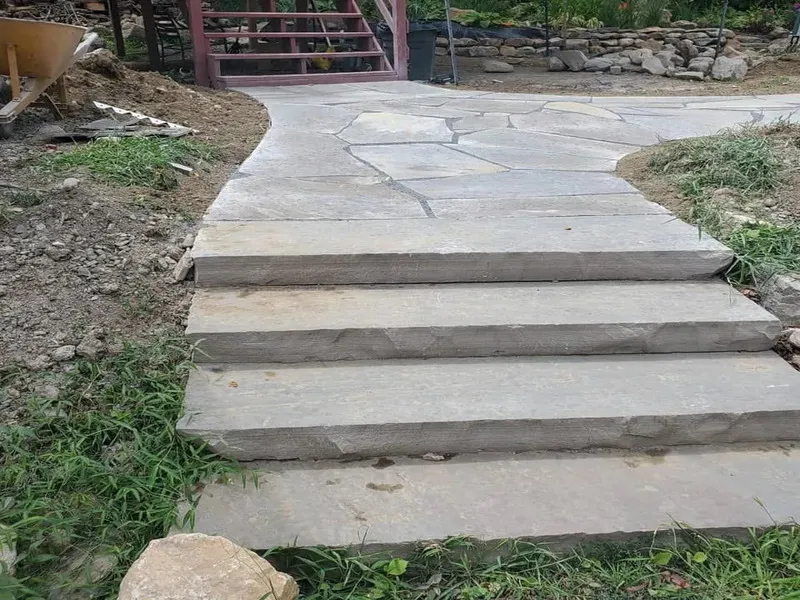
Stone & Boulder Retaining Walls
Natural stone retaining walls use locally quarried fieldstone, bluestone, or granite to create walls that look like they have been part of the landscape for generations. In the Hudson Valley, where stone walls line nearly every country road and historic property, natural stone is the material that fits most seamlessly into the existing landscape character.
Boulder walls use large individual stones, typically 1 to 3 tons each, placed with an excavator and interlocked by gravity. They work well on large properties where a more dramatic, natural appearance is desired. The weight of each boulder provides the structural resistance needed to hold back soil, and the irregular surfaces allow plants and moss to grow between stones over time.
- Locally quarried fieldstone, bluestone, and granite
- Hand-stacked or machine-placed depending on stone size
- Ages naturally and blends with Hudson Valley landscape
- Boulder walls for large-scale slope stabilization
- Dry-laid or mortared construction methods
When You Need a Retaining Wall
Retaining walls solve specific grading and erosion problems. Here are the most common situations where Newburgh and Hudson Valley homeowners need one:
- Hillside erosion control -- Properties sloping toward the Hudson River or its tributaries lose topsoil with every heavy rain. A retaining wall stops that erosion permanently and creates flat, usable terraces.
- Foundation protection -- Soil pushing against your home's foundation wall causes cracking, water infiltration, and structural damage. A retaining wall uphill from your foundation redirects soil pressure away from the structure.
- Creating usable yard space -- Steep yards are unusable for patios, play areas, or gardens. Terraced retaining walls carve flat platforms out of slopes, dramatically increasing your functional outdoor space.
- Driveway support -- Driveways cut into hillsides need structural support on one or both sides. Retaining walls hold back the earth and prevent the driveway edge from crumbling and collapsing.
- Raised planting beds -- Decorative retaining walls 2 to 3 feet tall create elevated garden beds that improve drainage, reduce bending, and add visual depth to flat landscapes.
Retaining Wall FAQ
In the Town and City of Newburgh, retaining walls over 4 feet in height (measured from the bottom of the footing to the top of the wall) typically require a building permit. Walls near property lines, within setback zones, or in flood-prone areas may also need review. We handle the permit process for every project that requires one, including site plans and structural calculations.
A properly engineered and installed retaining wall lasts 50 to 100 years. The most common cause of premature failure is inadequate drainage, which allows hydrostatic pressure to build behind the wall. Every wall we build includes perforated drain pipe, filter fabric, and clean gravel backfill to prevent this issue. Regular inspection every few years to check for minor settling or joint separation is all the maintenance required.
It depends on the severity. Minor leaning in a segmental block wall can sometimes be corrected by disassembling the top courses, improving drainage, and rebuilding. Walls that have shifted significantly or have compromised footings usually need to be removed and rebuilt correctly. We assess the root cause -- typically poor drainage, insufficient base, or inadequate reinforcement -- before recommending repair or replacement.
Get a Free Retaining Wall Estimate
From erosion control to terraced outdoor living spaces, we design and build retaining walls that last. Serving Newburgh, New Windsor, Cornwall, and the entire Hudson Valley.