
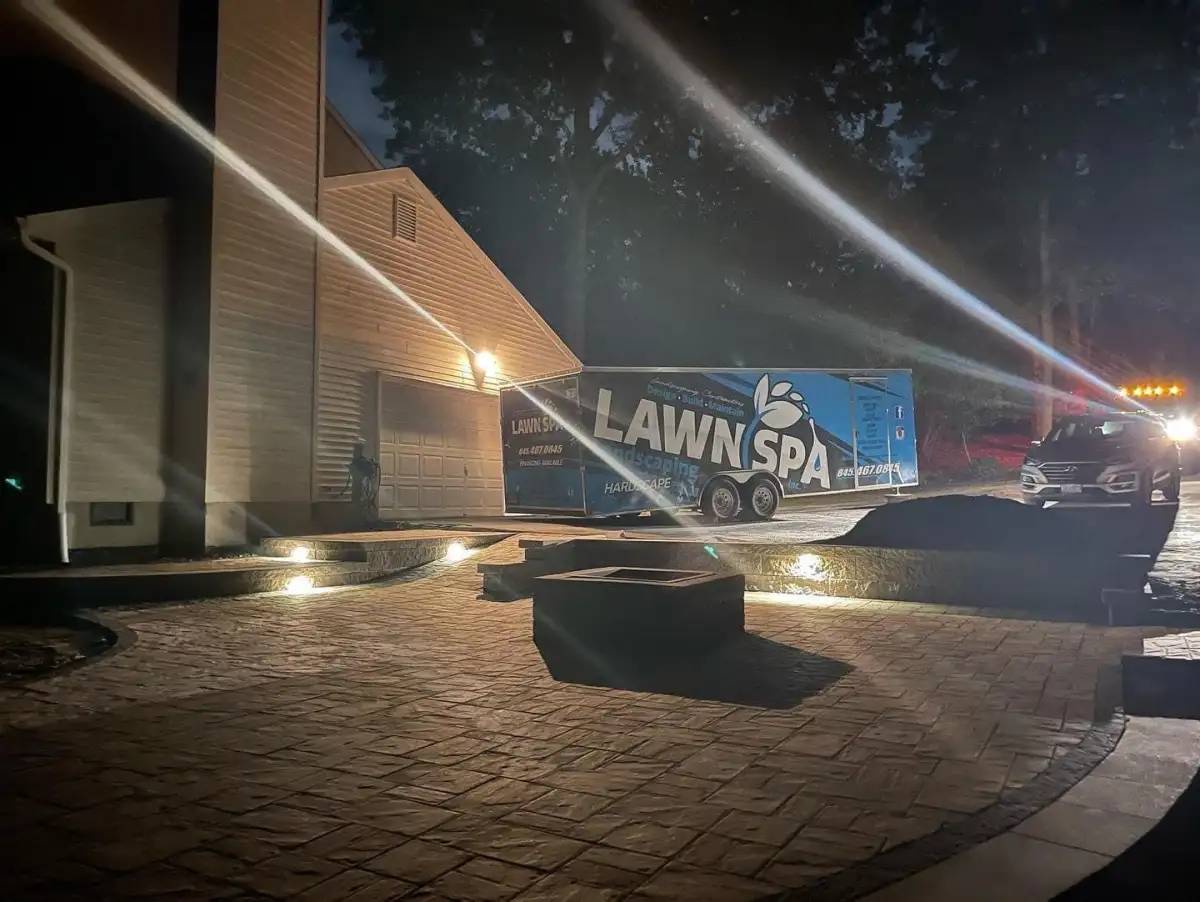
Lawn Spa's current planning range for a standard paver patio in the Hudson Valley is $15 to $30 per square foot installed. At that range, a 300-square-foot patio starts as a $4,500 to $9,000 budgeting exercise—not a final quote. The total can move outside that range when your yard needs demolition, deeper excavation, drainage work, difficult access, retaining walls, steps, premium materials, or detailed cuts and borders.
Square footage gives you a useful starting point, but it does not describe the ground below the patio or everything that must connect to it. For an accurate number in Newburgh or elsewhere in the Hudson Valley, the contractor needs to see the grade, runoff path, access, existing surfaces, nearby foundations, and the elevations where the new patio will meet your lawn, doors, walkways, or pool area.
Paver Patio Cost by Size
The examples below apply Lawn Spa's published $15-to-$30 planning range to three common footprints. They are early budget figures only. A written estimate should price the work your site actually requires.
| Patio Footprint | Area | Planning Range |
|---|---|---|
| Compact patio | 200 sq ft | $3,000–$6,000 |
| Standard patio | 300 sq ft | $4,500–$9,000 |
| 20-by-20 patio | 400 sq ft | $6,000–$12,000 |
A 20-by-20-foot patio is 400 square feet, so the arithmetic is straightforward. The harder question is whether two contractors are pricing the same demolition, excavation, base, drainage, paver, border, edge restraint, joint material, cleanup, and restoration. Compare the scope before you compare the total.
What Changes Hudson Valley Hardscaping Costs?
A patio is one type of hardscaping. Other elements—such as walkways, steps, fire-pit areas, seat walls, and retaining walls—may be priced by a different unit or require different preparation. That is why one square-foot figure cannot reliably price an entire outdoor project.
- Demolition and site preparation. Removing concrete, an old patio, buried debris, roots, or unsuitable soil adds equipment time, disposal, and restoration.
- Excavation and base requirements. The intended use, exposed soil, grade, manufacturer guidance, and local freeze-thaw conditions influence the recommended assembly below the finished surface.
- Access and staging. A wide, level route for equipment is different from a fenced side yard, steep lot, long material carry, or limited delivery area.
- Drainage and finished elevations. Pitch, downspouts, low areas, foundations, and runoff paths need to be considered before the layout is final. If water already collects near the proposed patio, review drainage solutions with the patio plan.
- Materials and layout. Product line, color blend, pattern, borders, curves, inlays, and cuts change material quantities and installation time.
- Connected features. Retaining walls, steps, fire features, seating walls, pool coping, planting areas, and landscape lighting expand the scope beyond the patio surface.
- Cleanup and restoration. Disposal, topsoil, seed, plantings, mulch, and repairs to access routes should be clear in the proposal instead of assumed.
How Material Choice Affects the Estimate
Material affects more than the pallet price. Product dimensions, pattern, edge details, cut waste, delivery, local availability, installation system, and future matching pieces can all change the installed total.
| Material | Why Homeowners Consider It | Cost Questions to Ask |
|---|---|---|
| Concrete pavers | Wide range of shapes, colors, textures, and patterns | Exact product line, border, pattern, delivery, cuts, and replacement availability |
| Brick pavers | Traditional appearance and smaller-format patterns | Product availability, pattern labor, edge details, and color matching |
| Natural stone | Natural variation and a distinct Hudson Valley look | Stone type, thickness, sorting, fitting, cuts, delivery, and installation method |
| Porcelain or travertine | Specialized finishes for patios and pool areas | Application suitability, installation system, edge pieces, slip guidance, and availability |
If your priority is the lowest initial patio cost, ask for a simple rectangular layout using a standard concrete paver, then compare that scope with any higher-finish option. The least expensive product on its own may not create the least expensive completed patio once delivery, waste, cutting, preparation, and access are included.
What Should a Complete Paver Patio Estimate Include?
A useful proposal makes it possible to compare the same work. Look for clear descriptions of:
- the measured footprint, intended use, and surfaces or features being removed;
- excavation, disposal, subgrade evaluation, base materials, bedding, and compaction;
- the exact paver product, color, finish, pattern, border, and allowed substitutions;
- finished elevations, pitch, runoff direction, drainage work, and transitions;
- edge restraint, joint material, steps, walls, lighting, or other connected features;
- equipment access, material staging, property protection, cleanup, and lawn or bed restoration;
- what is excluded and how unexpected site conditions or scope changes will be handled.
For a deeper proposal checklist, read the related guide to paver questions Newburgh homeowners should ask before booking. That article covers base specifications, drainage, product details, maintenance, and contractor comparisons without repeating the pricing examples here.
Is Poured Concrete Cheaper Than Pavers?
A basic poured-concrete slab can have a lower initial price than a detailed paver installation, but a fair comparison uses the same footprint and the same demolition, excavation, base preparation, access, drainage, finish, edges, steps, cleanup, and restoration. Pavers and poured concrete also differ in appearance, repair options, and maintenance, so the lowest starting price is only one part of the decision.
If you are comparing pavers with concrete, ask each proposal to identify the full assembly and finish—not just a unit price. Lawn Spa also offers concrete and masonry, making it possible to discuss which material suits the planned use and site conditions.
Planning a Paver Patio With Lawn Spa
Lawn Spa Landscaping Inc. is a Newburgh-based, licensed and insured hardscaping contractor serving the Hudson Valley. The team plans patios alongside excavation, grading, drainage, retaining walls, masonry, landscape design, and lighting when those services are part of the project. 3D design renderings are available to help you review the proposed layout before installation.
To move from a planning range to a property-specific estimate, call (845) 467-0845 or request a free estimate online. The contact form is the quickest way to share your town, intended patio use, approximate dimensions, access, existing surfaces, and any concerns about slope or drainage.
Common Hudson Valley Patio Budget Questions
A 20-by-20-foot patio is 400 square feet. Using Lawn Spa's current $15-to-$30-per-square-foot planning range for a standard paver patio gives a rough starting range of $6,000 to $12,000. Demolition, access, excavation, drainage, materials, steps, walls, and restoration can change the site-specific estimate.
At the same planning range, 200 square feet works out to about $3,000 to $6,000. Treat that as early budget context rather than a quote because preparation, materials, access, drainage, and added features affect the total.
For a patio, a simple rectangular layout with standard concrete pavers will generally cost less than natural stone, specialty pavers, curves, intricate patterns, steps, or walls. Compare the complete installed scope because the lowest material price may not produce the lowest finished-project cost.
A basic poured-concrete slab can have a lower initial price than a detailed paver installation, but compare the same demolition, excavation, base, drainage, access, finish, edges, steps, and restoration. Appearance, repair options, and maintenance also differ.