
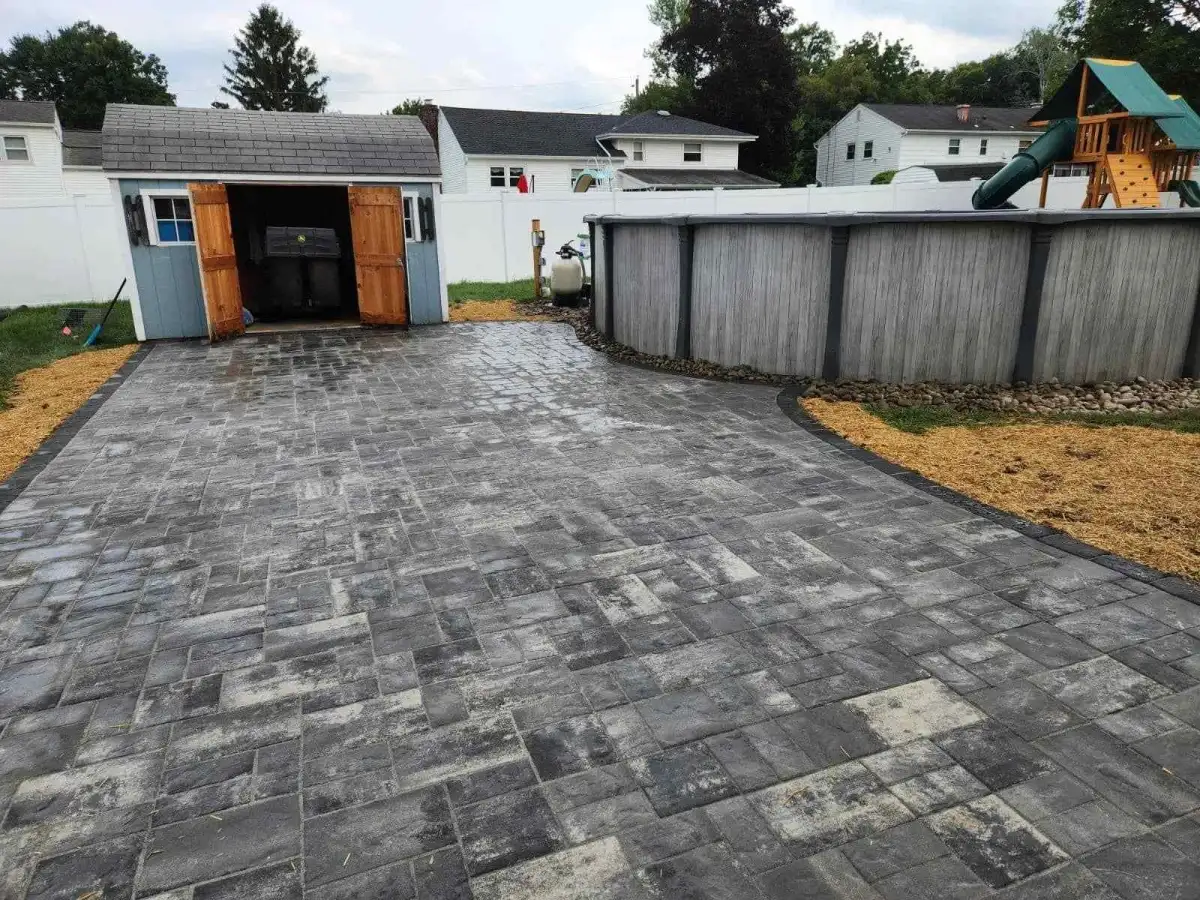
The paver itself is only the visible part of the project. Before booking a patio, walkway, entry, or pool deck, compare how each proposal handles the surface's intended use, the ground beneath it, water movement, edges, transitions, and long-term care.
Those decisions are especially important for Newburgh-area properties, where existing slopes, runoff paths, seasonal freeze-thaw movement, and connections to foundations or driveways can change the scope. Use these questions to compare complete paver installation proposals—not just colors or material prices.
1. Am I comparing the same kind of paver work?
A search for “paving companies” can return asphalt contractors, material suppliers, masons, and landscape hardscape installers. Start by confirming that each company handles the kind of segmental paver project you need. A driveway, pedestrian walk, dining patio, step system, and pool surround do not have identical use or surface requirements.
Give each contractor the same footprint, intended use, adjoining features, and material preferences. That creates a fair starting point for comparing preparation and installation details.
2. What should the written proposal say about the base?
There is no universal answer to “the best base” for every property. The recommendation should account for the exposed subgrade, intended load, selected paver system, manufacturer guidance, compaction, and water movement.
Ask the proposal to identify demolition and excavation, the base aggregate, how it will be placed and compacted, the bedding layer, edge restraint, joint material, and the plan for soft, wet, disturbed, or otherwise unsuitable soil. A single depth number without the rest of the assembly does not explain how the surface will be supported.
3. Where will rainwater go after installation?
The finished elevations and pitch should move water toward an appropriate outlet without directing it against a foundation or creating a new low spot. During a site walk, trace roof discharge, slopes, retaining walls, driveways, lawn areas, pool coping, and nearby surfaces.
The City of Newburgh's stormwater information is a useful reminder that runoff is a property-planning issue, not merely a cosmetic detail. If water already collects around the proposed area, ask whether the work should be coordinated with drainage solutions before the layout is finalized.
4. Is there a best paver manufacturer?
No manufacturer or product line is automatically best for every application. Compare products by their intended use, dimensions, thickness, finish, texture, edge profile, freeze-thaw guidance, care instructions, local availability, and written warranty terms.
Put the exact manufacturer, product line, color, finish, pattern, border, and permitted substitutions in the proposal. If future matching pieces may matter, ask about replacement availability rather than assuming a color blend will remain unchanged.
5. Where is the cheapest place to buy pavers?
The lowest displayed unit price may not be the lowest delivered material cost. Compare pallet coverage, order minimums, delivery, lead time, waste allowance, return terms, and the availability of matching pieces.
For installed work, product cost is only one part of the total. Demolition, disposal, excavation, aggregate, equipment, labor, cuts, edges, joints, drainage, cleanup, and restoration can all affect the proposal. Our Hudson Valley paver patio cost guide explains why square footage alone cannot produce a project-specific price.
6. What upkeep should I plan for?
Routine care commonly includes removing debris, cleaning spills promptly, watching joints and edges, and addressing rocking pavers or drainage changes before they spread. Ask what joint material is proposed and what replenishment or repair may involve.
Cleaning products, pressure-washing methods, de-icing products, and sealers should be compatible with the specific paver. Sealing is not one universal requirement; if it is recommended, ask what it is intended to do, when it can be applied, and what preparation and future reapplication involve.
Your before-booking checklist
- Confirm the project type, measured footprint, intended use, and adjoining features.
- Record the exact paver product, pattern, finish, border, and allowed substitutions.
- Review demolition, excavation, subgrade evaluation, base, bedding, compaction, edges, and joints.
- Identify finished elevations, pitch, runoff direction, and drainage responsibilities.
- Clarify access, staging, disposal, property protection, cleanup, and restoration.
- Understand exclusions, change conditions, care guidance, and written warranty terms.
A useful comparison does not require every contractor to recommend the same system. It requires enough detail to understand why the recommendation fits the property and what the price includes. If the project also connects to steps, walls, or other outdoor features, explore Lawn Spa's broader hardscaping services. When you are ready to discuss the property, contact Lawn Spa Landscaping for a project-specific estimate.
Common Questions About Pavers in Newburgh, NY
Compare the total delivered cost of the exact product rather than the advertised unit price. Product line, pallet coverage, delivery, minimum quantities, waste, returns, and future availability all matter. For installed work, material price is only one part of the project total.
There is no universal base specification. The suitable excavation, aggregate, compaction, bedding, and drainage details depend on the exposed subgrade, intended use, selected paver system, manufacturer guidance, and site conditions.
No manufacturer is best for every project. Compare the specific product line for its intended application, dimensions, thickness, finish, texture, freeze-thaw guidance, care instructions, local availability, and written warranty terms.
Give each contractor the same project description and compare written scopes line by line. Confirm the work includes the intended paver application, excavation, base preparation, pitch, drainage, edges, joints, access, cleanup, restoration, and a clear process for changes. Verify current insurance and relevant credentials directly.