
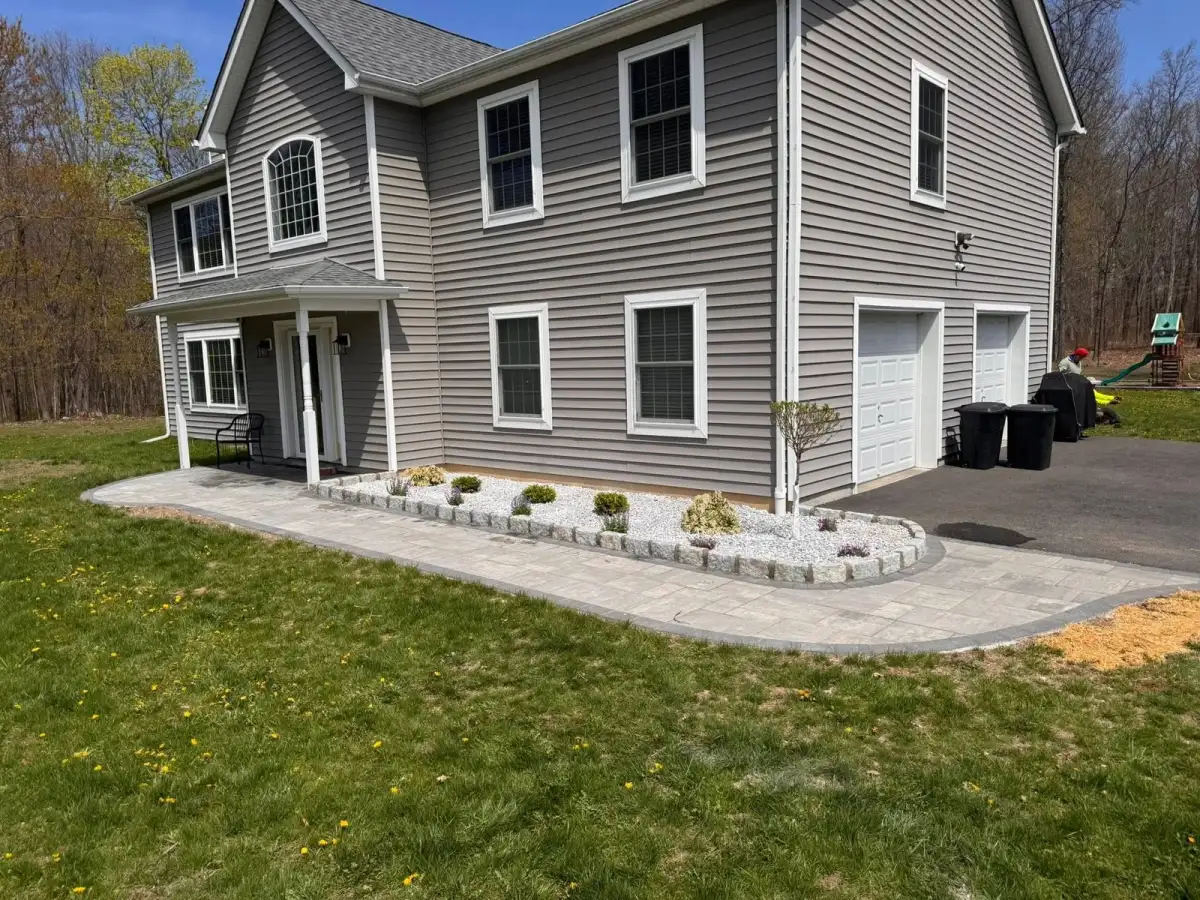
Pavers are one of the most requested ways to upgrade a Newburgh property, but the best questions come before color and pattern selection. Homeowners comparing patios, front walks, driveway edges, and pool decks should ask how the installation will handle the base, drainage, access, freeze-thaw durability, and nearby landscape features. Those details decide whether the finished surface looks good only on day one or continues to perform through Hudson Valley weather.
For Newburgh homeowners, the best paver estimate is built around the real conditions on the property, not only the pattern in a catalog. Lawn Spa installs pavers, hardscaping, pavers and pool decks, drainage, excavation, pool installation, and landscaping throughout Newburgh and nearby Hudson Valley communities, so the paver plan can account for how the new surface connects to the rest of the yard.
Start With How the Paver Area Will Be Used
A paver patio, pool deck, walkway, and vehicle-rated surface do not need the same scope. A backyard patio needs room for furniture, grilling, circulation, and a clean lawn transition. A front walk needs stable footing, predictable snow clearing, and a neat connection to steps or the driveway. A pool deck needs a comfortable texture, splash-zone drainage, coping transitions, and room for lounge furniture. A driveway apron or parking area needs a heavier base and pavers rated for vehicle loads.
Before requesting an estimate, describe how the space will be used during a normal week and during gatherings. If the project may connect later to a pool, retaining wall, outdoor lighting, planting beds, or fencing, include that early. Planning the edges, grades, and future tie-ins now is usually cleaner than cutting into a finished paver surface later.
Ask What Is Included Below the Surface
The visible paver is only the top layer. Long-term performance depends on excavation, soil conditions, geotextile fabric when needed, compacted crushed stone, bedding material, edge restraint, joint material, and final compaction. Newburgh-area properties can include sloped yards, older concrete, clay-heavy soil, fill, tight side-yard access, and drainage patterns that become obvious after a hard storm.
A clear estimate should explain the installation layers, not just the square-foot price. Ask how deep the excavation will be for your specific use, what base material will be installed, how compaction will be handled, and where removed soil or old concrete will go. If two proposals include different base depths or one skips drainage review, they are not the same project even when the surface area is identical.
Compare the Full Installed Scope
Paver pricing around Newburgh changes with more than square footage. A small grill patio with open lawn access, a pool deck with splash-zone grading, and a driveway apron built for vehicle loads all need different preparation. Excavation depth, compacted base stone, paver thickness, borders, cuts, steps, drainage corrections, old concrete removal, staging room, and tight side-yard access should be part of the same conversation as color and pattern.
Ask whether the estimate includes layout planning, cuts, border details, steps or edge transitions, cleanup, disposal, and any grading needed to move water away from the house, garage, pool, or low lawn areas. A patio built over a poor base or pitched toward a structure can become more expensive later than a better-planned installation from the start.
Drainage Questions Should Come Before Pattern Choices
Drainage is one of the biggest differences between a paver project that lasts and one that shifts, puddles, or creates icy spots. Ask where water currently moves during a storm and where it will move after the pavers are installed. Downspouts, basement entries, pool edges, porch steps, low lawn areas, existing concrete, and nearby retaining walls can all affect the finished pitch.
Some paver projects only need corrected grading and a clean tie-in to the lawn. Others may need a channel drain, French drain, dry well connection, downspout adjustment, or broader drainage solution. The point is to answer water movement before the final pattern is approved, especially where pavers meet a home, pool, driveway, or older hardscape.
Choose Materials for Hudson Valley Weather
Newburgh paver projects need materials that can handle Northeast freeze-thaw cycles, winter moisture, summer heat, and routine maintenance. Interlocking concrete pavers are common because they offer pattern flexibility and can be repaired one unit at a time when installed correctly. Natural stone and travertine can be attractive options for some outdoor living areas, but finish, heat comfort, texture, maintenance, and budget should be discussed before booking.
For pool decks, ask about slip resistance, bare-foot comfort, splash water, and coping transitions. For walkways, ask about snow clearing and step heights. For patios, ask about grill traffic, furniture legs, border restraints, and how the paver color will sit against siding, stonework, and plantings.
Use Measurements to Clarify Scope
Good estimate conversations move faster when Lawn Spa can see the whole area. Include photos from several angles, rough dimensions, preferred timing, and notes about access. Show gates, slopes, steps, downspouts, low spots, existing concrete, pool edges, fences, narrow side yards, and where equipment can or cannot enter. If water collects after a storm, photograph the wet area before it dries.
For Newburgh properties, these details help determine whether the project is a straightforward surface installation or whether grading, excavation, drainage, or future phases should be included. Lawn Spa also plans pavers in New Windsor, NY around access, grade, drainage, and pool-deck connections.
Questions to Ask Before Booking
- What base depth and paver profile are recommended for this patio, walkway, pool deck, or vehicle area?
- Will compacted crushed stone, edge restraints, polymeric sand, cuts, cleanup, and disposal be included?
- How will the finished surface pitch water away from the house, pool, garage, steps, and low lawn areas?
- Does the selected paver handle Hudson Valley freeze-thaw exposure and the way the space will be used?
- Should conduit, lighting, walls, fencing, planting beds, or future pool work be planned before installation?
- What access limits, staging needs, old concrete removal, or soil conditions could affect the estimate?
Book With the Full Scope in Mind
A strong paver estimate answers more than color, pattern, and square footage. It explains how the surface will be built, how water will move, what site conditions matter, and how the new hardscape connects to the rest of the property. That is especially important in Newburgh, where grade, older hardscape, pool plans, and drainage can all shape the finished result.
Explore paver installation, confirm service in Newburgh, or request a free estimate. You can also call (845) 467-0845 with photos, dimensions, timing goals, and notes about drainage or access.
FAQ: Newburgh Paver Booking
Ask how the installer will prepare the site: excavation, compacted stone base, edge restraints, drainage pitch, joint material, cleanup, material rating, access needs, and future connections to pools, walls, lighting, or landscaping.
Installed cost depends on area size, excavation depth, base material, paver type, edging, demolition, drainage, access, and whether the surface needs to handle pool traffic or vehicle loads. A reliable proposal should describe the preparation below the finished surface as clearly as the visible paver material.
Drainage protects the paver base and helps reduce settlement, puddling, and winter icing. Grade, pitch, downspouts, nearby structures, low lawn areas, and existing water problems should be reviewed before the layout is approved.
Yes. When pavers may connect to a pool, retaining wall, fence, lighting, planting bed, or drainage improvement, those tie-ins should be discussed early so grades, edges, conduit paths, and access routes are planned together.