
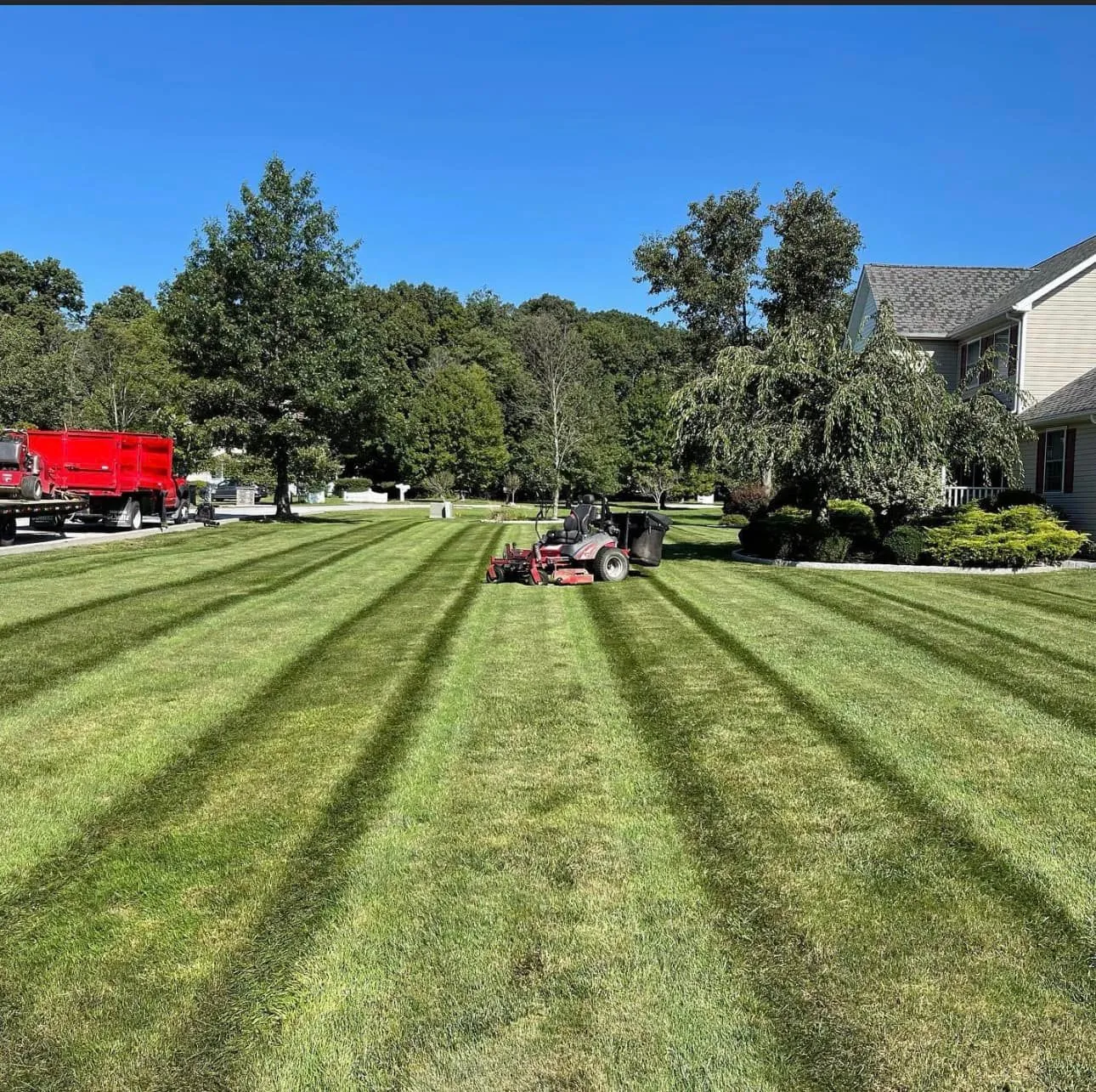
Residential Lawn Management in Newburgh, NY
Routine mowing, clean edging, seasonal cleanup, turf repair, aeration, overseeding, and landscape maintenance coordinated around the way Hudson Valley lawns grow, thin out, and recover through the year.
Keeping the Yard Clean Between Bigger Projects
Residential lawn management is the recurring care that keeps a property presentable after the hardscaping, plantings, patios, pool areas, and drainage work are complete. For Newburgh and Hudson Valley homeowners, that usually means a practical mix of mowing, trimming, edging, seasonal cleanup, turf repair, soil improvement, and bed maintenance rather than a one-size treatment calendar.
Orange County lawns usually rely on cool-season grass blends that grow heavily in spring, slow during hot summer weeks, and recover again in fall. Lawn Spa adjusts service around those cycles, watching for compaction, low spots, shaded turf, heavy leaf cover, plow damage, and thin areas where seed or hydroseeding may be needed before routine mowing can deliver a finished look.
The right program depends on lot size, property access, slope, drainage, irrigation, shade, pet traffic, and how formal the homeowner wants the landscape to feel. A yard around a pool deck or paver patio needs different detail work than a large open lawn, and a shaded property near mature trees needs a different recovery plan than a sunny new-construction lawn.
Clean Mowing, Edging, and Seasonal Care
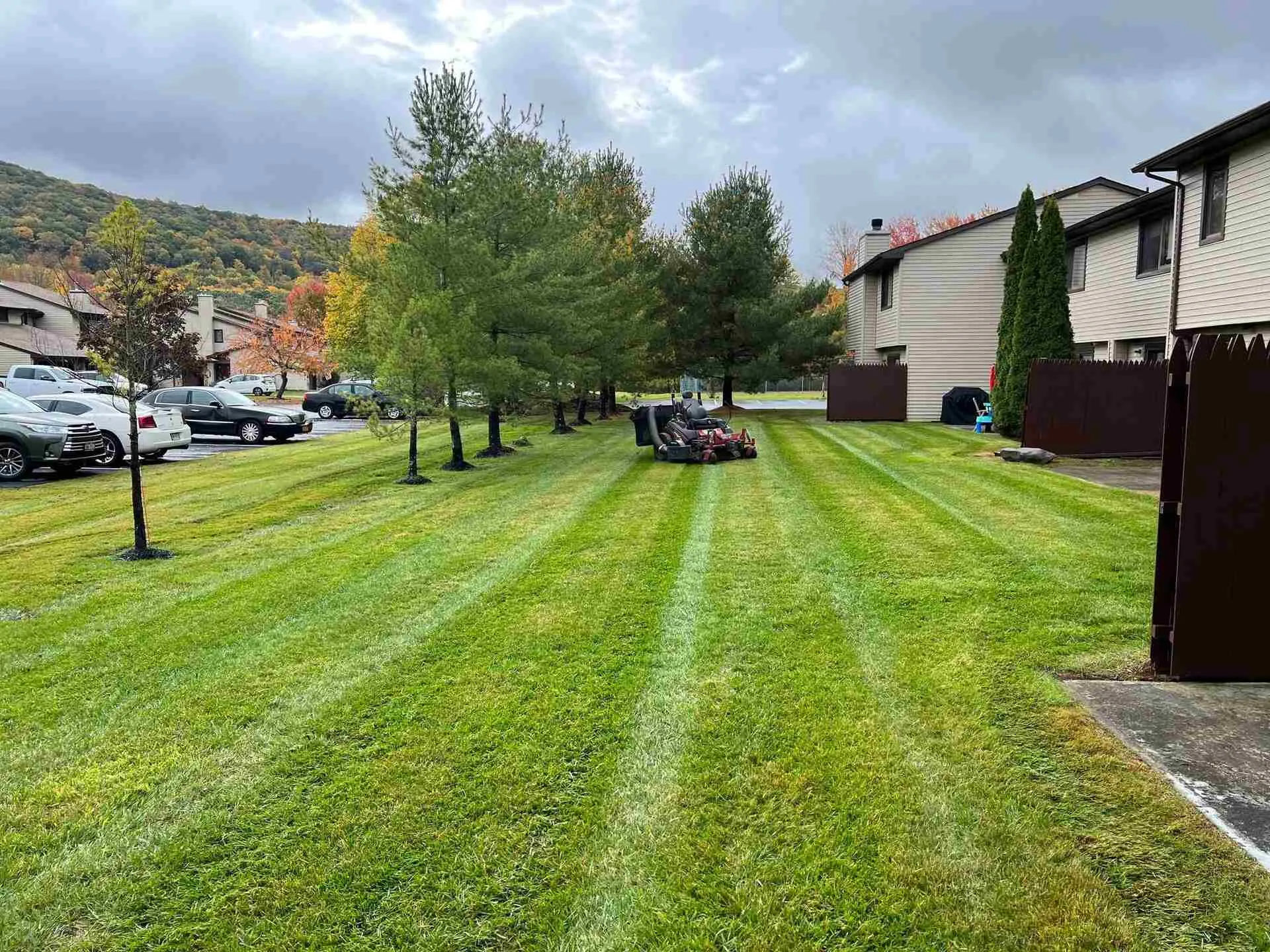
The weekly look of a property comes from consistent cutting height, clean trimming around beds and walkways, and edges that keep the lawn from creeping into patios, paver borders, driveways, and planting areas. Lawn Spa builds recurring service around the parts of the yard homeowners see every day.
- Regular mowing with height adjusted for seasonal growth and summer stress
- String trimming around fences, beds, trees, retaining walls, and pool areas
- Defined edges along driveways, patios, walkways, and hardscape borders
- Spring and fall cleanup for leaves, storm debris, dead growth, and bed refreshes
- Landscape coordination when mowing needs to work around mulch, planting, drainage, or hardscape work
Turf Repair for Thin, Wet, or Compacted Lawns
Many residential lawns look weak because the underlying issue has not been corrected. Compacted soil, standing water, low spots, poor topsoil, shade, and construction traffic can all limit turf growth even when mowing is consistent.
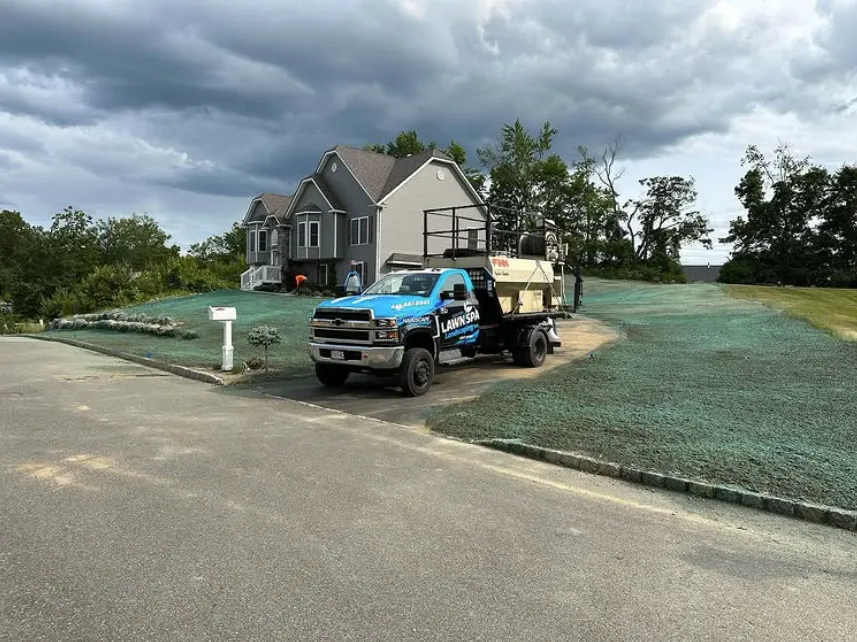
Lawn Spa can recommend aeration, overseeding, topsoil, hydroseeding, grading, or drainage improvements depending on what the lawn needs first. Fall is often the best time for recovery work because soil is still warm, weed pressure is lower, and new seed has time to establish before winter.
- Core aeration with commercial drum aerator
- Premium seed blend selected for Orange County conditions
- Starter fertilizer to accelerate germination
- Best results in September through early October
- Pairs with hydroseeding for bare areas
Turf Care Built Around Hudson Valley Conditions
Residential lawns in Newburgh and the surrounding Hudson Valley deal with a hard seasonal cycle: fast spring growth, humid summer stress, fall recovery, leaf cover, snow piles, and freeze-thaw damage near driveways and walkways. Lawn Spa builds lawn care around those conditions instead of treating every property the same.
A strong program may include weekly mowing, string trimming, clean edging, spring cleanup, fertilization, weed control, soil repair, seeding, hydroseeding, fall aeration, and targeted restoration after construction or winter plow damage. The right schedule depends on current turf density, shade, slope, irrigation, drainage, pet traffic, and how much finish you want around patios, pool areas, beds, and walkways.
Many lawns decline because compaction, standing water, low soil pH, or heavy shade is ignored. Lawn Spa separates routine maintenance from repairs that should happen before seed, topsoil, or recurring service is added, which helps homeowners spend money in the right order.
For a residential lawn estimate, tell us whether you need ongoing mowing, turf improvement, seasonal cleanup, or recovery after another outdoor project. Photos of thin spots, wet areas, slopes, and property access help the first conversation move faster.