
Most snow disputes are not about bad plowing. They are about a contract that never said what was supposed to happen. Was the sidewalk included? Should the crew have come out for two inches? Who pays for the curb the plow clipped? If the answers are not written down, every storm becomes a negotiation.
A good commercial snow removal contract answers those questions in plain language before winter starts. It does not have to be long. It has to be specific about your property.
How commercial snow removal contracts are priced
Contractors usually price commercial snow work one of three ways. A seasonal contract is one rate for the winter. Per-push or per-event pricing charges each time a crew services the site. Some contracts mix the two, with a seasonal base and extra charges past a certain number of storms or inches.
Seasonal pricing lets you budget the winter up front. Per-event pricing tracks the weather, so a light winter costs less and a heavy one costs more. Whatever the format, read the fine print on large storms, ice-only events and hauling snow off site, since that is where surprise charges usually live.
Lawn Spa prices commercial snow removal as a seasonal contract. Each one is set for the specific site: how big it is, how much sidewalk and how many entrances it has, and what the property's RFP (request for proposal) asks for. That is also why a single price posted online would not mean much. Two lots with the same square footage can need very different work.
What a commercial snow contract should spell out
1. A map of what is included
List every surface: parking areas, drive lanes, loading docks, fire lanes, sidewalks, entrances, ramps, stairs and dumpster pads. A marked-up site map attached to the contract settles most arguments before they start. If an area is excluded, say so.
2. When service starts
The trigger depth is the amount of snow that sends crews out, written in inches. Ask what happens with freezing rain or a thin coat of ice when there is no measurable snow, and whether crews come back during a long storm or only once it ends.
3. Salt and ice treatment
Plowing and salting are different services. The contract should say which surfaces get treated, whether treatment happens before, during or after a storm, and whether ice-only visits are included or billed separately.
4. Where the snow goes
Piles take up parking, block sight lines at exits and melt into water that refreezes. Mark pile locations on the map, keep them off drains and away from walkways, and decide in advance what happens when there is no room left.
5. Storm hours and response
Snow does not wait for business hours. Ask whether the contractor plows around the clock during a storm, what the site's priority is when every customer needs service at once, and when lots and walks will be open before your first employees or tenants arrive. Lawn Spa plows 24/7.
6. Service records
You should be able to see when your property was serviced. Ask what gets logged and how you receive it. Lawn Spa logs every site with timestamps and sends property managers monthly reports.
7. Damage and repairs
Plows and loaders work close to curbs, islands, signs, lawn edges and paver walks. The contract should say how damage gets reported, how quickly, and who repairs it. Marker stakes along edges, set while the ground is still visible, prevent a lot of it.
8. Insurance
Ask for a certificate of insurance before the season starts, and check what your own insurer or management company requires of outside contractors.
What to put in a snow removal RFP
An RFP (request for proposal) is the document a property manager or board sends to contractors so every bid prices the same work. The more specific it is, the easier the bids are to compare. A useful snow RFP includes:
- The property address and a site map with every surface marked
- Rough measurements of lots, drive lanes and sidewalks
- Business or occupancy hours, and when the site must be open
- The trigger depth you want, and your expectations for ice
- Which areas get priority, such as entrances, ramps and fire lanes
- Where snow may and may not be piled
- The records and reports you need
- Insurance requirements and the contract dates
If you have problem spots from past winters, like a walkway that ices over from a downspout, put those in too. They change the scope, and a contractor can only price what you tell them about.
How Lawn Spa handles commercial snow contracts
Lawn Spa's snow and ice work is commercial only. We don't plow residential driveways. Our accounts are businesses, HOAs, apartment and townhome communities, and other managed properties in Newburgh, New Windsor, Cornwall and surrounding Orange County.
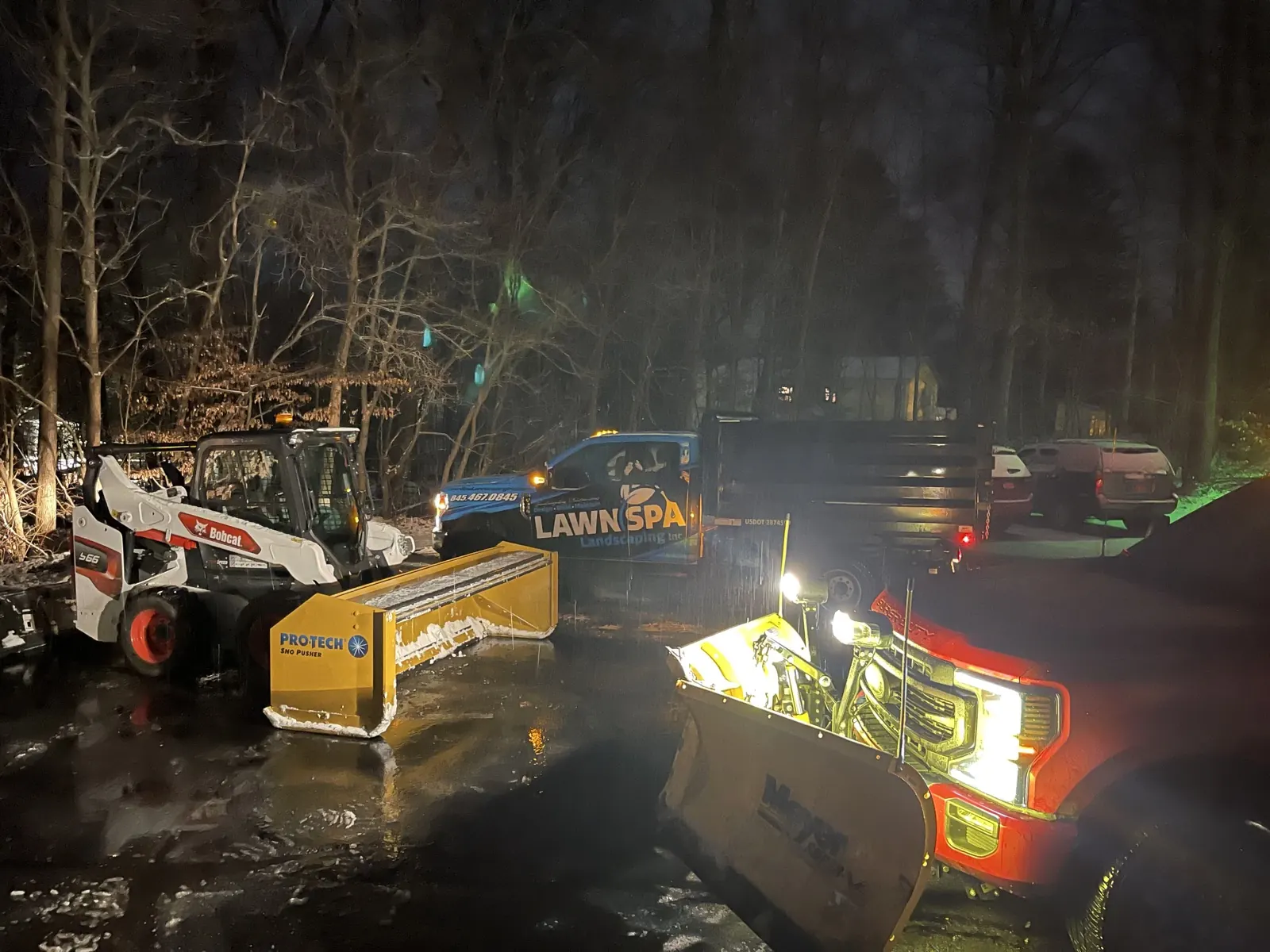
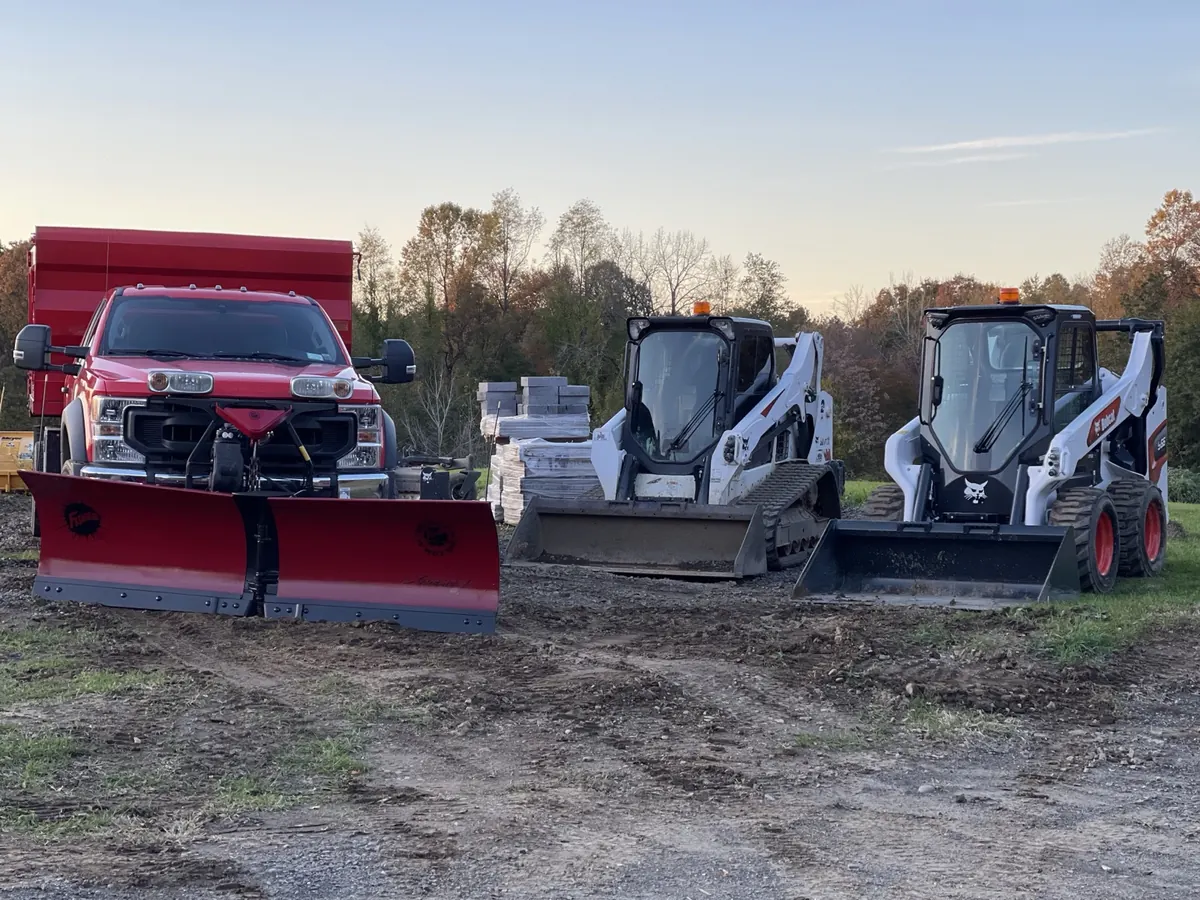
Every contract is a seasonal rate priced to the site and the RFP. We plow 24/7. Every site is logged with timestamps, and property managers get monthly reports. The equipment is our own: plow trucks with V-plows and salt spreaders, Bobcat loaders and a CAT skid steer with containment pushers for bigger lots, and a stand-on sidewalk machine for walks and entrances. See the full commercial snow removal page for photos.
For a proposal, send the site address, your RFP or a description of the surfaces to be cleared, your hours, and any problem areas from past winters. Request a snow proposal or call (845) 467-0845.
Commercial Snow Removal Contract Questions
Most are seasonal contracts, per-push or per-event pricing, or a mix. Lawn Spa prices commercial snow work as a seasonal contract, set for each site based on how big it is and what the property's RFP asks for. There is no honest flat rate that fits every lot.
It is the amount of snow that starts service, written into the contract. Without it, you and the contractor can disagree about whether a light storm should have been plowed. Ask for the trigger in inches and ask what happens with ice when there is no measurable snow.
Usually, yes. Walks, entrances, ramps and stairs are where people slip, so leaving them out or splitting them between vendors creates gaps. The contract should list which walks and doors are included and whether they get salted.
At minimum, a timestamped log of when each site was serviced, and a regular report you can file. Lawn Spa logs every site with timestamps and sends property managers monthly reports.
No. Lawn Spa's snow and ice work is commercial only: businesses, HOAs, apartment and townhome communities, and other properties run by a manager or board.