
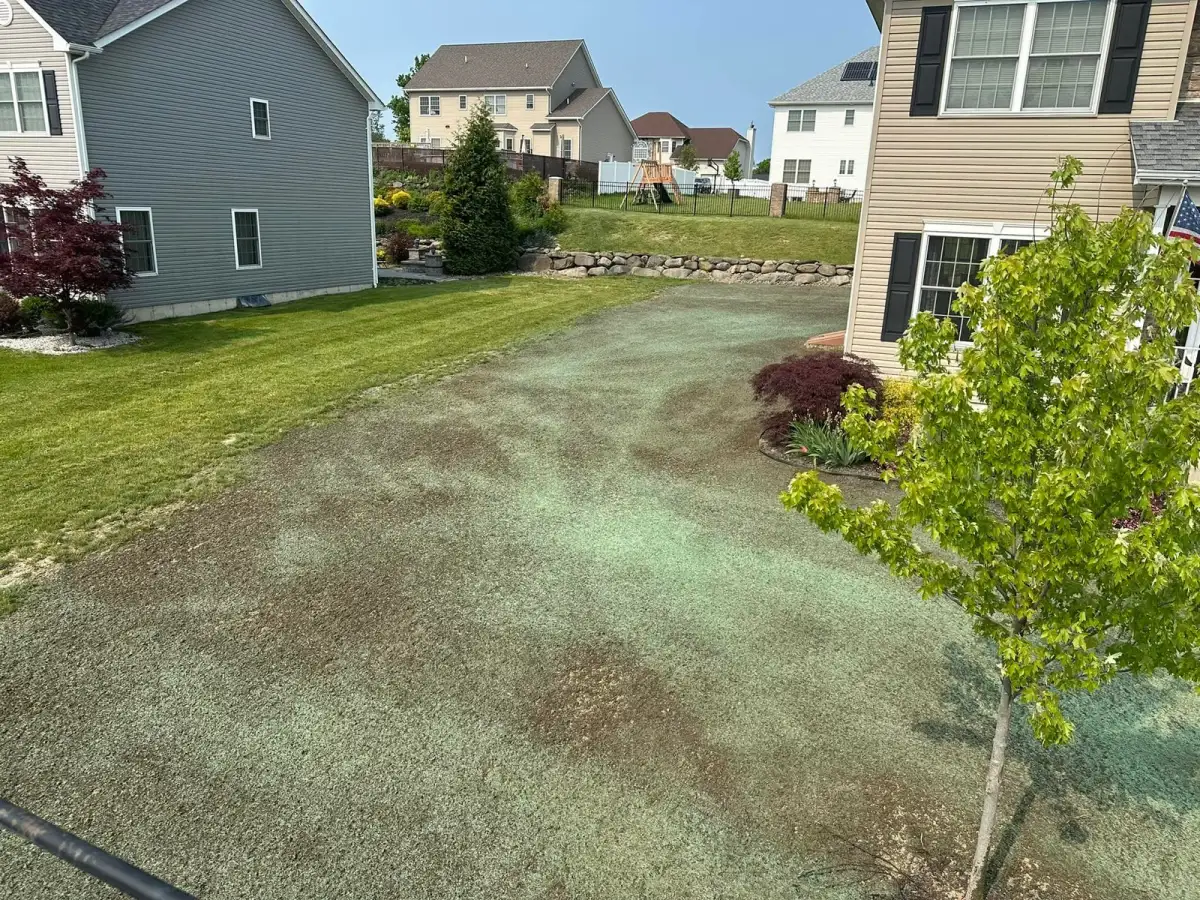
A hydroseeding estimate is more than lawn area multiplied by a single rate. Size matters, but the work required before the slurry is applied can change the total substantially. Bare, finish-graded soil with easy equipment access is a different job from compacted fill, active washout, construction debris, or a steep slope.
For early budgeting in the Hudson Valley, a rough hydroseeding planning range is about $0.06 to $0.20 per square foot. That is a starting point, not a quote. Small-job minimums, topsoil, grading, erosion control, difficult access, and restoration outside the seeded area can move a proposal beyond simple square-foot math.
The six details that change a hydroseeding estimate
1. Measured lawn area
Contractors need the seedable area, not the entire tax-lot size. Patios, driveways, buildings, planting beds, wooded areas, and existing lawn that will remain should be excluded. Irregular edges and separated lawn sections can also take more setup than one open rectangle of the same size.
2. Soil and seedbed preparation
Hydroseed needs prepared soil. Removing rocks and debris, loosening compaction, adding topsoil, correcting low areas, and producing a smooth final grade are separate from spraying the seed mixture. Ask every estimator to state whether preparation is included so that you are comparing the same scope.
3. Grading, drainage, and erosion risk
Water needs to move without washing seed away or collecting in low spots. Slopes, roof discharge, driveway runoff, and disturbed construction soil can call for grading or added erosion-control measures. If the work changes drainage patterns or involves substantial soil disturbance, confirm applicable local requirements; the City of Newburgh’s stormwater information explains why runoff deserves attention before work begins.
4. Equipment and hose access
A truck or hydroseeding unit that can stage close to the lawn usually makes application more direct. Narrow gates, long hose runs, retaining walls, steep grades, protected surfaces, and limited parking may affect labor and setup. Tell the estimator about access limits before the visit if you already know them.
5. Seed mix and site conditions
Sun exposure, shade, slope, intended use, soil conditions, and the desired lawn type influence seed selection and application specifications. The lowest-priced mix is not automatically the best value if it does not fit the site. A written proposal should identify what is being applied and the area it covers.
6. Watering and early care
Hydroseeding shifts part of the success equation to aftercare. New seed needs consistent moisture, limited traffic, and care that responds to weather and germination. Before accepting a proposal, understand the watering expectations, first-mow guidance, and what happens if heavy rain causes washout or thin areas appear.
How to compare hydroseeding quotes fairly
A low total may exclude work that another contractor includes. Request a written scope and compare these items line by line:
- Measured square footage or acreage to be seeded
- Debris removal, topsoil, soil loosening, and final grading
- Seed mix, mulch, fertilizer, tackifier, and application details
- Slope protection or additional erosion-control measures
- Equipment access, staging, cleanup, and disturbed-area restoration
- Watering, traffic, mowing, and follow-up care instructions
- Exclusions, change conditions, and any minimum service charge
If one proposal covers only hydroseed application and another includes full seedbed preparation, the totals are not directly comparable. Ask each contractor to explain the condition in which the lawn must be left before application and who is responsible for getting it there.
Hydroseeding vs. sod: compare the whole project
Hydroseeding is generally less expensive than sod, particularly over larger lawn areas. Sod provides an immediate green surface; hydroseed needs time to germinate and demands careful early watering. Either option can still require topsoil, grading, delivery access, and preparation.
Compare the same finished scope rather than a sod material price against a hydroseed application price. If you need an instant surface, sod may justify the premium. If you can protect and water the area while grass establishes, hydroseeding may offer a more economical path to a new lawn.
What Newburgh-area homeowners should show the estimator
Share the approximate lawn dimensions, photos of bare or disturbed areas, known water access, slopes, shade, recent excavation, and any deadline tied to construction or outdoor use. On Newburgh properties, the site walk should also trace runoff and identify areas where compacted soil or a recent project may need correction before seeding.
Lawn Spa Landscaping provides hydroseeding across its Hudson Valley service area, including communities such as New Windsor, Cornwall, Beacon, and Fishkill. The estimate should be based on the actual site, not a citywide average.
When drainage or excavation belongs in the conversation
Hydroseeding can establish grass after construction, but it will not correct ongoing washout, standing water, or a grade that directs water toward the wrong place. If those conditions are present, review drainage options and any needed excavation or grading before scheduling the lawn finish.
Resolving the underlying condition first can keep you from paying to seed the same area twice. When the site is stable and ready, request a hydroseeding estimate from Lawn Spa Landscaping with the measured area and preparation needs included.
Common Hydroseeding Price and Planning Questions
Using a rough planning range of $0.06 to $0.20 per square foot, 1,000 square feet works out to about $60 to $200 before considering minimum service charges, soil preparation, grading, access, seed mix, erosion controls, or other site-specific work. A site visit is needed for a reliable project price.
Hydroseeding is generally less expensive than sod for establishing a lawn, especially across larger areas. Sod provides an immediate green surface, while hydroseed needs germination time and consistent early watering. Compare proposals that include the same soil preparation, grading, restoration, and care expectations.
Tank volume alone does not provide a dependable coverage number. Coverage depends on the machine, slurry recipe, mulch and seed rates, slope, soil condition, and application specifications. Ask for the measured square footage included in the proposal instead of comparing tank capacity.
Application time depends on access, hose reach, slope, refill logistics, obstacles, and the specified application rate. Soil preparation, grading, and cleanup may take longer than spraying. A contractor should separate preparation time from application time when discussing the schedule.