
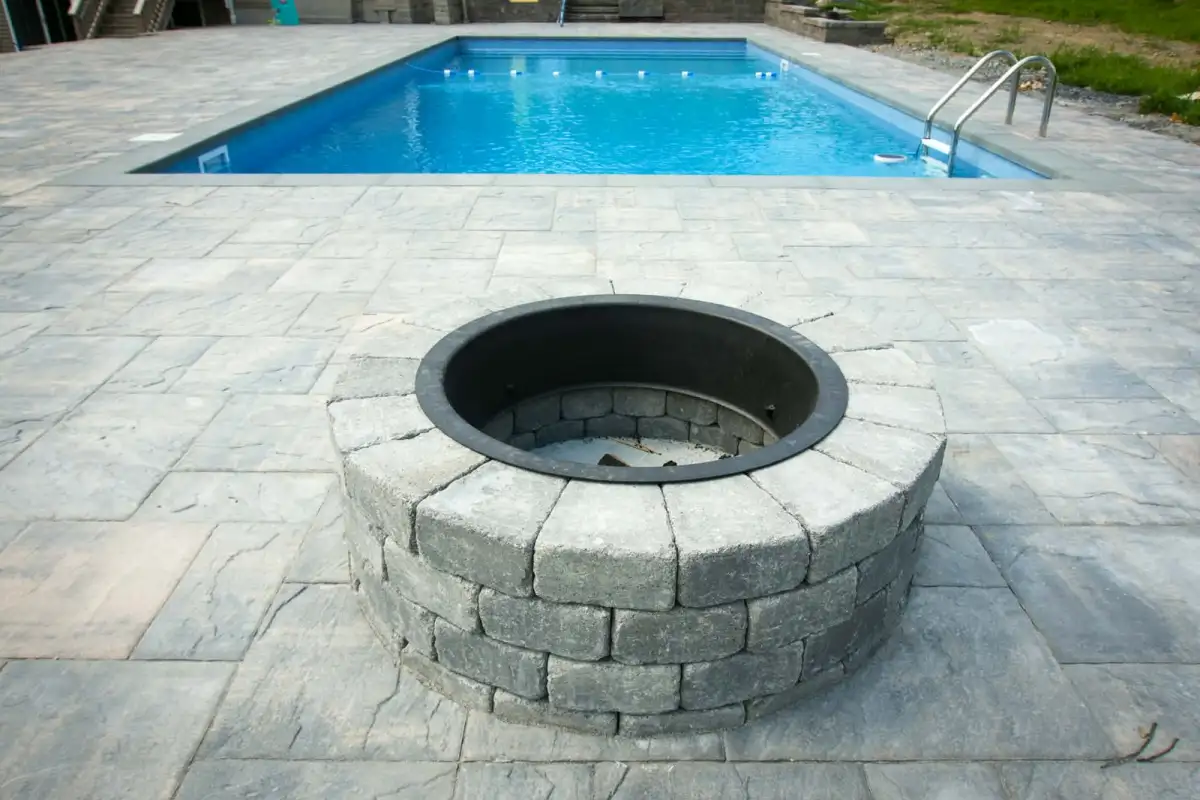
For many inground pool projects in the Newburgh and Orange County area, Lawn Spa Landscaping uses about $45,000 to $85,000 as a preliminary planning range. That is not a flat rate or a promise that every yard fits within it. The actual price depends on the pool, the site, and exactly what the written proposal includes.
The biggest budgeting mistake is comparing a shell, kit, or base installation figure with a complete backyard construction scope. An inground pool can also require excavation, soil export, drainage, plumbing, electrical work, equipment, coping, a pool deck, fencing, permits, inspections, access repair, grading, and landscaping. A low headline price is not useful until you know which of those items are included.
What makes up a complete pool-builder price?
Pool type, size, depth, and features
The shell or construction system is only one part of the budget, but it is an important one. Shape, length, width, depth, steps, benches, ledges, finish selections, equipment, heating, lighting, covers, and water features all affect the equipment and labor behind the finished pool. Lawn Spa’s pool-building service focuses on inground projects, including fiberglass options from Viking Pools and Swim USA.
Excavation, soil, and material removal
A clear dig with predictable soil is different from a yard with rock, groundwater, buried debris, unsuitable fill, or limited room to stockpile material. The proposal should state what excavation and haul-away are included and how unexpected subsurface conditions are handled. Ask whether base preparation, backfill, compaction, and final grading are part of the quoted work.
Machine access and protection of your yard
Pool construction needs a route from the street to the dig area. Gate width, side-yard clearance, overhead wires, septic components, existing patios, retaining walls, slopes, trees, and neighboring boundaries can all affect the equipment plan. Limited access may call for smaller machines, more handling, or temporary removal and replacement of fencing or landscape features.
Drainage and finished elevations
The pool, coping, deck, lawn, and nearby structures need compatible elevations. Surface water should not run toward the pool or house, and excavation can expose wet soils that were not obvious from the lawn surface. On Hudson Valley sites with slope, clay-heavy soil, or wet areas, drainage work may be a necessary part of the build rather than an optional add-on. Review related drainage solutions before finalizing the deck and landscape plan.
Utilities, equipment, permits, and safety
Plumbing, electrical service, bonding, equipment placement, heating, and controls should be assigned clearly in the contract. Permit, inspection, barrier, alarm, and fencing requirements vary by municipality and project, so confirm what the builder handles and what remains your responsibility. An allowance is not the same as a fixed included price; ask how allowances are reconciled if selections or field conditions change.
Coping, pool deck, and restoration
A usable pool area needs safe transitions and enough deck for circulation, seating, and maintenance access. Material, square footage, base construction, edge details, steps, walls, and drainage all influence the deck price. If you are considering pavers, compare the pool proposal with the details on pavers and pool decks. Also define how the access path, lawn, planting beds, and disturbed grades will be restored after heavy construction.
Can you build an inground pool for $20,000 or $30,000?
Those numbers are below Lawn Spa’s current preliminary range for many complete inground projects in this service area. They may apply to a different category of pool, an older quote, a shell or kit, or a limited base package. They may also omit major work that you will still need to buy separately.
If you receive a much lower figure, ask for an itemized installed scope. Specifically look for excavation, soil removal, base and backfill, plumbing, equipment, electrical work, heating, coping, deck, fencing, permits, inspections, drainage, cleanup, and yard restoration. A realistic comparison uses the total required to reach a safe, finished, usable backyard—not the smallest number in an advertisement.
Does a 12-by-24 pool have a standard price?
No. Dimensions help identify a model and establish excavation volume, but they do not describe the complete job. A 12-by-24 pool in an open, level yard with a modest deck can have a very different cost from the same-size pool behind a narrow gate, below a steep bank, or beside a wet area that needs drainage and retaining work.
Depth and features matter too. Steps, benches, a tanning ledge, heating, lighting, an automatic cover, an expanded paver deck, or connections to an outdoor-living area can shift the budget even when the water footprint stays the same. Ask the estimator to separate the pool package, sitework, utilities, hardscape, and landscape restoration so you can see where the money is going.
How to compare pool-builder estimates without missing costs
Put every proposal beside the same checklist. If an item is absent, do not assume it is included:
- Pool manufacturer, model, dimensions, depth, finish, and selected features
- Excavation, haul-away, prepared base, backfill, and compaction
- Known access work and protection or restoration of the construction route
- Plumbing, filtration, sanitation, heating, electrical, and equipment pad scope
- Groundwater, drainage, grading, and runoff management
- Coping, deck material, deck square footage, steps, and retaining walls
- Permits, inspections, fencing, alarms, and other assigned responsibilities
- Lawn, planting, irrigation, and landscape restoration after construction
- Allowances, exclusions, change-order conditions, payment milestones, and warranty sources
Also compare communication and sequence. A complete proposal should explain who coordinates the different trades, when selections must be made, and which conditions can change the price or schedule. The cheapest starting figure can become the most expensive choice if essential work appears later as separate contracts or change orders.
Local site conditions deserve an early review
In Newburgh and nearby Hudson Valley communities, slope, freeze-thaw cycles, clay-heavy soil, runoff, and tight residential access can affect excavation, deck base preparation, retaining needs, and drainage. These conditions do not produce one citywide price; they are reasons to walk the actual yard before relying on a budget number.
Lawn Spa serves homeowners throughout its service area, including New Windsor, Cornwall, Beacon, Fishkill, and other listed communities. The estimate should reflect your municipal requirements and your yard’s access, elevations, drainage, and finish plan.
Plan early enough to price the whole project
A pool schedule involves more than excavation day. Design decisions, site review, permits, utility coordination, materials, construction availability, inspections, weather, deck work, and final landscaping all influence when the backyard is ready to use. Starting early gives you time to compare complete scopes and make finish decisions before they hold up construction.
If you are planning an inground pool, send the property address, several yard photos, approximate access width, desired pool size or features, and your target season. Lawn Spa can then discuss whether the project fits its pool-building scope and schedule a closer review. Request a pool estimate or call (845) 467-0845.
Common Pool Price and Estimate Questions
Lawn Spa Landscaping uses a preliminary planning range of about $45,000 to $85,000 for many inground projects in the Newburgh and Orange County area. The final price depends on the shell, site access, excavation, drainage, electrical work, coping, decking, fencing, permits, and restoration included in the proposal. A site-specific estimate is necessary.
Those figures are below Lawn Spa’s current preliminary range for many complete inground projects in this area. A lower advertised figure may describe an above-ground pool, a shell or kit, or a scope that excludes excavation, access work, utilities, decking, fencing, permits, drainage, and yard restoration. Ask for an itemized installed scope before comparing prices.
Dimensions alone are not enough to price it. Shell or construction type, depth, access, excavation conditions, groundwater and drainage, equipment, electrical work, coping, deck area, fencing, permits, and landscaping can create major differences between two pools with the same footprint.
A useful quote should define the pool model and equipment, excavation and haul-away, base and backfill, plumbing, electrical responsibilities, drainage, coping and deck scope, permits and inspections, fencing responsibilities, access restoration, landscaping, exclusions, allowances, change conditions, payment schedule, and warranty sources.
Start well before the season in which you want to swim. Design choices, site review, permits, utility coordination, material availability, construction scheduling, inspections, weather, and final landscape work all affect the calendar. An early consultation gives you time to define the full scope before committing to a target date.