
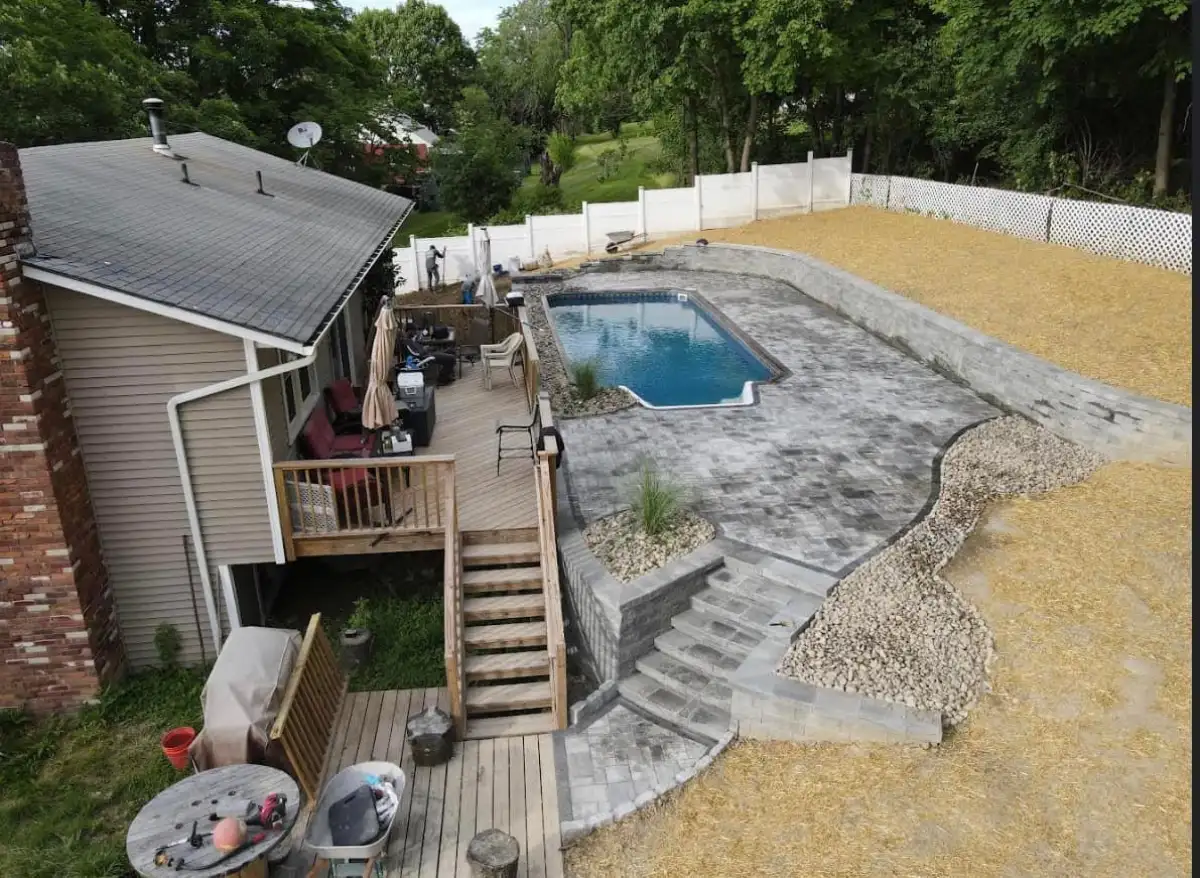
Before booking paver work, separate the visible choices from the decisions that make the finished surface function. Color and pattern matter, but so do the intended use, excavation, base, finished elevation, water movement, access, edge restraint, and maintenance plan.
This guide answers the current questions homeowners commonly search while comparing paver installation and contractors around Newburgh, NY. Use it to prepare for a site visit and to check whether competing proposals describe the same work.
How much should a 20x20 paver patio cost?
A 20-by-20 patio has a 400-square-foot surface, but there is no responsible installed price based on that number alone. A contractor also needs to know what is there now, how deep the area must be excavated, what the soil and grades are like, how equipment and materials can reach the yard, and whether steps, borders, drainage, demolition, disposal, or restoration are part of the project.
Material selection changes the total as well. Product cost, delivery, layout, cuts, borders, and installation time can vary. For a useful comparison, give each contractor the same rough dimensions and intended use, then compare written inclusions. Lawn Spa's paver patio cost guide explains the main budget drivers, but a property visit is still needed for an estimate.
Where is the cheapest place to get pavers?
Homeowners can compare local landscape suppliers, masonry yards, home-improvement stores, and contractor-supplied products. The lowest pallet price is only one part of the decision. Check whether the paver is intended for the planned use, whether the needed color and quantity are available, and how delivery, breakage, cut waste, returns, base materials, joint material, and edge restraints affect the completed cost.
Seeing samples outdoors can help because color and texture look different in daylight than they do on a screen. If a contractor is supplying the material, ask for the manufacturer, product line, color, finish, border, and pattern in the proposal. That makes substitutions easier to identify and gives both parties a clear reference.
Can pavers be laid directly on dirt?
Not for a lasting patio, walkway, or pool deck. These surfaces normally require excavation, a prepared subgrade, compacted aggregate, bedding material, secure edge restraint, joint material, and planned pitch. The base has to support the intended load and remain stable through water, winter conditions, and repeated use.
Ask how the contractor will determine excavation depth, compact the base, handle soft or disturbed areas, and connect the new surface to doors, steps, lawn, existing concrete, or other hardscaping. The exact assembly should be matched to the site rather than reduced to “base included.”
How should a paver patio handle water?
A new hard surface changes how rainfall moves across the property. The proposal should describe finished elevations and pitch, especially near the house, garage, pool, retaining walls, downspouts, and low lawn areas. The City of Newburgh publishes stormwater information; for an individual property, the practical project question is where water will go once it leaves the pavers.
Some sites can direct water safely through the finished grade. Others may need separate drainage solutions or excavation before the paver layout is finalized. If a patio, walkway, or pool deck would meet an existing wet area, solve that relationship on the plan rather than after installation.
What is the best plant to grow between pavers?
There is no single best choice for every paver surface. First decide whether the joints are designed to hold plants at all. Narrow structural joints are normally filled with the specified joint material; replacing that material with soil can invite movement, weeds, and maintenance problems.
For an intentionally spaced garden path, a planting choice should match sunlight, moisture, joint width, foot traffic, winter exposure, and the amount of trimming or weeding the homeowner wants to manage. Discuss planted joints during design so the spacing, base, soil pockets, and edging support that goal. A conventional entertaining patio or paver pool deck will usually call for a different joint treatment than a lightly used garden path.
What maintenance questions belong in the proposal?
Ask how to clean the selected surface, whether joint material may need replenishment, what signs of edge movement or settlement to watch for, and whether sealing is optional or recommended for that specific product. Also ask how snow and ice should be handled. Product-specific care directions are more useful than a universal maintenance promise.
Maintenance expectations may influence the material decision. A textured or light-colored surface, a shaded damp area, a pool surround, and a driveway each face different use and staining conditions. Make the selection with those realities in view.
What should be confirmed before signing?
- Measured footprint, intended use, layout, and product selection
- Demolition, excavation, disposal, and protection of nearby features
- Subgrade preparation, base, bedding, edge restraint, and joint material
- Finished elevations, pitch, drainage work, steps, and transitions
- Access route, material staging, equipment limits, and restoration
- Schedule assumptions, cleanup, maintenance guidance, and exclusions
When the proposal answers these questions, the decision becomes more than a comparison of paver colors or headline prices. It becomes a comparison of how each contractor plans to fit the surface to the property.
FAQ: Pavers in Newburgh, NY
A 20-by-20 patio is 400 square feet, but a reliable installed price requires a site-specific scope. Demolition, excavation, soil and base requirements, access, drainage, product choice, borders, steps, delivery, disposal, and restoration can all affect the total. Compare estimates built around the same dimensions, use, and inclusions.
The lowest pallet price may not produce the lowest completed-project cost. Compare product suitability, quantities, delivery, cut waste, returns, base materials, edge restraints, joint material, and installation. A local supplier can be useful for seeing colors and textures in person, but the complete installed scope is the better comparison.
Not for a lasting patio, walkway, or pool deck. These surfaces normally need excavation, a prepared subgrade, compacted aggregate, bedding material, edge restraint, joint material, and a planned pitch. The depth and materials should suit the soil, intended load, drainage, and product.
There is no single best plant for every paver area. Only joints designed with planting space should be planted. The choice should fit sun, moisture, joint width, foot traffic, winter exposure, and maintenance expectations. Narrow structural joints are normally filled with the specified joint material rather than plants.