
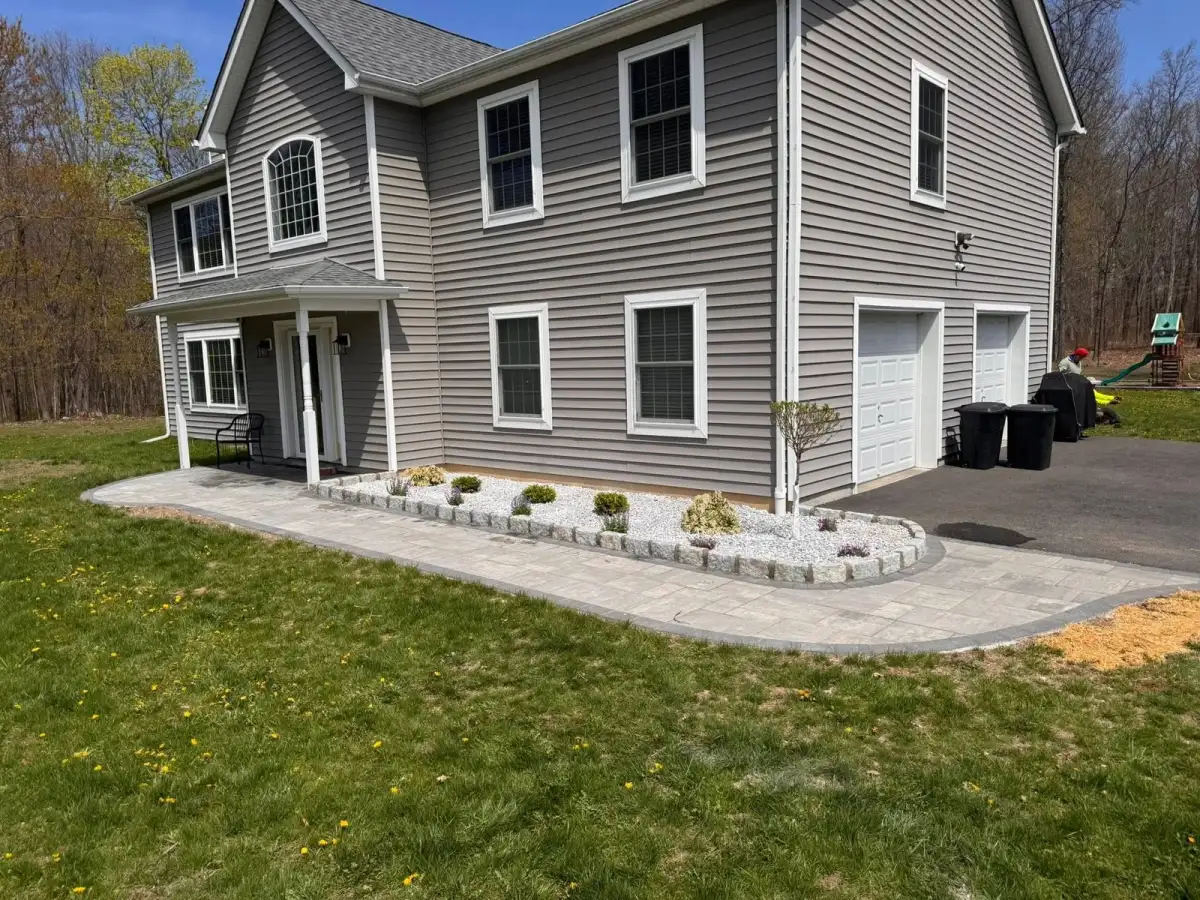
A useful paver estimate explains the complete system under, around, and beside the finished surface. Product samples matter, but so do excavation, base preparation, pitch, edge restraint, joints, access, drainage, cleanup, and future care.
That context is especially important when comparing paver installation for a patio, walkway, entry, or pool deck in Newburgh, NY. Two proposals can cover the same square footage and still describe materially different work. These questions make those differences easier to see before booking.
1. What will the paver area need to do?
Start with the intended use. A front walk, dining patio, pool surround, and vehicle area carry different loads and create different needs for texture, layout, clearances, and transitions. Mark the locations of doors, gates, steps, downspouts, utilities, retaining walls, pool equipment, and furniture before finalizing a footprint.
Ask whether the measured layout includes borders, curves, steps, landings, and connections to existing surfaces. Those details affect cuts, quantities, labor, and how naturally the new work fits the property.
2. What is the best base to put under pavers?
There is no single base depth or material specification for every paver project. The assembly should respond to the existing subgrade, intended use, drainage, selected paver system, and manufacturer requirements. A typical scope may include excavation, evaluation of the exposed subgrade, compacted aggregate placed in controlled lifts, a compatible bedding layer, edge restraint, and joint material.
Ask the contractor to describe the proposed aggregate, excavation depth, compaction approach, bedding, and edge treatment in writing. Also ask what happens if excavation reveals soft, wet, disturbed, or otherwise unsuitable material. In the Hudson Valley, freeze-thaw exposure makes water movement and a stable foundation part of the same planning conversation.
3. Where is the cheapest place to buy pavers?
The lowest advertised price is only one part of the material cost. Compare the exact product and color, coverage per pallet, minimum quantities, delivery, lead time, breakage allowance, waste, return policy, and availability for future repairs. A low unit price can lose its advantage after freight, shortages, or extra pallets are included.
For professionally installed work, the supplier price is not the installed project price. Demolition, disposal, excavation, base materials, equipment access, cuts, borders, steps, drainage, joint fill, restoration, and cleanup can all affect the total. The Hudson Valley paver patio cost guide explains why scope matters more than a stand-alone square-foot figure.
4. What company makes the best pavers?
No manufacturer is automatically best for every property or application. Compare the specific product line instead: intended use, thickness, dimensions, finish, edge profile, surface texture, freeze-thaw guidance, cleaning instructions, local availability, and the written terms of any manufacturer warranty.
Put the manufacturer, product line, size or size blend, color, finish, border, and permitted substitutions in the estimate. That gives each bidder the same material target and reduces the chance that a general label such as “premium paver” hides a different product.
5. How do I compare reputable paver contractors?
Use the same project description for every estimate, then compare the written scopes line by line. Ask who will perform the work, what site protection is planned, how changes are approved, and how unexpected subgrade or drainage conditions will be documented. Verify current credentials and insurance directly rather than relying on an old logo or general statement.
A detailed conversation should cover preparation as clearly as appearance. The contractor should be able to explain the plan for excavation, base, pitch, edge restraint, joints, transitions, access, and restoration without treating those items as interchangeable.
6. Where will rainwater go after the project?
A new hard surface changes how runoff moves across a yard. Review doors, foundations, downspouts, walls, steps, pool edges, driveways, neighboring surfaces, and existing low spots before finished elevations are set. Ask where water will leave the pavers and whether that path creates a new wet area.
The City of Newburgh publishes stormwater and MS4 information for the community. At the property level, some paver projects may need separate drainage work, excavation, or a coordinated hardscape plan when slopes and adjoining features affect the same grades.
7. What should the written estimate include?
Before comparing totals, look for a clear description of:
- Footprint, intended use, layout, pattern, border, and transitions
- Manufacturer, product line, color, finish, quantities, and substitutions
- Demolition, excavation, disposal, subgrade review, base, and bedding
- Compaction, finished pitch, edge restraint, and joint material
- Drainage responsibilities, steps, walls, utilities, and adjoining surfaces
- Equipment access, staging, property protection, cleanup, and restoration
- Schedule assumptions, change conditions, care guidance, and exclusions
If one proposal leaves these items open and another defines them, the totals are not yet a direct comparison. Request clarification before signing rather than assuming the missing work is included.
8. How much maintenance should I expect?
Routine care generally includes clearing debris, addressing stains promptly, watching joints and edges, and using cleaning methods that match the selected product. Careless pressure washing can disturb joint material or affect some surfaces, so start with the manufacturer's cleaning guidance.
Sealing is not a universal requirement. Its suitability depends on the paver, finish, joint system, exposure, and the homeowner's appearance and maintenance goals. Ask for product-specific care instructions and compatible snow-removal or de-icing guidance before winter.
FAQ: Booking Pavers in Newburgh, NY
There is no single base specification for every project. The correct aggregate, depth, excavation, compaction, bedding, and drainage details depend on the subgrade, intended use, paver system, and site conditions. Ask for the proposed assembly in writing.
The lowest advertised unit price may not be the lowest delivered or installed cost. Compare the exact product, coverage, minimum quantities, delivery, waste, returns, and availability. For installed work, compare the full project scope rather than the pallet price alone.
There is no universal best manufacturer for every property. Compare product suitability for the application, dimensions, finish, slip considerations, freeze-thaw guidance, availability, care instructions, and the terms of any manufacturer warranty.
Compare written scopes, not only totals. Confirm who will handle excavation, base preparation, pitch, edge restraint, joints, drainage, access, cleanup, and restoration. Ask how changes and unexpected subgrade conditions will be documented, and verify current credentials and insurance directly.
Routine care generally includes removing debris, addressing stains promptly, monitoring joints and edges, and following product-specific cleaning guidance. Sealing is not a universal requirement; whether it is appropriate depends on the paver, finish, joint system, and homeowner's goals.