
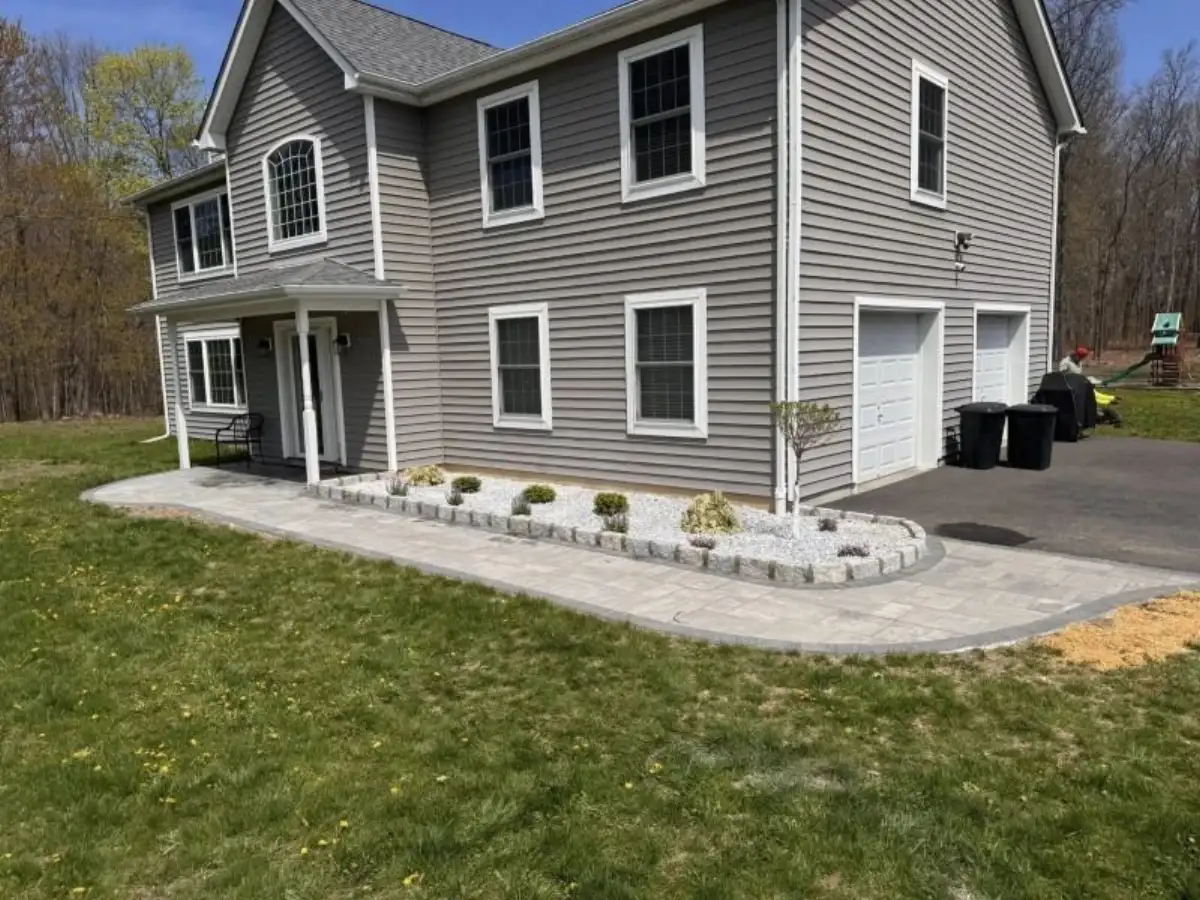
Before booking a paver patio, walkway, or pool deck, compare the system below the surface as carefully as the color and pattern above it. In Newburgh, slope, soil conditions, winter freeze-thaw cycles, and existing drainage can all affect the recommended scope.
That is why a useful estimate for paver installation should connect the layout to excavation, base preparation, finished pitch, edge restraint, joints, access, cleanup, and adjoining features. These current homeowner questions offer a focused way to compare proposals for a property in Newburgh, NY.
What does a 20x20 paver patio cost?
A 20-by-20-foot patio covers 400 square feet, but area alone cannot establish a reliable installed price. The total can change with demolition, equipment access, excavation depth, exposed subgrade, base materials, paver product, pattern, borders, cuts, steps, drainage, disposal, and restoration.
For an accurate comparison, give each contractor the same footprint and intended use. Ask every estimate to identify the paver product, base assembly, edge and joint system, drainage responsibilities, exclusions, and conditions that could lead to a change. Our Hudson Valley paver patio cost guide explains the main scope variables in more detail.
Where is the cheapest place to buy pavers?
The lowest advertised price is not always the lowest delivered material cost. Compare the exact manufacturer and product line, coverage per pallet, minimum quantity, delivery charge, lead time, breakage or waste allowance, return terms, and availability if matching pieces are needed later.
Homeowners should also separate material cost from installed cost. Pallet pricing does not include the labor, aggregates, disposal, equipment, cuts, edge restraint, joint material, site protection, or lawn restoration needed to produce a finished surface. When collecting estimates, specify the product and permitted substitutions so every proposal starts from the same material target.
How do I compare paver contractors in Newburgh?
Start with a consistent project description, then read the written scopes line by line. Ask who will perform the work, how the property will be accessed and protected, where excavated material will go, how unexpected subgrade conditions are handled, and how changes receive approval. Verify current insurance and credentials directly.
A reputable proposal should make the preparation understandable. Look for clear descriptions of excavation, subgrade review, aggregate, compaction, bedding, pitch, edges, joints, transitions, cleanup, and restoration. If a patio connects to steps, a wall, a pool, or a sloped yard, ask whether those features require a broader hardscaping plan.
Do you need crushed rock under pavers?
Paver systems commonly include a compacted aggregate base, but there is no universal material or depth that fits every property. The assembly should respond to the exposed subgrade, intended use, drainage, selected paver system, and manufacturer guidance. Ask the contractor to name the proposed aggregate, planned excavation, compaction approach, bedding layer, and edge treatment.
Also ask what happens if excavation reveals soft, wet, disturbed, or otherwise unsuitable soil. Simply adding more material does not answer where water will move. Finished elevations and pitch should be reviewed around doors, foundations, downspouts, driveways, walls, and existing low spots. Projects with persistent runoff or standing water may also need coordinated drainage solutions.
What should be settled before you book?
- The footprint, use, pattern, border, transitions, and selected paver product
- Excavation, subgrade evaluation, base material, compaction, bedding, edges, and joints
- Finished pitch, runoff path, downspout conflicts, and drainage responsibilities
- Equipment access, staging, disposal, site protection, cleanup, and restoration
- Schedule assumptions, substitutions, exclusions, and written change conditions
Once those details are written down, price comparisons become more meaningful and the finished project is less dependent on assumptions.
FAQ: Planning Pavers in Newburgh, NY
A 20x20 patio is 400 square feet, but size alone cannot establish a reliable installed price. Demolition, access, excavation, subgrade conditions, base preparation, paver selection, cuts, borders, drainage, steps, disposal, and restoration can all change the scope. Compare written estimates that describe the same work.
Compare the total delivered cost of the exact product, including pallet coverage, minimum quantities, freight, breakage allowance, lead time, return terms, and future availability. The lowest advertised unit price may not produce the lowest material or installed project total.
Give each contractor the same project description and compare written scopes line by line. Look for clear details about excavation, subgrade evaluation, base materials, compaction, pitch, edge restraint, joint material, drainage, access, cleanup, restoration, substitutions, and change conditions. Verify current insurance and credentials directly.
Paver systems commonly use a compacted aggregate base, but there is no universal material or depth for every site. The assembly should suit the subgrade, intended use, drainage conditions, paver system, and manufacturer guidance. Ask for the proposed base specification in writing.