Shopping for pavers and booking a paver installation are two different decisions. A product that looks right on a display board still needs an installation plan suited to the space, the intended use, and the property beneath it.
For homeowners considering pavers in Newburgh, that means looking beyond color and price per square foot. Slopes, soil conditions, runoff, winter freeze-thaw cycles, equipment access, and connections to doors, lawns, driveways, walls, or pools can all affect the scope. Use the questions below to compare complete proposals—not isolated products or headline prices.
1. Where is the cheapest place to buy pavers?
Start by comparing the total delivered cost of the exact product, not only the displayed price. Record the manufacturer, product line, color, finish, dimensions, pallet coverage, order minimum, delivery charge, lead time, return terms, and allowance for cuts or breakage. Also ask whether the same line is likely to be available if matching pieces are needed later.
If a contractor is supplying the materials, ask for those specifications in the proposal. A low pallet price does not include demolition, disposal, excavation, aggregate, equipment, labor, edge restraint, joint material, drainage, cleanup, or lawn restoration. For a realistic comparison, separate the material choice from the full installed scope. Our Hudson Valley paver patio cost guide outlines the major variables behind a finished project total.
2. What is the best base to put under pavers?
There is no one base depth or aggregate specification that is best for every project. A front walk, dining patio, pool deck, and vehicle area place different demands on the assembly. The exposed subgrade, intended use, selected paver system, drainage conditions, and manufacturer instructions should all inform the recommendation.
Ask each contractor to describe the proposed excavation, subgrade evaluation, aggregate, compaction, bedding layer, edge restraint, and joint material. The proposal should also explain what happens if excavation reveals soft, wet, disturbed, or otherwise unsuitable soil. In Newburgh's seasonal climate, managing water and creating a stable foundation are connected decisions; simply adding more aggregate does not explain where runoff will go.
3. What is the best paver manufacturer?
The better question is: which specific product line fits this application? Manufacturers offer products with different thicknesses, dimensions, textures, finishes, edge profiles, color blends, and intended uses. A pool surround may place more emphasis on surface texture and transitions at coping, while a walkway may prioritize comfortable footing and clean connections to steps or pavement.
Compare product-level information: suitability for the intended use, freeze-thaw guidance, cleaning instructions, local availability, replacement availability, and the actual written warranty terms. Put the chosen product line and permitted substitutions in the contract. Broad labels such as “premium paver” do not establish that two estimates include equivalent materials.
4. How can I compare reputable paving companies in Newburgh?
First confirm that you are comparing the right trade. Search results for “paving companies” may include asphalt driveway contractors, material suppliers, masonry contractors, and landscape hardscape installers. If the project is a segmental paver patio, walkway, entry, or pool deck, ask specifically about experience with that type of assembly and site condition.
Give every contractor the same footprint, intended use, material target, and list of adjoining features. Then compare written scopes line by line. Ask who will perform the work, how the property will be accessed and protected, where excavated material will go, how drainage and finished pitch will be handled, and how unexpected conditions or substitutions receive approval. Verify current insurance and credentials directly.
For connected work—such as steps, a wall, or multiple outdoor surfaces—review whether a broader hardscaping plan would prevent conflicting grades or piecemeal transitions.
Walk the Newburgh property before choosing a layout
A site walk should trace water as carefully as foot traffic. Note doors, foundations, downspouts, roof discharge, low areas, retaining walls, slopes, driveways, utilities, pool equipment, and neighboring surfaces. Decide where the finished pavers need to meet existing grades and where rainwater can leave the new hard surface without creating a wet area elsewhere.
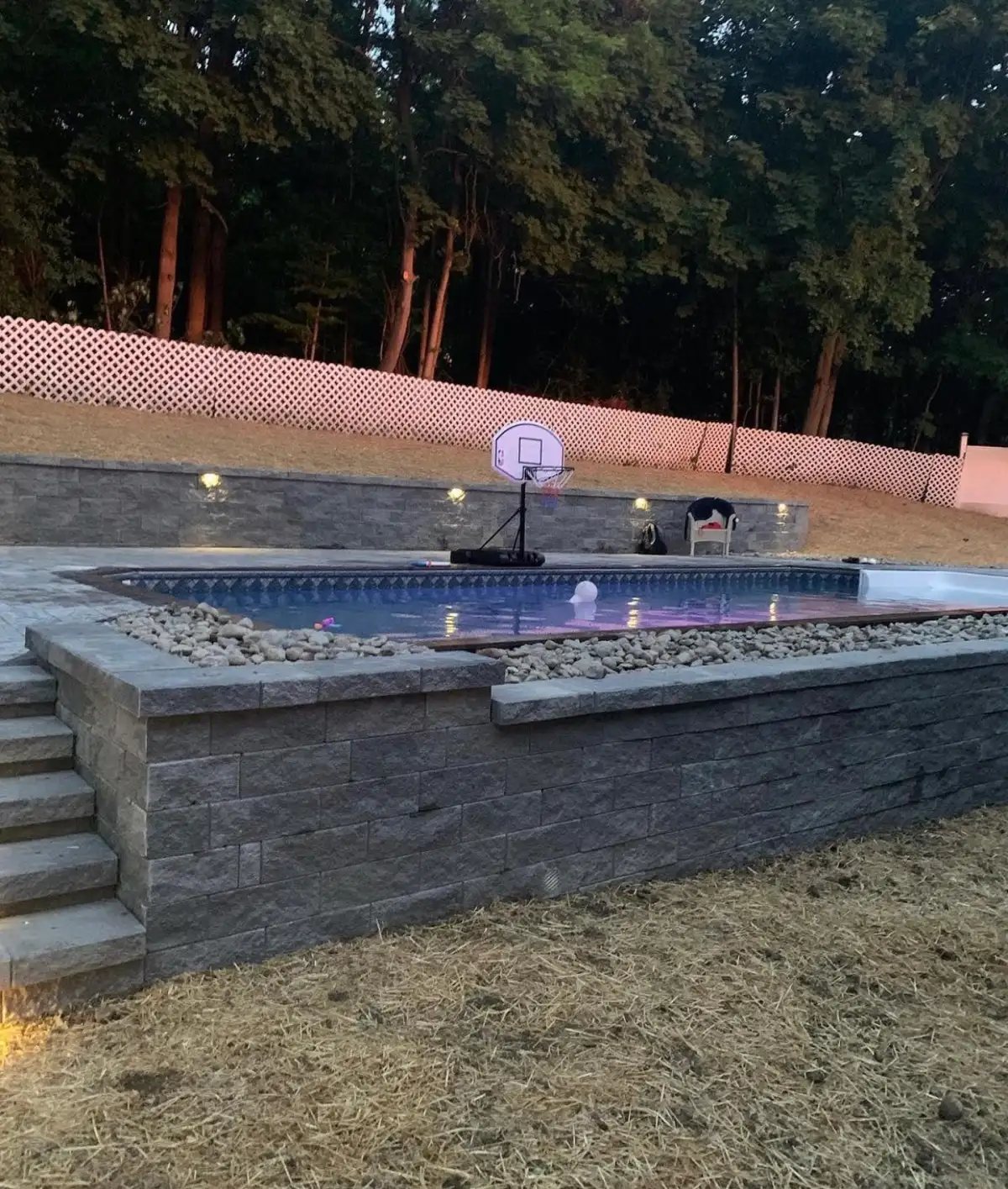
If the existing yard already holds water or concentrates runoff, discuss whether the paver project needs coordinated drainage solutions. Pool projects also benefit from reviewing the deck, coping, access, and surrounding grades together; see Lawn Spa's pavers and pool decks service for the related planning path.
What should be in the proposal before you book?
- The measured footprint, intended use, pattern, border, transitions, and adjoining features
- The manufacturer, product line, color, finish, quantity, and allowed substitutions
- Demolition, excavation, disposal, subgrade review, aggregate, bedding, and compaction
- Finished elevations, pitch, runoff path, edges, joints, and drainage responsibilities
- Equipment access, staging, property protection, cleanup, and restoration
- Schedule assumptions, exclusions, change conditions, care guidance, and written warranty terms
Once these details are defined, it becomes easier to see whether two proposals describe the same finished result. Lawn Spa installs pavers in Newburgh, NY and nearby Hudson Valley communities. When you are ready to discuss the layout and site conditions, contact Lawn Spa Landscaping for a project-specific estimate.
FAQ: Pavers in Newburgh, NY
Compare total delivered cost rather than the advertised unit price. Product line, pallet coverage, order minimums, delivery, waste allowance, return terms, lead time, and future availability can all affect the real material cost. For an installed project, excavation, base materials, labor, cuts, edges, joints, drainage, and restoration are separate parts of the total.
There is no single base specification for every property. The suitable excavation depth, aggregate, compaction, bedding, and drainage details depend on the exposed subgrade, intended use, selected paver system, and site conditions. Ask for the proposed assembly and the plan for unsuitable soil in writing.
No manufacturer is automatically best for every project. Compare the specific product line for its intended application, thickness, dimensions, finish, texture, freeze-thaw guidance, cleaning instructions, local availability, replacement availability, and written warranty terms.
First confirm that each company installs the type of paver project you need, since asphalt paving and segmental paver work are different services. Give each contractor the same project description, compare written scopes line by line, verify current insurance and credentials directly, and ask how excavation, base preparation, pitch, drainage, edges, joints, cleanup, restoration, and changes will be handled.