
Slope and Grade
How far the ground falls across the patio area decides how much cutting, filling, and wall work comes before any pavers go down.
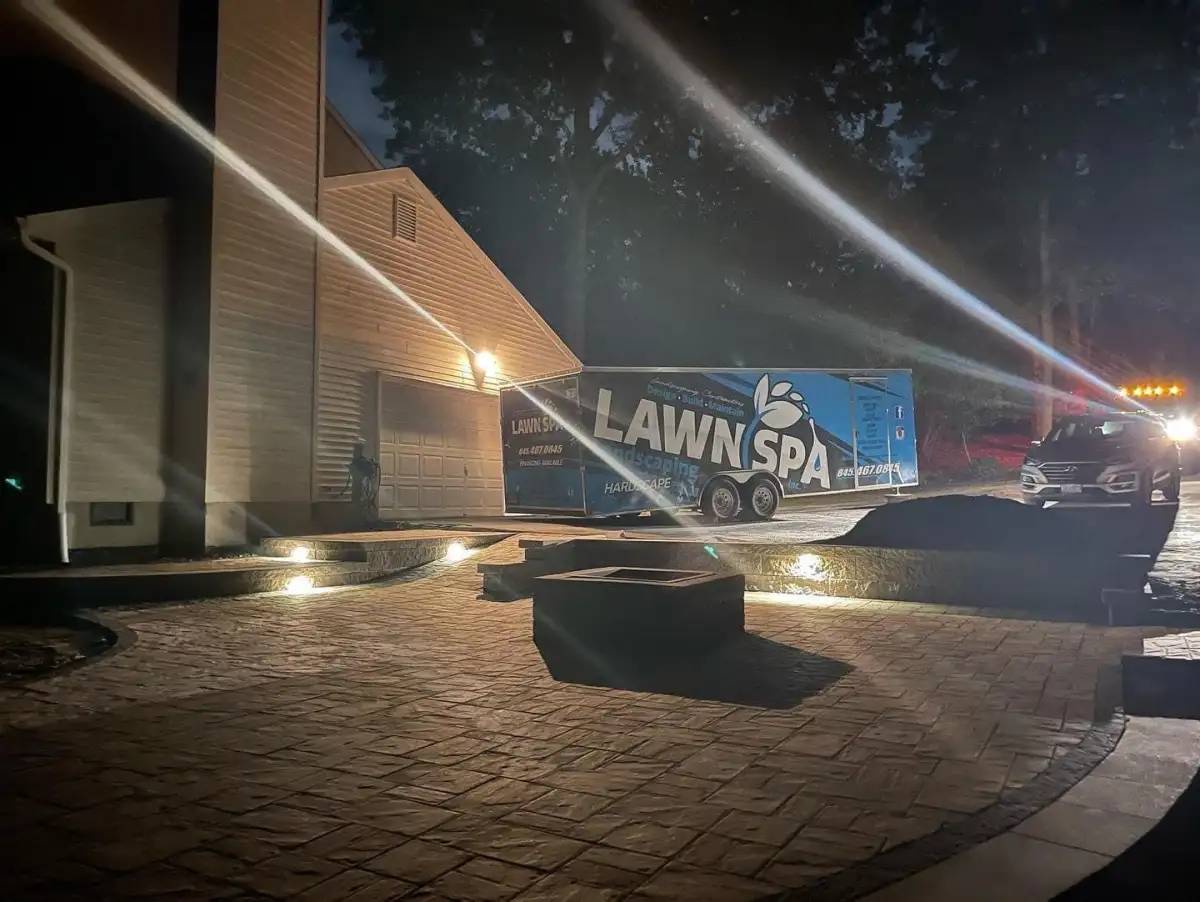
Paver patios, walkways, and pool decks for Beacon properties, planned around the slope, the rock under the yard, and the way water runs downhill.
A lot of Beacon sits on ground that falls one way. The City of Beacon's Natural Resources Inventory describes the land sloping from east to west, from Fishkill Ridge down to the Hudson River, and South Beacon Mountain tops out at about 1,600 feet just outside the city. For a backyard patio, that usually means the first question isn't the paver color. It's how much of the yard has to be cut, filled, or held back with a wall before a level surface can sit there.
A flat lot and a Beacon hillside can be the same size and still be very different jobs. On a slope, the patio's finished height has to line up with the door it serves, the lawn below it, and the water that will run toward it in every storm. Lawn Spa looks at those first, then sizes the patio, picks the material, and decides whether steps, a seat wall, or a retaining wall belong in the plan. Any paver patio contractor you talk to should be able to explain that part before giving you a price.
If the yard is already terraced, an old wall is leaning, or water cuts a path across the lawn after rain, mention it up front. Those details change the scope more than the square footage does.
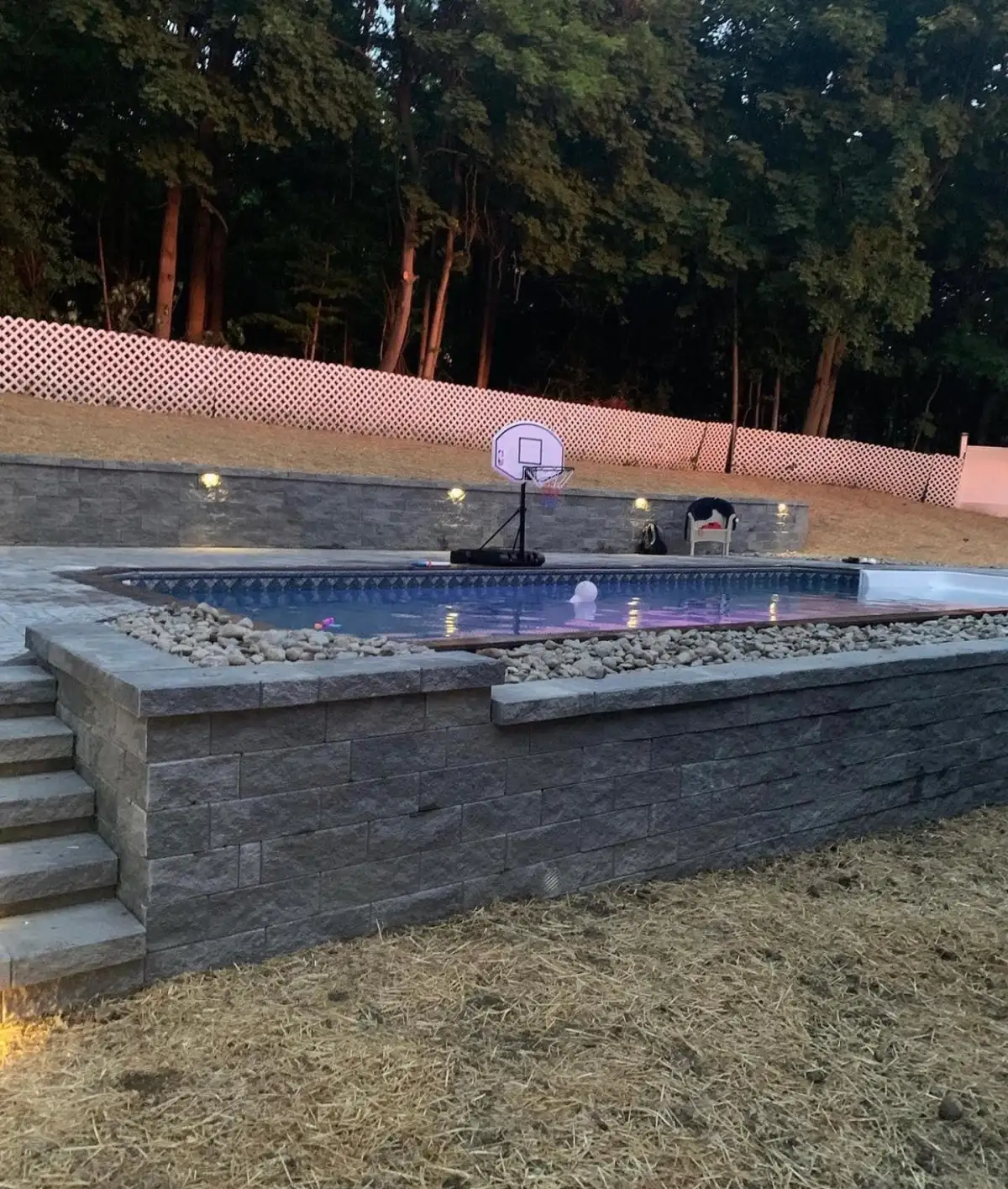
The city's resource inventory describes Beacon's surface as mostly glacial till, a mix of soil and rocks of every size left behind by the last glacier. Below that is Hudson Highlands gneiss, bedrock more than a billion years old that shows up along the city's eastern side. Dutchess County's natural resource inventory lists shallow depth to bedrock, scattered rock outcrops, and steep slopes as the main construction limits on its hilly till uplands.
None of that rules out a patio. It changes how the base gets built. Stony till usually has to come out and be replaced with crushed stone compacted in layers, so the pavers sit on something even. Where rock is close to the surface, the patio may move, sit higher, or need rock removal in the budget. Those calls are better made before the estimate than halfway through the dig.
Two patios of the same size can price very differently here. These are usually the reasons.
How far the ground falls across the patio area decides how much cutting, filling, and wall work comes before any pavers go down.
Stony till and shallow rock can mean more digging, more hauling, and more base stone than a soft, level lot would need.
Rain from the yard above the patio has to go somewhere. The plan should carry it around or through the surface, not toward the house.
Beacon's building department rates weathering here as severe. The base, joints, and edges have to handle repeated freezing, shovels, and deicers.
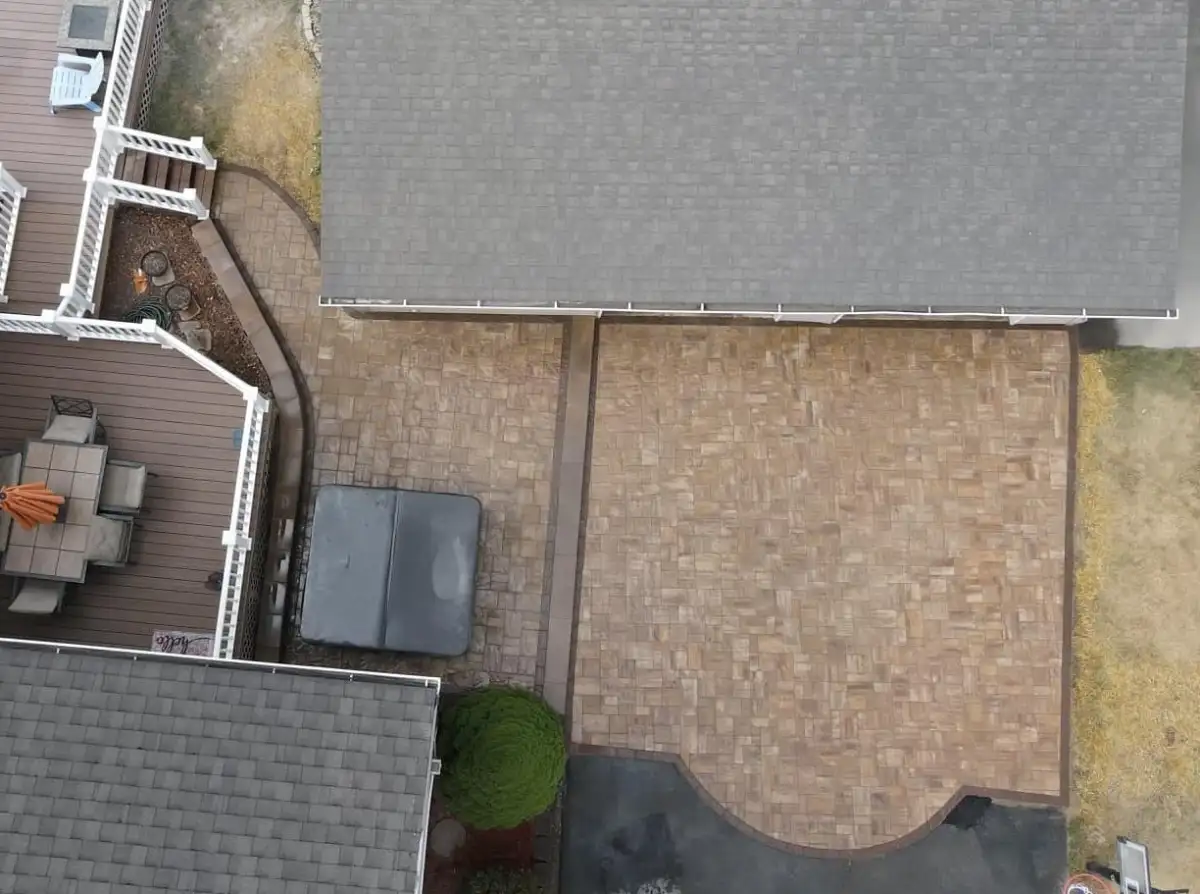
Beacon has a few rules worth knowing before a hillside patio is designed. The zoning code treats slopes of 25 percent or more as very steep and limits grading, excavation, fill, and site improvements on them unless the city's approval board signs off. The city also has a separate excavation and grading permit that calls for stamped plans with contours, drainage, and erosion control. Whether a specific patio triggers either one depends on the site and how much earth is moved, so it's a question for the Building Department, not a guess.
Location matters too. FEMA flood maps put parts of the waterfront, including Long Dock, Riverfront Park, and Dennings Point, in the 100-year flood zone, and a floodway runs along Fishkill Creek. Work in a mapped flood zone needs a Floodplain Development Permit from the city first.
Around Main Street and along the Route 52 and 9D corridors, the city's resource inventory notes that paved, hard surface is already heavy, and it suggests offsetting new pavement with surfaces water can soak into. Permeable pavers, which let rain pass through the joints into the stone below, are one way to do that on a patio or walkway. Lawn Spa can talk through where they make sense alongside drainage solutions, excavation, and retaining walls.
On a slope, a patio usually connects to something else: a wall, steps, a drain, or lighting.
See Lawn Spa's full paver installation service, the service areas directory, or ask about your Beacon property directly. Planning the patio together with walls, steps, and drainage keeps the grades lined up and saves redoing work later.
Discuss Your Beacon ProjectUsually, yes. A patio on a slope is often cut into the hill, built up behind a retaining wall, or split into two levels with steps between them. Which one fits depends on how steep the ground is, what's under the soil, and where water runs. On very steep ground, 25 percent or more, Beacon's zoning adds its own review, so that gets checked early.
It depends on the project. Beacon's building permit rules, the separate excavation and grading permit, steep-slope zoning, and floodplain rules can each come into play depending on the site and how much earth is moved. The City of Beacon Building Department, at (845) 838-5020, is the right place to confirm what applies before work starts.
There's no single number. It depends on whether the surface carries people or vehicles, what the soil is, and how water drains. Beacon's building code lists a 42-inch frost line, but that rule is for structural footings, not paver patios. What it does tell you is that the ground freezes deep here, so a well-compacted, well-drained base matters more than it would in a milder climate.
They can be, especially where runoff is already a problem, or near Main Street and the other heavily paved areas the city has flagged. Permeable pavers are built differently from standard ones, with a stone base made to take in water, so they're worth bringing up when drainage is part of the reason for the project.
It depends on the slope, rock, access, drainage, and the paver you pick, which is why hillside patios vary so much. For general ranges and what drives them, read the Hudson Valley paver patio cost guide, then ask for a written estimate for your property.